Ending suicide with love
Body & Soul


Suicidality is on the increase among Britain’s young people, but too often healthcare systems only treat symptoms and not causes. Suicide prevention charity Body & Soul are tackling the problem head-on with a person-centred therapeutic approach, underpinned by love.
Words by Eve Livingston
Photography by Jayne Lloyd
“We use the word ‘love’ here, and I think sometimes in the healthcare system, people don’t understand what we mean – like, ‘is it about just hugging everyone all the time?’” laughs Kudzai Sitima.
“And yes, it is about building that epistemic trust – but it’s also that love is a part of healing, and for everyone who has been through our doors, love has been an issue. So we’re really talking about the combination of clinical treatment with robust, whole-person, decolonised care that looks beyond what’s wrong with you to what’s happened to you. I think that’s a question the healthcare system doesn’t ask.”
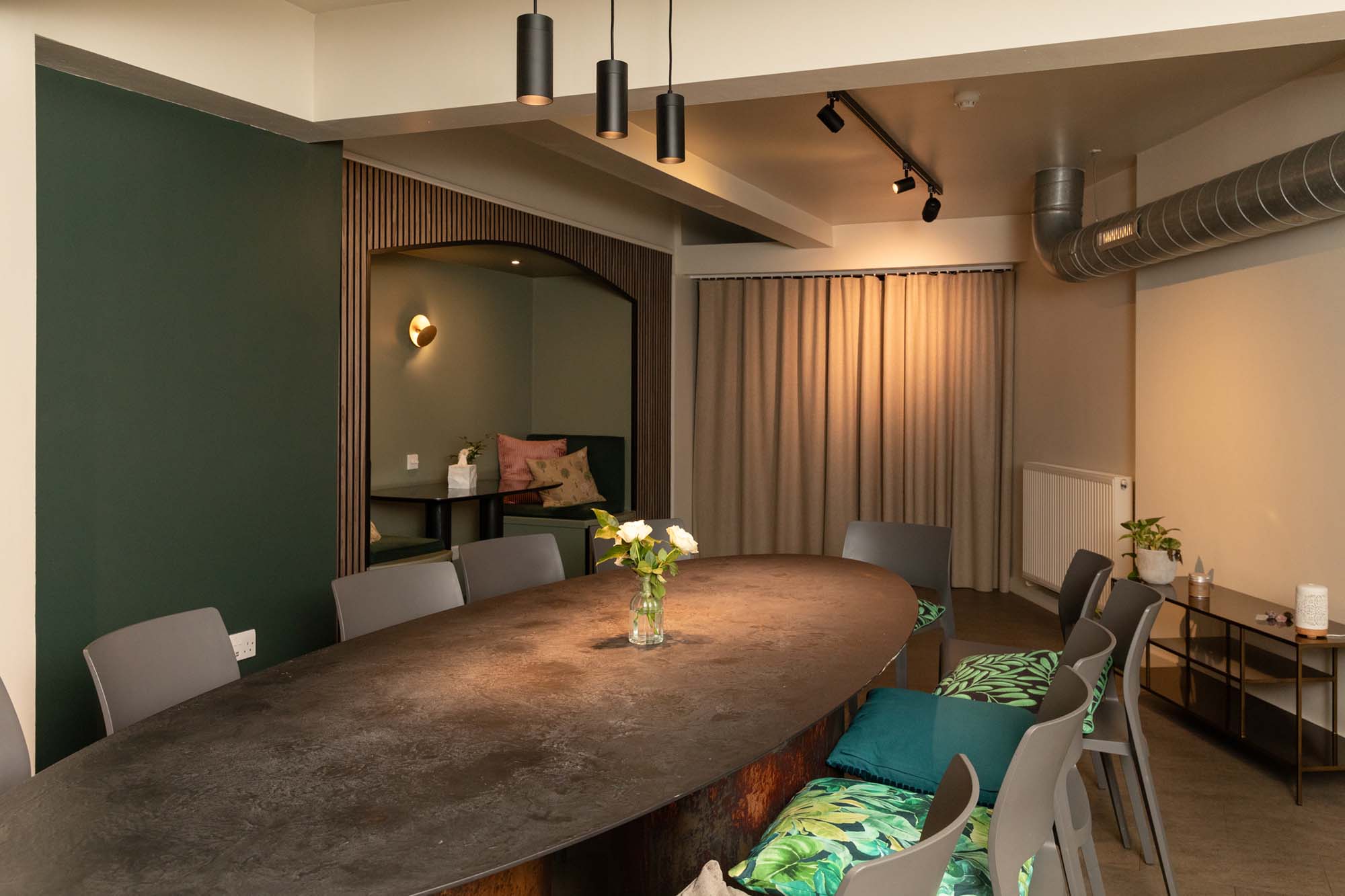
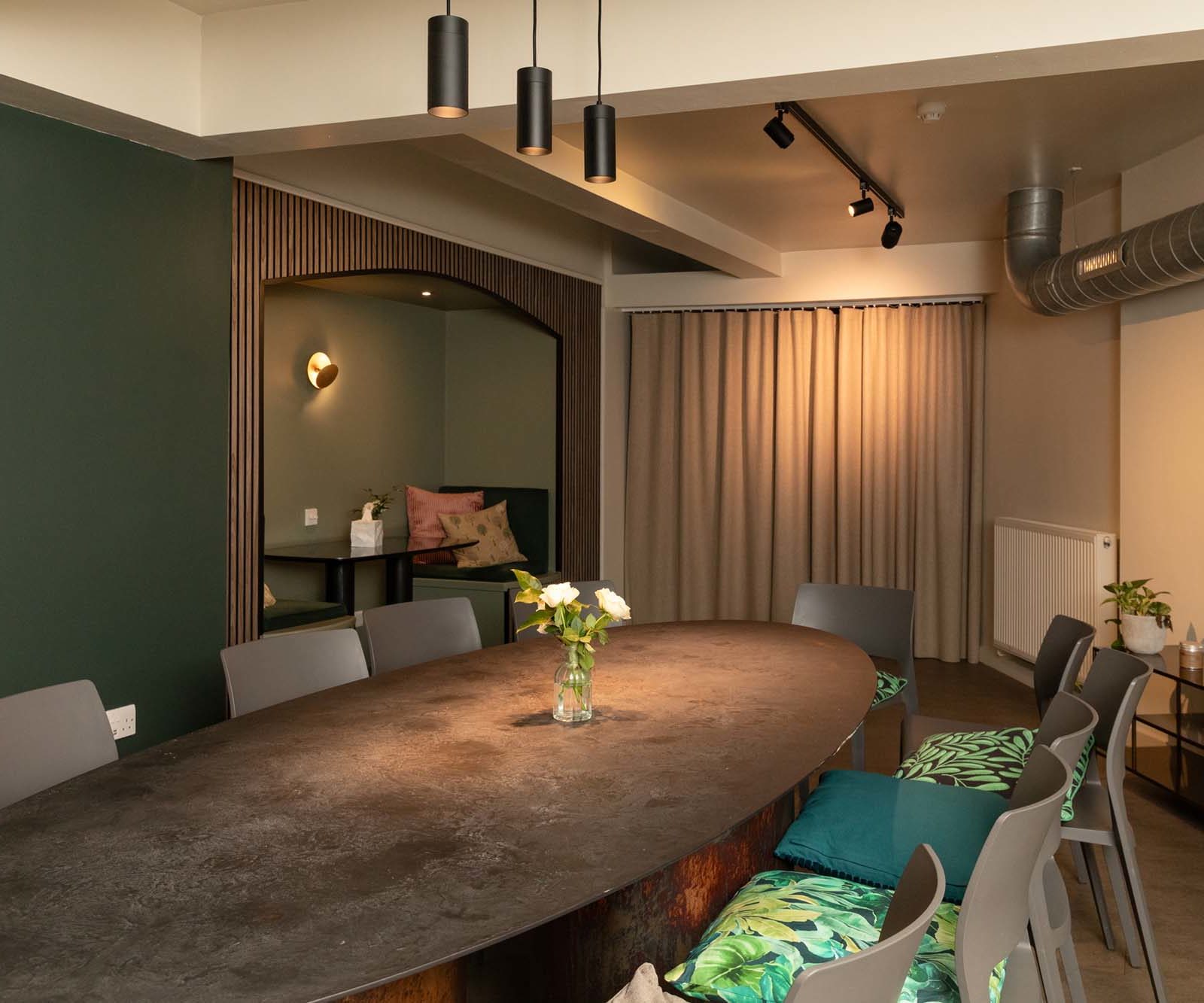
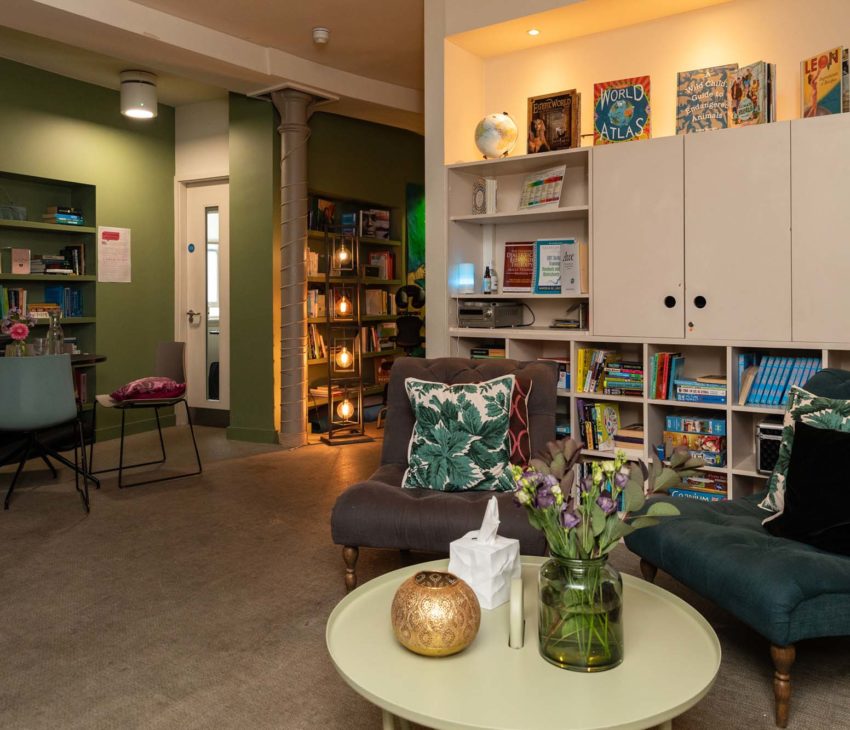
Kudzai, one of four co-directors of suicide prevention charity Body & Soul, sits in what’s informally called the ‘yoga room’ as she speaks, a tranquil, quiet space on the second floor of the organisation’s home in central London. Historically used for yoga classes, it now more commonly hosts workshops and therapies. But, like the entirety of the building, it’s still filled with warm, thoughtful touches that create a powerful sense of calm from the moment you step through the door: bright windows, soft furnishings, scented candles and fresh flowers.
“We’re very purposeful about that,” says Kudzai. “It’s important that this is a safe, meditative space for people to step into.”
First founded in 1996 and celebrating its thirtieth birthday this November, Body & Soul has been through what Kudzai sees as three iterations in its time as a charity. It started life in the midst of the HIV epidemic, mostly supporting children and families from the African diaspora. These were people experiencing both “the compounding factors of a clinical system that wasn’t supporting them, as well as external systems of racism and systemic inequity,” Kudzai explains. “Clinical care wasn’t the whole picture of what they were going through.”
That experience led the charity to its second iteration, and to a specific focus on trauma. “The biggest compounding factor in people’s care was the complexity of trauma and adverse childhood experiences, and then the inequalities that bubble all around them at the same time,” says Kudzai.
Adverse childhood experiences, or ACEs, are traumatic events occurring in childhood that can have long-term negative impacts on health, well-being and opportunity. What Body & Soul was seeing was that those deemed “too risky or too complex” within centralised healthcare systems were the same people most at risk of suicidality, and in need of interventions which acknowledged their histories and experiences beyond their immediate crisis. The charity turned its focus to a mission of ‘transforming trauma with love,’ widening its participant base and introducing dedicated suicide prevention programmes.
And then came 2025, and another refocus. “People didn’t always understand what we were trying to do up to that point – there was very little understanding about how trauma coincides with suicidality and mental health,” reflects Kudzai. “But suicidality is the umbrella that encompasses everyone we see, and the systems around us aren’t built to identify it in different ways.” And so the charity pivoted its mission once more, to its current tagline of ‘ending suicide with love’.
Today, Body & Soul delivers five therapeutic programmes for different groups including young people, family members of those at risk, frontline workers, and people from displaced communities. Over its thirty-year history, the charity has supported more than 30,000 people. Last year alone, 2,500 members were active across all programmes.
It’s this ability to flex and adapt, “knowing that our model and the stability of our community is what holds us” that has kept the charity thriving for thirty years, says Kudzai. That community is at the heart of everything Body & Soul does: members shape all aspects of the organisation, from strategy and decision-making to thoughtful, meditative artworks that adorn the building’s walls.
“And we have the evidence proving that this approach works, and that’s something you can’t deny,” she points out. Last year, Body & Soul’s You Are Not Alone programme for 16–35-year-olds supported 618 members; 94% made no further suicide attempts during the programme, and 100% reduced their self-harming. “This is really working for people and having a profound impact.”
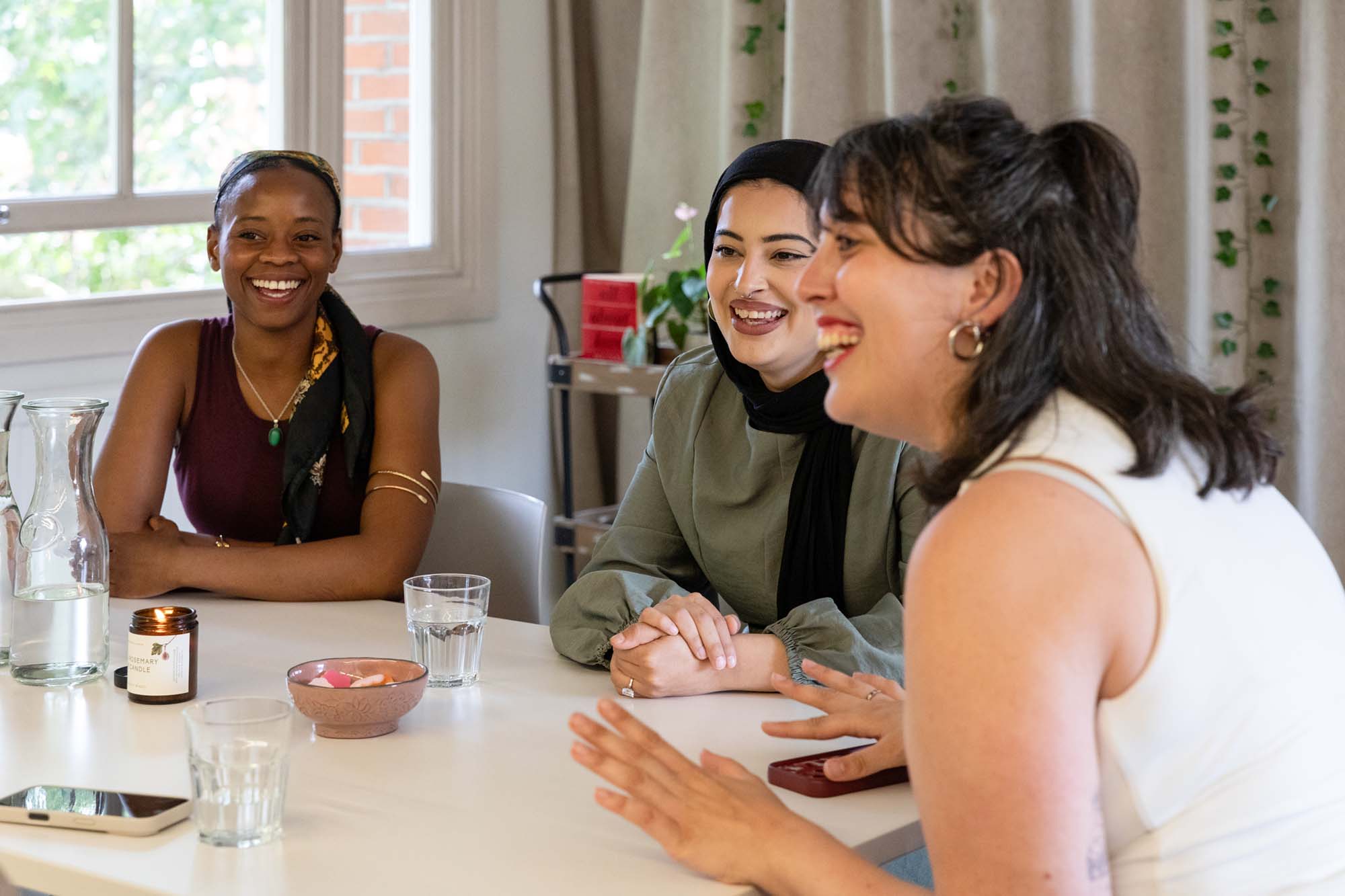 Left to right: Kudzai Sitima, Co-Director; Ilayda Yuce, Rachel Bothamley, Co-Director
“It turned out to be life-changing”
Ilayda Yuce, 25, first walked through Body & Soul’s doors in 2022, aged 20, after a referral from a university well-being team. She had grown up around complex mental health issues in her family, and experienced abuse, racism and health difficulties first-hand.
“As a child, I obviously didn’t really realise the impact of all that,” she says. “But then you get older and it catches up. For me, it was very much an experience of compounding factors.”
Ilayda sought out mental health support as a teenager but found it insufficient, and later disrupted by a move from her home in Liverpool to university in London. She was regularly self-harming and had made multiple suicide attempts when she tried, through the NHS, to access dialectical behaviour therapy, a form of structured talking therapy of the kind offered by Body & Soul.
“[The NHS] told me I could be eligible, but not while I’m in a period of crisis – I had to be one month free of self-harm,” she recalls. “I just thought, ‘I don’t know how I’m going to do that, because I need this therapy to get me there.’”
Still, with support from family and friends, and a herculean personal effort, Ilayda did what was asked, spending the month in the meantime conducting detailed research into different treatment options.
“Until I came here, I never had that sort of holistic care. Nobody ever asked me: what’s happened to you? What’s led to this? How can we address those things?”
“Then I went back to them and said, ‘I’ve done what you asked me; I’ve been doing all this research and I know this would help me; I’m still struggling, please’. But then, because I had been able to improve and not self-harm in a month, they told me I wasn’t eligible anymore. I no longer met the criteria. I’d fallen straight through a gap.”
When she first reached out to Body & Soul a few months later, Ilayda was “suicidal every day, and wondering how they were going to let me down – because all my other experiences beforehand were to be let down.”
But, she says now, “it turned out to be life-changing.”
“In my experience of healthcare systems, they’re not equipped to deal with the complexity of the human experience – it’s all based on treating symptoms,” she says. “Until I came here, I never had that sort of holistic care. Nobody ever asked me: what’s happened to you? What’s led to this? How can we address those things?”
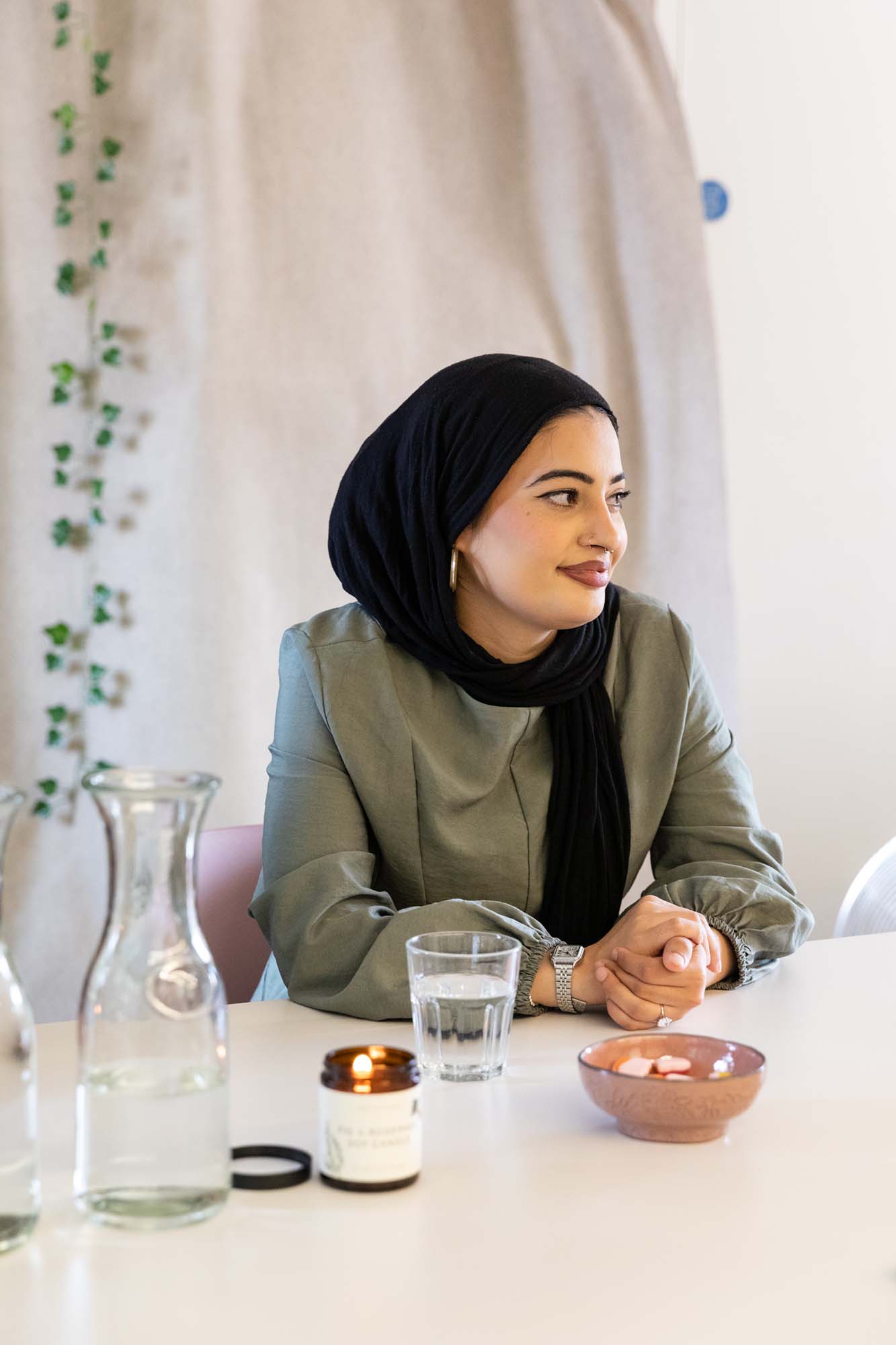 Ilayda Yuce
A life worth living
16-35 year-olds are the age group most at risk of suicidality in the UK. Every day an estimated 300-450 young people attempt suicide, the country’s leading cause of death for the age group.
It was against this backdrop that Body & Soul launched the You Are Not Alone (YANA) programme for 16-35 year-olds which has helped Ilayda and thousands of others. As co-director Katie Brown explains, YANA participants have experienced, on average, ten Adverse Childhood Experiences before the age of 18.
“What we see in these young adults, because of those experiences, is that they’re really struggling with their emotional regulation,” says Katie. “What that means is there’s all these young adults who are very well known by crisis teams and suicide phone lines, by GPs, by mental health services – but we’re not equipping them with the skills to get out of those cycles of crisis, or supporting them to believe they’re worthy of having a life worth living.”
YANA, on the other hand, consists first of a 24-week dialectical behaviour therapy (DBT) programme designed to stabilise its members. Unlike other programmes with restrictive eligibility, Body & Soul’s expertise and person-centred focus allows them to welcome and provide support at the point of crisis, while participants are actively self-harming and often have complex needs. The focus is on practical skills and tools including mindfulness, interpersonal effectiveness, and emotional regulation, with sessions delivered in groups – which, says Katie, “also does something quite powerful in giving people that message that you’re not alone; you’re not broken.”
“When I started coming to community nights regularly, that’s when I started to realise this wasn’t just something to improve six months of my life. This is a regular, ongoing thing; it’s not one and done and it’s not treating you as a patient, but as a human.”
After the 24 weeks, outcomes are strong: evidence shows suicide attempts and self-harm are reduced, and members have a more positive outlook on life. But rather than being discharged at that point, members instead join a lifelong graduate community with a focus on thriving and flourishing, rather than just surviving.
“That’s really unique in the mental health space,” Katie points out. “We don’t believe that after a six-month therapeutic intervention, you’ll just somehow magically remember to keep practicing those tools six months or six years later. We know as humans that it’s really hard to keep up a new skill unless you have a community around you that understands you and has similar goals.”
China Li finished her course of DBT and joined the YANA graduate community in 2022. In the four years since, she has stayed involved by attending events and taking on an internship with Body & Soul, working on the organisation’s outreach strategy. And she has become an advocate for the organisation and other young people like her, including inviting her local MP to a parliamentary reception hosted by the charity.
“I know when I finished the DBT that there was a big change in me – going from just not being bothered about life at all to actually having a gladness for being alive,” she says. “But I wasn’t immediately very engaged in the graduate community, and it was only after about a year that I became involved again because they were really persistent about reaching out to me.
“When I started coming to community nights regularly, that’s when I started to realise this wasn’t just something to improve six months of my life. This is a regular, ongoing thing; it’s not one and done and it’s not treating you as a patient, but as a human.”
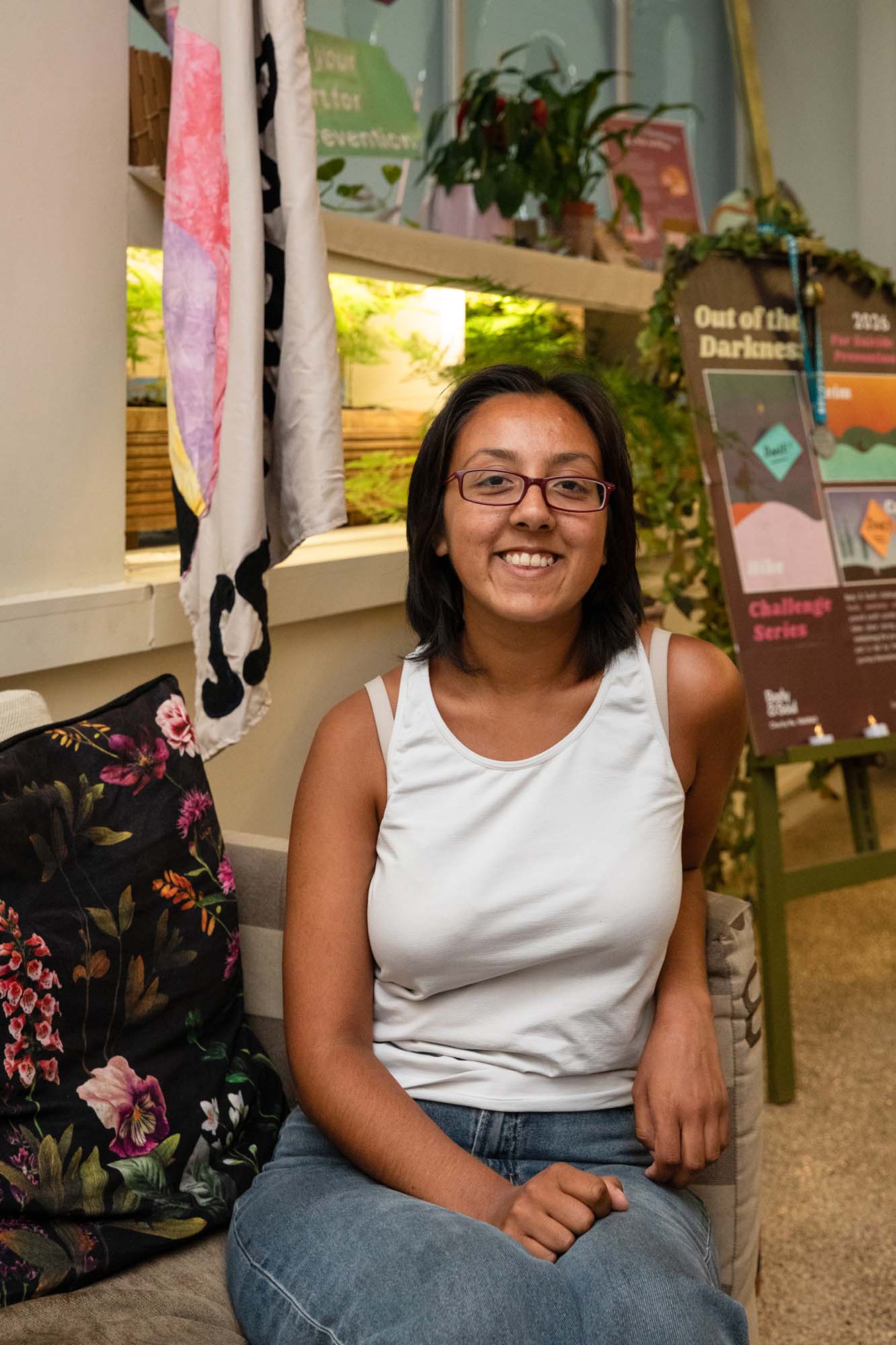 China Li
A greater need than ever
As the end of the working day draws closer at Body & Soul, the building seems only to be getting livelier. Members buzz around the space, chatting with each other and staff, and working on programme homework and tasks. The doorbell rings as a fresh set of volunteers begin to arrive for an induction event running this evening. The candles keep burning, filling the space with an inviting floral aroma.
This is nothing out of the ordinary at Body & Soul, who host regular member and community events, celebrations and fundraisers multiple nights a week. Soon it will be time to turn their attention to their upcoming milestone birthday: thirty years of Body & Soul.
“There have definitely been challenges along the way,” Kudzai Sitima emphasises. 2023 and 2024 were difficult for the charity sector, with funding opportunities dwindling. Body & Soul temporarily moved some services online and had to rethink their offerings.
“But the amazing thing was our community really galvanised,” Kudzai says with a smile. “People were writing letters to statutory services, to other funders, trusts, foundations. They developed a pop-up shop where our community were creating things to sell to the public; they took on all these fundraising challenges. Our model of having the community and members at the centre of our work is really what saved us in that time.”
It’s also true that the charity’s work has never been more important, with suicide rates continuing to increase and the societal factors underpinning them also, says Kudzai, on the rise. The majority of Body & Soul members are Black, Indigenous or of colour, including 56% of YANA members and 91% of members on the Life Beyond programme for displaced communities living with HIV.
“Our birthday will be a celebration of a charity turning thirty at a time when charities are sadly closing all around us,” says Kudzai. “But there’s also an irony that the very issues that began Body & Soul in the first place – systemic inequity; racism; the crumbling of health services – those issues that we’ve always dealt with are still here, and they’re amplified by that exponential rise in suicidality among young people.
“So we’re honoured to be able to give that support, and to be a community of members championing one another and all the thousands of people who’ve been involved over the years. But we still see that the need is there more than ever. The gap is there more than ever, and the fragmentation of people’s care is there more than ever.
That’s why we’ve been here for thirty years, and we know we need to be here for thirty more.”