A Well-Heeled Foundation
The Jimmy Choo Academy


London’s Jimmy Choo Academy is laying the groundwork to put the future of UK leather craft firmly in the luxury crosshairs.
Words by Shane Kurup
Photography by Paul Read
Along with Manolo Blahnik and Christian Louboutin, Jimmy Choo is a name that is sacrosanct to shoe lovers the world over. The Malaysian-born designer, who hails from Georgetown, Penang, is the archetype of a rags-to-riches fashion tale, which is increasingly rare in the conglomerate heavy industry of today.
After leaving Penang where he was raised in a family of shoemakers, Choo travelled to London to study at Cordwainers’ College and went on to build his namesake label, JIMMY CHOO, into a global brand with the help of co-founder, Tamara Mellon. While Choo relinquished the reins at the company in 2001 after selling his stake in the business, he remains active in the industry, running his own bespoke shoe business and a bridal and couture-focused brand, The Atelier. But most recently, Choo embarked on a new venture that is sure to be one of his greatest legacies.
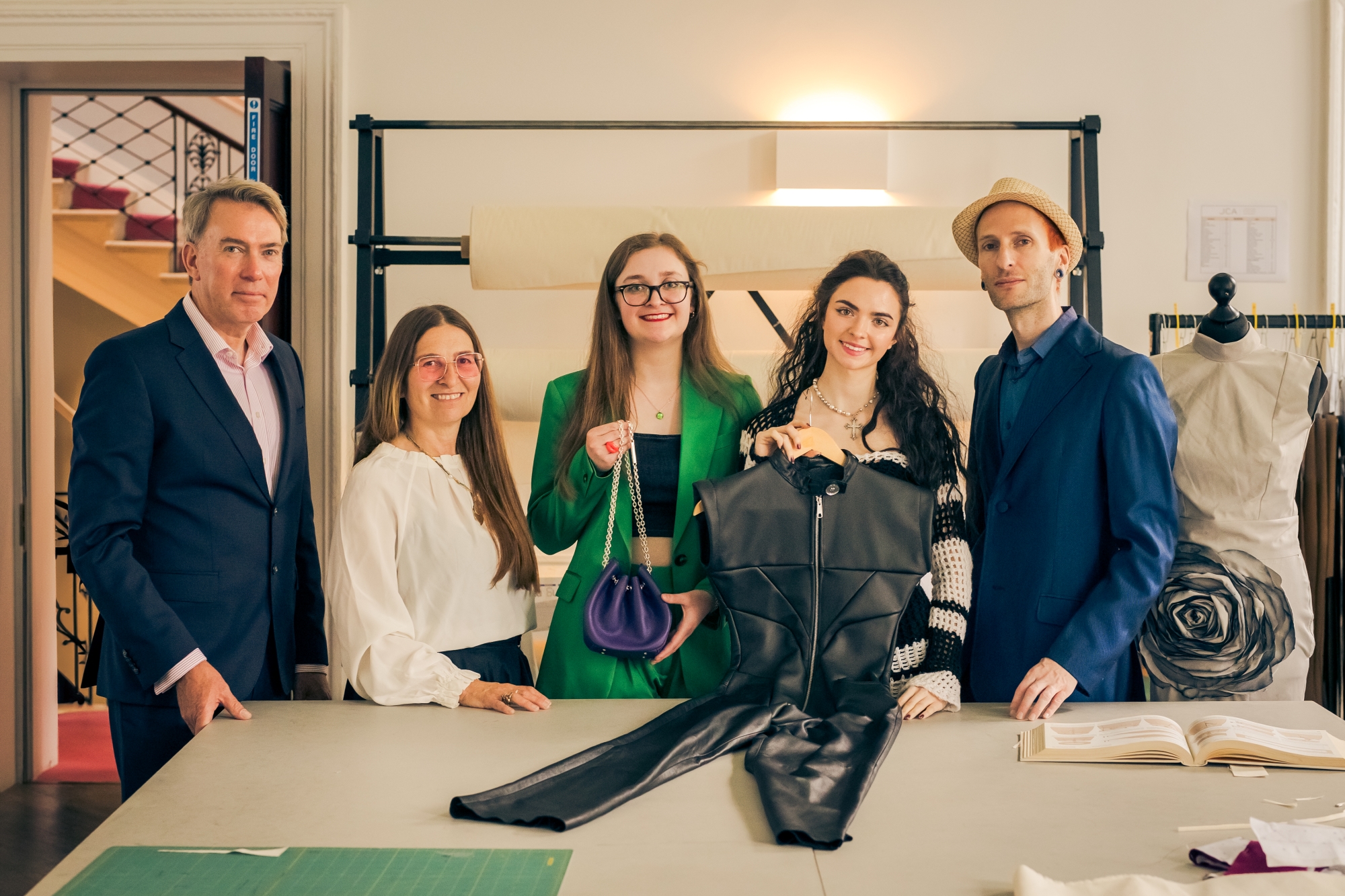
The Jimmy Choo Academy – or JCA for short – was founded by Choo and the management team in 2021, with the dual aim of equipping fashion and design students from a range of disciplines both with the craft knowledge needed for their trade and with the skills to do business in fashion. “Jimmy and the founding team really thought there was a niche in the market to get people ready to go into the industry. Over the years, Jimmy has been actively working as a mentor with young designers to get them industry ready. He was saying, ‘There’s so many design school students that come out with a degree, but they don’t know how to run a shop,’ explains Frederik Willems, Programme Leader, BA (Hons) Fashion Design, Branding and Entrepreneurship at JCA. “We also aim to offer every kind of industry incubation, so that students work on live projects, placements and have lots of workshops with people from the industry, to really understand it more and be ready for a quite tough, aggressive market,” he adds.
The school has two sites. Its main hub is at 20 Hanover Square in a handsome 18th century townhouse, which has workshops, cutting rooms and meeting and lecture spaces. Its second site at Boston Manor – adjacent to the historic West London stately home of the same name – is where the bulk of the leatherwork is done, with specialist machinery and tools for working hides.
While more bijou than long-established fashion schools, JCA offers a “boutique education”, which focuses on the individual. “It’s very familial here – we’re very small and nurturing. What’s very different is that students have much more direct contact with the tutors,” says Rosa Fior, Associate Lecturer and leather champion at JCA, who has worked as a shoe and leather accessories designer for over 30 years and runs her own label, Antigone.
 Jennifer Duffy


One of the founding principles of JCA is also to promote sustainability in fashion – a hot topic right now – and Fior and the team are keen to myth-bust many of the misconceptions that surround genuine leather at a time when numerous brands are switching to synthetic ‘vegan’ leathers, made from polymers. “My own brand is rooted in sustainability, and I’m passionate about moving away from plastics that we all know aren’t good for anybody. I talk to the students about the degradation of synthetic materials and how that creates micro plastics, and they get quite an intense introduction; not only about leather itself, but where leather comes from, how we use it and the history of leather, footwear, and handbags,” says Fior. “The projects are built around sustainability.”
Despite the fact that leather has been pivotal to Choo’s career success, it didn’t initially play a starring role at JCA, but Fior is aiming to change that. “Up to now, there’s been more focus on ready to wear, but with my background and interest in the material, I’m really keen to push the leather and accessory side,” she says. This year Fior secured an allocation from the Leathersellers’ Surplus Leather Project, which is invaluable for furthering opportunities for students to work the material, as it’s often prohibitively expensive on a student budget– particularly when it comes to sampling before the main showpiece. “I can be relaxed about not having to give students a tiny piece. We were given whole hides, so, it’s absolutely perfect for them to experiment with – and I actively encourage them to,” says Fior. “They might be more comfortable with calico and other fabrics, but I can say to them, have you thought about making it in leather, or making a leather trim?”
For Choo himself, the school will become a love letter to the material that made his name. “Leather has always been a very special material to me. From the earliest days of my career, it offered me a way to bring elegance and structure to my designs – I was trained as a shoemaker and working with leather taught me patience, precision, and respect for the material,” he explains. “At JCA we’re trying to create a space where the value of craftsmanship is truly understood and respected. Leathercraft is now a big part of that. We want students not just to design, but to work with their hands and understand the material itself. It’s important to keep traditional skills alive, while also being open to new ideas and more sustainable ways of working,” he adds.
“…They get quite an intense introduction; not only about leather itself, but where leather comes from, how we use it and the history of leather, footwear, and handbags…”
For Choo himself, the school will become a love letter to the material that made his name. “Leather has always been a very special material to me. From the earliest days of my career, it offered me a way to bring elegance and structure to my designs – I was trained as a shoemaker and working with leather taught me patience, precision, and respect for the material,” he explains. “At JCA we’re trying to create a space where the value of craftsmanship is truly understood and respected. Leathercraft is now a big part of that. We want students not just to design, but to work with their hands and understand the material itself. It’s important to keep traditional skills alive, while also being open to new ideas and more sustainable ways of working,” he adds.
One of this year’s JCA graduates who has benefitted from the Surplus donation is Jennifer Duffy, whose collection, called Amazonia, consists of colour co-ordinated evening dresses and leather handbags in poppy jewel-tone green and purple that draw inspiration from the flora and fauna of the Amazon basin. “It’s provided me with supreme quality leather and the opportunity to work with different types of leather. [The surplus leather] had a much lighter finish, so was a lot easier to work with when I was stitching it,” says Duffy, whose collection has been shortlisted for this year’s ‘Real Leather. Stay Different.’ design competition. “I’d like to continue developing bags for manufacture to an even higher standard. What I’ve learned here about different leathers and finishing techniques can really be used to create different aesthetics and construction styles.”
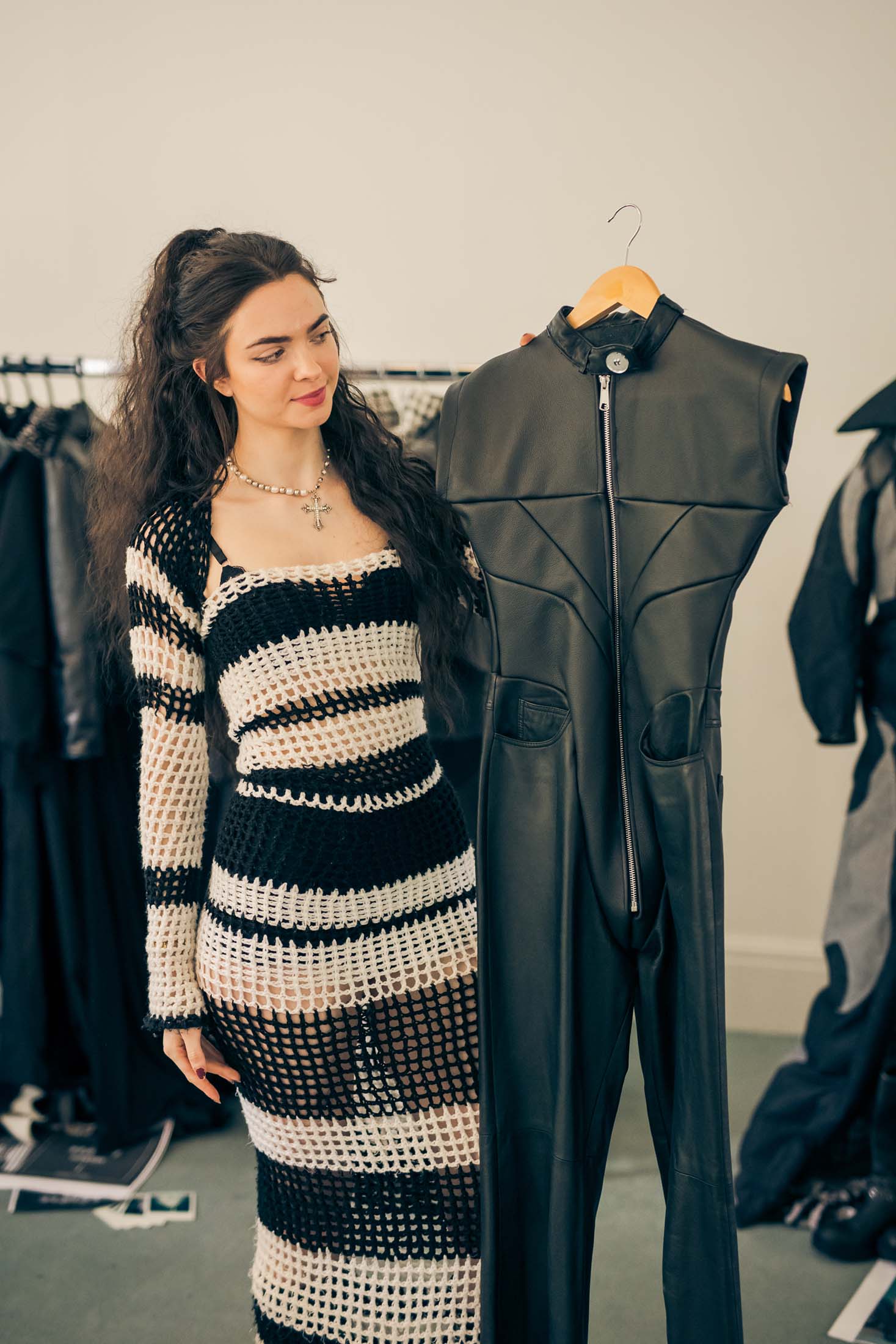 Olivia Parkinson is a graduate of the Jimmy Choo Academy and was awarded Collection of the
Year in 2025
Olivia Parkinson is a graduate of the Jimmy Choo Academy and was awarded Collection of the
Year in 2025
The school has also received a grant from The Leathersellers’ Foundation, which has given Fior the opportunity to run specialist classes that are set to debut later this year. “We’re going to run leather masterclasses in design, manufacturing and pattern cutting for footwear and accessories. And if I can stretch the budget, I’d also like to do a masterclass for leather garments. You have to think differently about how you use leather for these different disciplines – and what types – as each piece is unique,” she explains. Choo, of course, is elated by this recognition for his namesake design school. “The support from the Leathersellers’ grant and the Surplus Leather Project is a real gift to our students. It gives them access to high-quality leather they might not otherwise have the chance to work with. This kind of support opens up new possibilities for learning and helps us continue passing down traditional skills in a meaningful, hands-on way,” observes Choo.
For the masterclasses Fior is looking to bring in high-profile names with practical experience and success in the field, including Sevda Hussein, founder of luxury leather goods brand Sevda London, William Church, owner of historic shoemaker Cheaney and Jonathan Whiteman of leather supplier Robelko. “The idea is to bring people from industry, both from a design perspective, but also from a manufacturing perspective, into the college and conduct site visits to expose the students to that,” says Fior. “I think very often designers are visual, so if they can see it happening, then they take that and run with it.”
Although it’s the first year that the Academy has received support from the Surplus Leather Project, the JCA team has big plans for the future and wants to grow opportunities for leather design and craft at the college. “We realised the national threat to artisanal leather-making and manufacturing with production moving outside of the UK and see other institutions closing their accessory or leather courses. We want to make sure that we’re not disenfranchising a whole potential new generation”, explains Stefán A.R. Orschel-Read, Director of Programmes at JCA.
While JCA might be a relatively new kid on the block, given that Choo’s career success is directly tied to leather, and given his zeal for supporting new talent, its future as a UK hub of leather design and craft seems the perfect fit.
READ MORE

Dream Maker
In her sleep, Frances Pinnock finds inspiration for her figurative leather sculptures.

Leathersellers’ Scholarships at Colfe's School
Celebrating the long-term success of the Leathersellers’ Scholarships at Colfe’s School.

Fashioning History
For an inspired project at Leicester’s De Montfort University, students of “Artifacts Live” are drawing on the lessons of historic leathercraft to create the designs of the future.