Excess Strategy
The Surplus Leather Project


The Leathersellers’ Surplus Leather Project is opening the door of opportunity for the next generation of leather designers.
Words by Shane Kurup
Photography by Paul Read
In our more eco-conscious times, manufacturers are having to think carefully about their consumption of natural resources. The use of ‘dead stock’ fabrics – previous seasons’ materials, left gathering dust in designers’ studios and warehouses – has seen growing popularity, with even high-end fashion houses promoting the use of upcycled and surplus materials.
Leather, as a by-product of the meat industry, is a natural fit for this heightened sense of awareness. From a waste material, tanners are able to create a durable, versatile material with far-reaching applications. As with any production chain there remain redundant samples, off cuts, seconds and dead stock at tanneries, workshops and factories producing goods from leather that would otherwise be discarded. Recognising the value of utilising this high quality material – particularly when it comes to the promotion and development of skills – the Leathersellers launched the Surplus Leather Project in 2022.
The initiative accepts donations of leather no longer of commercial use to tanneries, factories and studios and distributes them to universities for use on their design courses. Some students might be looking to experiment with unfamiliar leather-working techniques, but could have been put off by the high cost of the material. Others might not have thought of working with leather, but having it laid on the table provides the opportunity to broaden their material experience. Educating the students about where leather comes from, its versatility and sustainable advantage over synthetic alternatives, is pivotal to the initiative.
“We started this project because we want to give tutors and students access to leather, and allow them to learn about the possibilities of using it and explore a range of techniques,” explains Natalia Rymaszewska, Head of Grants at The Leathersellers’ Foundation. “For the first two years we had six initial education partners sharing this with their students, and now there’s 18. The enthusiasm from tutors and students alike is fuelling the growth of the programme and expansion of our partnerships, who we brought together later in the year to share experiences and strengthen connections.”
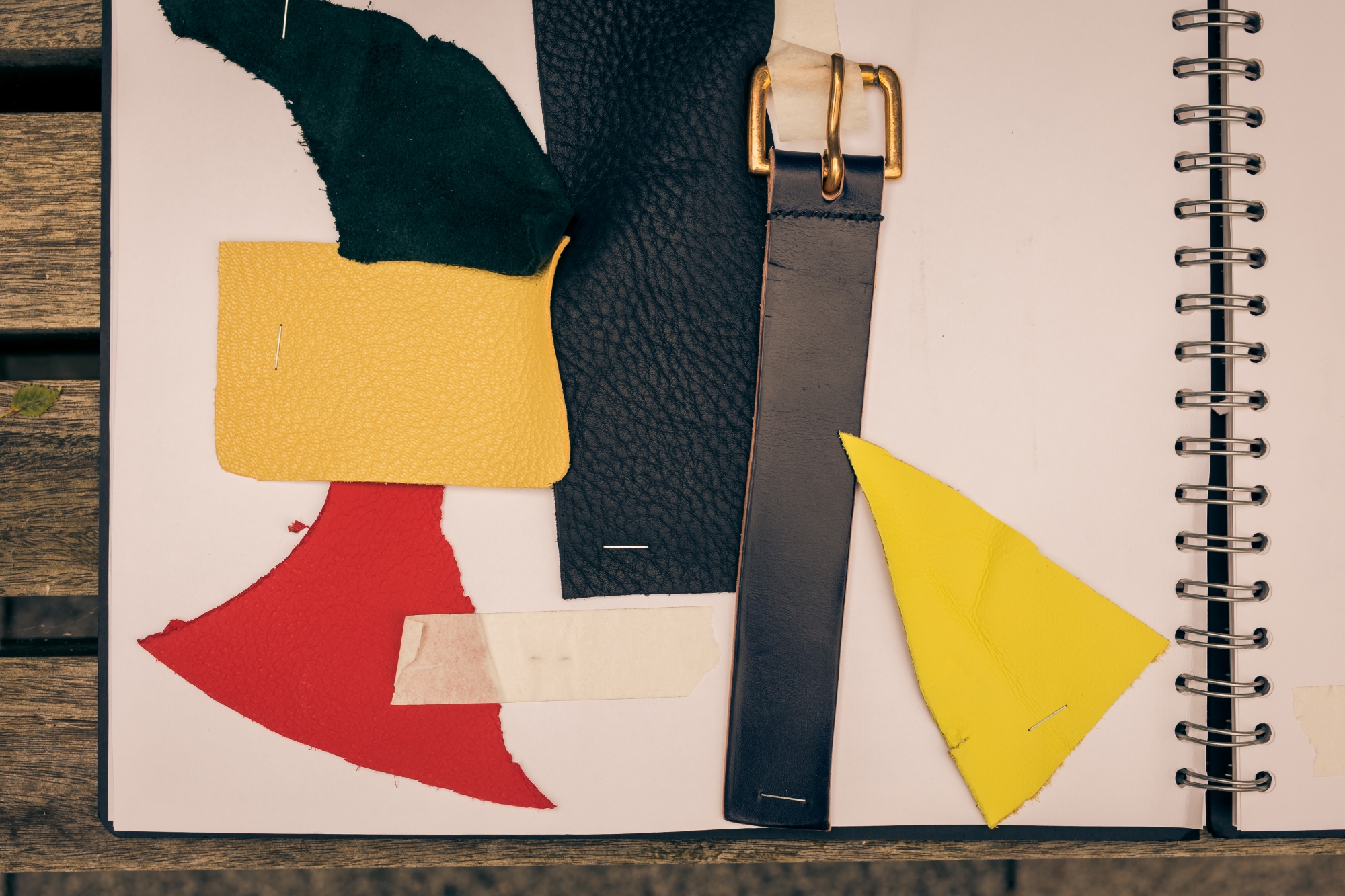
Abbey England, a family-run leather wholesaler established in 1982 that supplies all sectors of leather manufacturing from saddlers to fashion, interior design and film production, was enlisted to handle the logistics of the project, acting as the agent between the donor tanneries and the recipient institutions by storing, shipping and distributing the hides. Scottish Leather Group, C.F. Stead, Sedgwick & Co, Tusting and Waltham Tannery – all storied names in the industry – are the main donors of surplus hides intended for use in upholstery, fashion and cordwaining. “It was important to get at least 13 hides to each university – we felt that it was a good amount to be useful,”says Ishbel Watson, Marketing Manager of Abbey England.
“The first time we piloted the scheme we received a range of leathers, including both soft and hard types. While the harder leathers are ideal for applications like furniture and leather accessories, the softer leathers are often better suited to fashion projects students are working on. This time we requested a selection with lighter leathers, which has made a big difference in terms of meeting the needs of both fashion and furniture students. We are incredibly grateful for all the contributions donated by our partners, and no piece goes to waste. In 2024–2025 we ended up distributing 260 hides across 18 universities, which is fantastic.”
Educating the students about where leather comes from, its versatility and sustainable advantage over synthetic alternatives, is pivotal to the initiative.
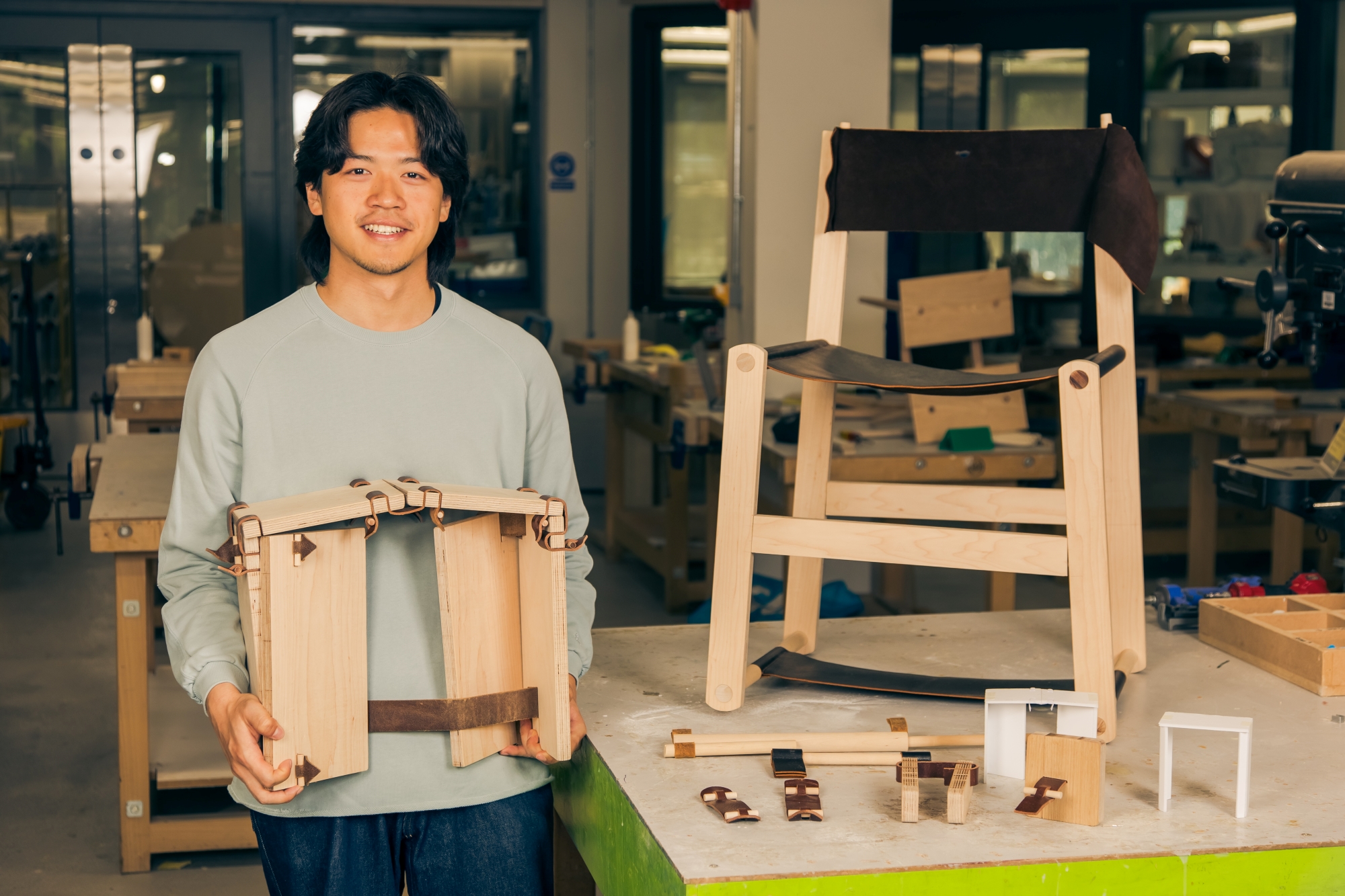 Kenji Chang, Kingston School of art MA student
One of the institutions to benefit from the project this year is Kingston School of Art, Kingston University, situated in the picturesque south-west London borough. The long established school runs courses across all creative disciplines, from fashion and furniture design to fine art, creative writing and architecture.
For this year’s Product & Furniture Design MA at Kingston, students were briefed to explore a single material, process or technology to inspire design innovation and consider renewable, surplus and waste materials in the process. A range of materials were offered, including leather from the Surplus Leather Project. Out of 28 students, 15 chose to work with leather in some form. “The students were looking at the material from animal rearing all the way through to design applications,” explains Course Leader David Weatherhead, whose design career includes working with The Conran Shop, Ettinger and MADE.com. “The design approaches of the cohort are varied, and conversations about making extend to the ethics of leather – the lifecycle of the material, repair and upgrade and whether it’s going back into the ground. Surplus is a big part of this.”
Students also benefited from the mentorship of veteran leather goods designer and Leatherseller Bill Amberg, who provided support to the students through design critique, visits to his leatherworking studio and donations of additional leather to the students. Despite his vast experience in the field, Amberg was impressed by the ingenuity of what came off of the students’ workbenches as a result of the access to the surplus leather. “It’s so exciting to see how they’ve interpreted it in their own unique ways. One student has done some really interesting scoring and boiling of leather, which was an accidental product of innovation, which is cool because I like the idea that from accidental experiments, something evolves into a product,” observes Amberg. “There’s also another student knitting with leather, and then heating and wet moulding it. They’re mashing up techniques and something comes of it.”
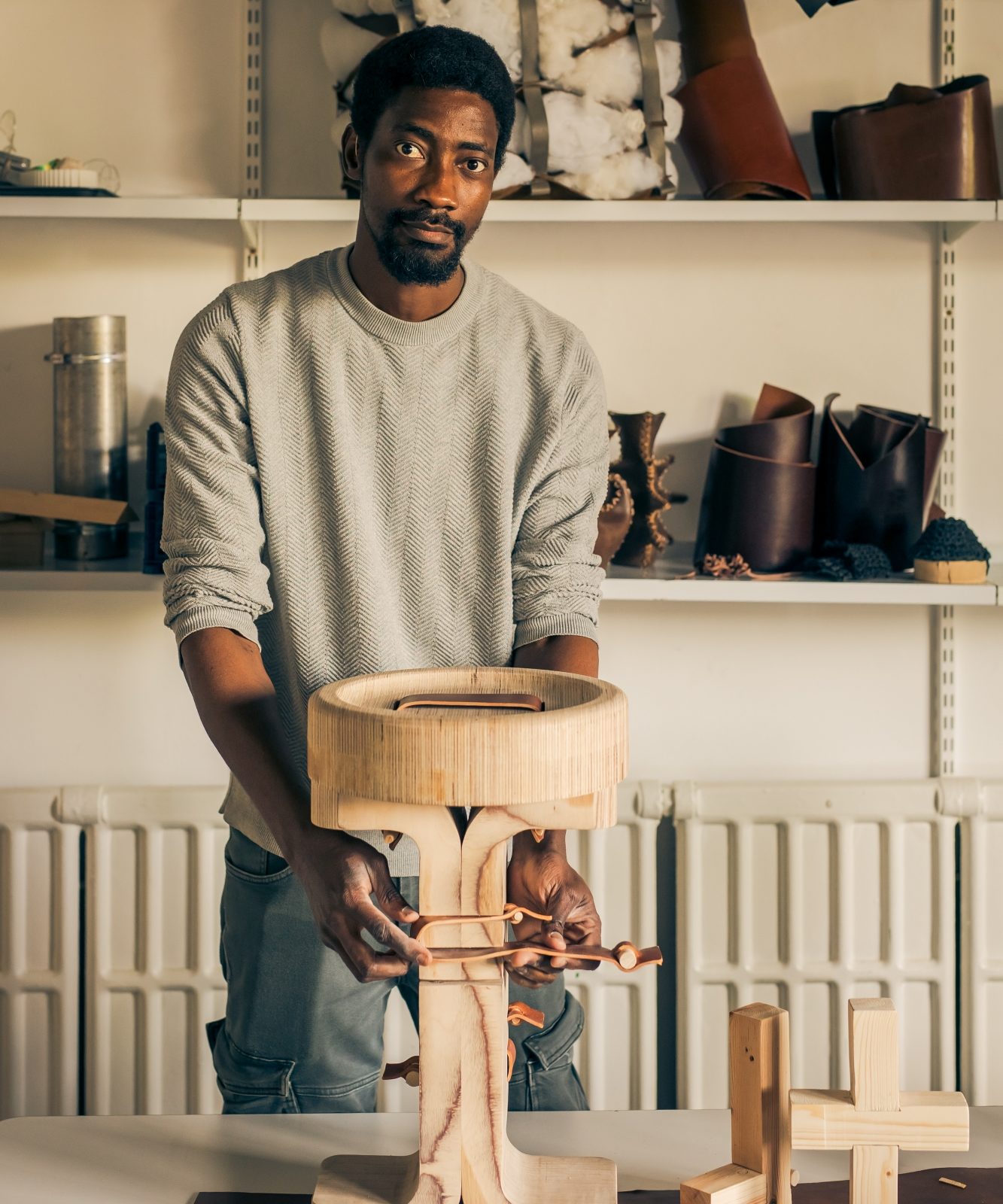 Gabriel Oladapo, Kingston School of Art MA student
For Amberg, having access to this donated leather has fired the creativity and opened the door of opportunity for the students. “Any nervousness with young designers is around cost and then availability of materials. If they had to buy it their ability to experiment wouldn’t be as free. If you can take that out of the equation, you release them to be more expressive,” he explains. “I was encouraging them from the beginning to make – to get it on the bench – understand the material more, play with it and a form will start to evolve from it”. Access to leather has positively impacted module delivery and supported a circular approach to working and thinking about the material. “In the past, when students have used leather, it’s been less experimental and expansive, and they are learning how their work connects to a UK-based industry,” says Weatherhead.
Ting Wan Hsu, a student from Taiwan with a background in material science engineering, enrolled on the MA course to explore furniture design. Hsu didn’t think about working with leather initially, but was inspired by Amberg’s use of it. Hsu used vegetable-tanned leather and techniques borrowed from metal workshops, like bead rolling, to shape sculptural seats inspired by human gestures and opera performance. “I never really had a chance to get to work with this material, which is why when we got the donation, I chose it. It opened up my interest in leather,” says Hsu. “It made me understand how precious this material is and the value of it. It made me think about the target audience – who I’m designing for.” In the future, Hsu hopes to apply her newfound leatherworking skills to design table objects, building a brand that creates artistic, functional products.
Having access to this donated leather has fired the creativity and opened the door of opportunity for the students.
Like Hsu, Kam Liang, who studied industrial design in Guangzhou, China, hadn’t worked with leather before arriving at Kingston, but the opportunity of getting hands-on with this material was invaluable for learning about leather and its qualities. Liang created a multi-tiered leather sitting structure, supported by leather straps and a wool filling. “It made me think, why couldn’t I utilise the flexibility and tensile strength of leather – which is different from other materials – to create my design?” says Liang. “I chose to work with suede because it’s flexible and soft; I really wanted to show these natural qualities instead of using a stiffer leather to create shape.”
Having the surplus leather to experiment with was also beneficial to Joe Jackson, who previously studied product design in Manchester before enrolling at Kingston. For the MA course Jackson made a range of sculptural leather vessels, using hot-water moulding and an innovative scoring technique. “It got me thinking about ways I could create form, and I sort of accidentally fell upon this scoring of lines to inform the shape of objects,” explains Jackson. “The material reacted naturally around it – it was about embracing its qualities to create sculptural designs.”
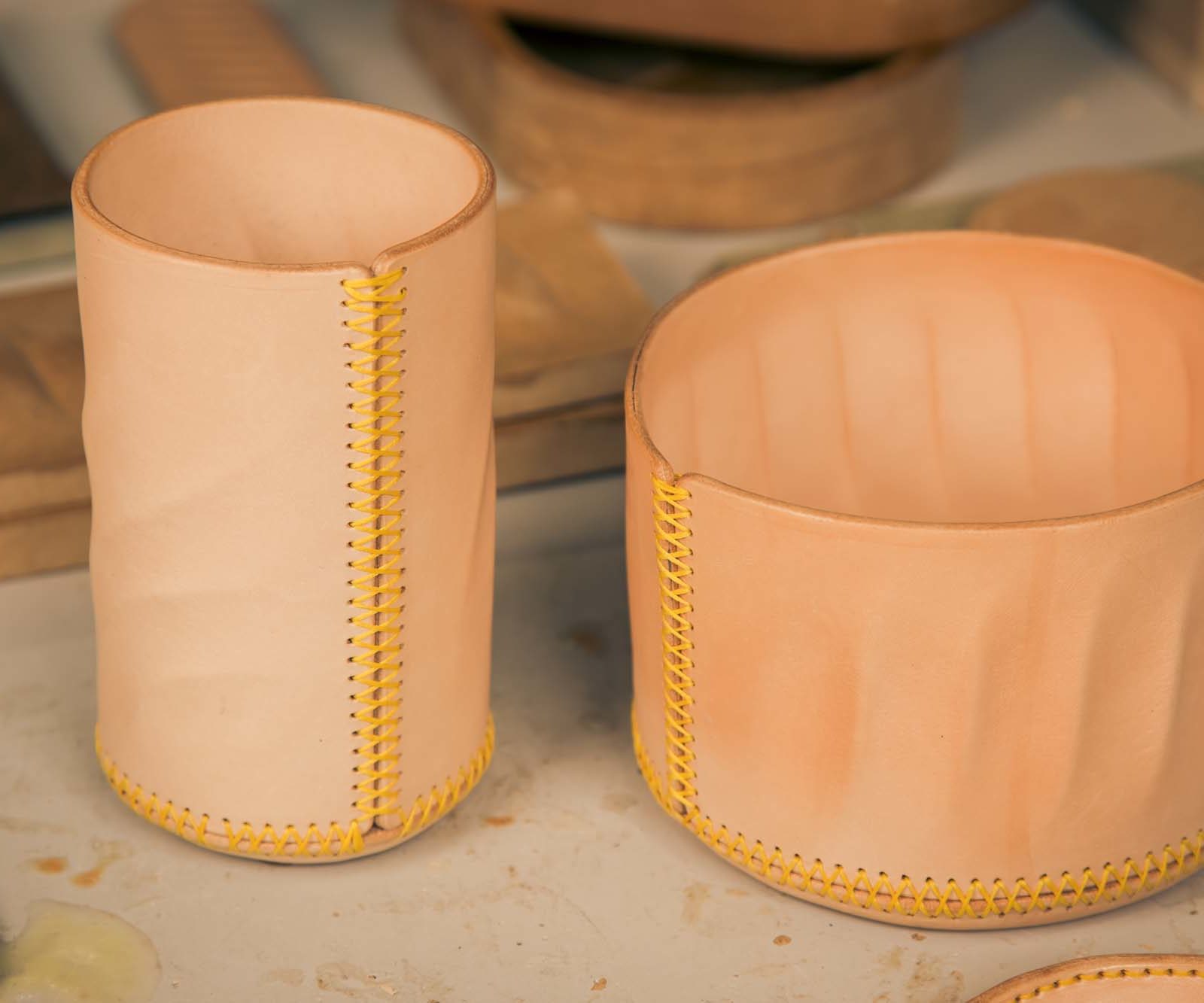
Owen Li, originally from Fujian, China, majored in industrial design and worked in product design for five years before enrolling on the Kingston MA course to bolster his hands-on production skills. Li was drawn to leather to make a collection of small household products, using a wet-moulding technique to give objects like pencil pots and vide-poches a honeycomb texture and ripple-like finish akin to the pattern formed by waves on a sandy beach. “Previously I didn’t have a chance to use leather to design products, because it’s mostly used in clothes or furniture, so I thought designing and making smaller scale products from it would be very interesting,” explains Li. “Because the donated leather was free, I had the chance to experiment much more with prototypes to figure out my design direction.”
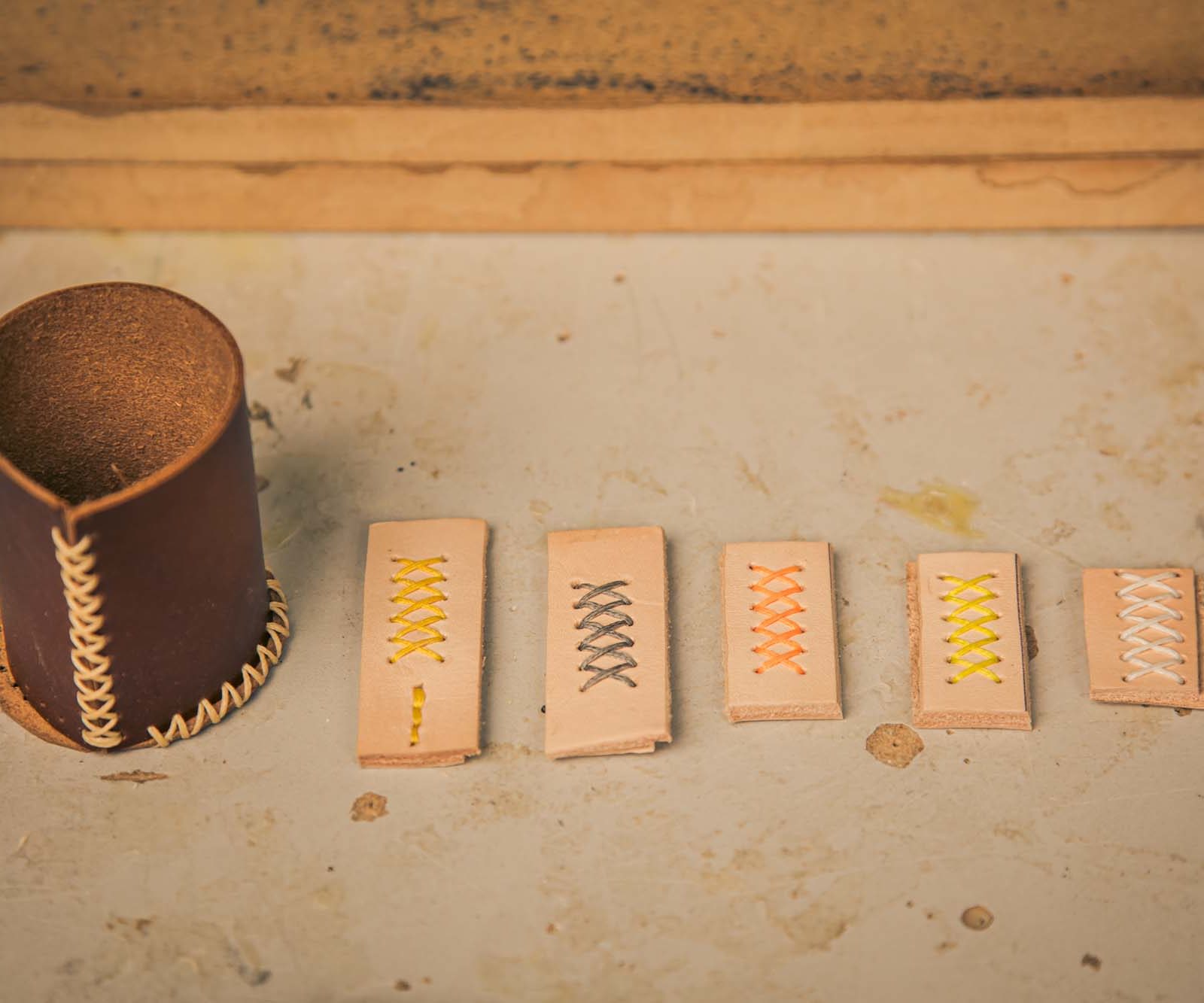 Work by Owen Li, Kingston School of Art MA student
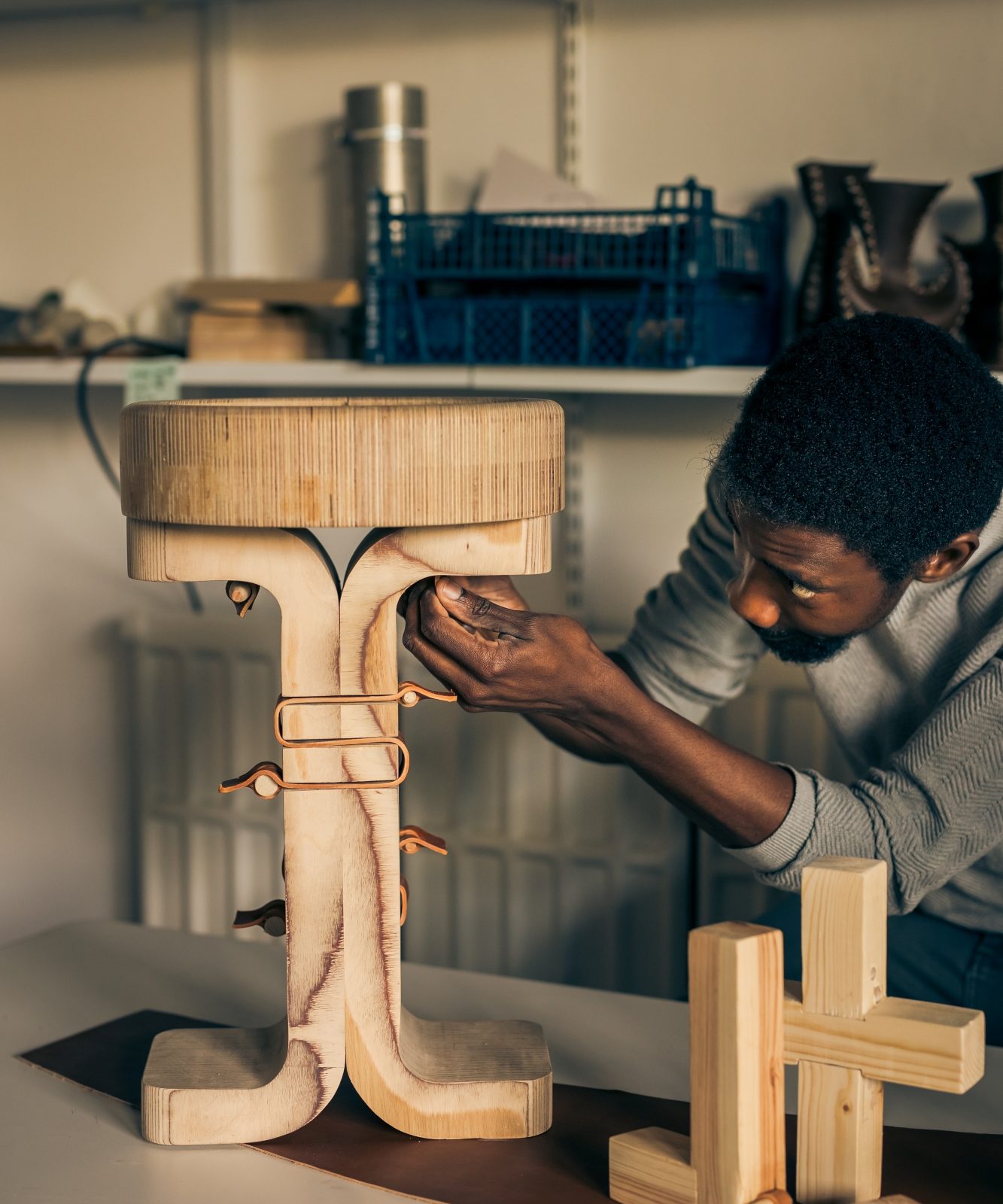
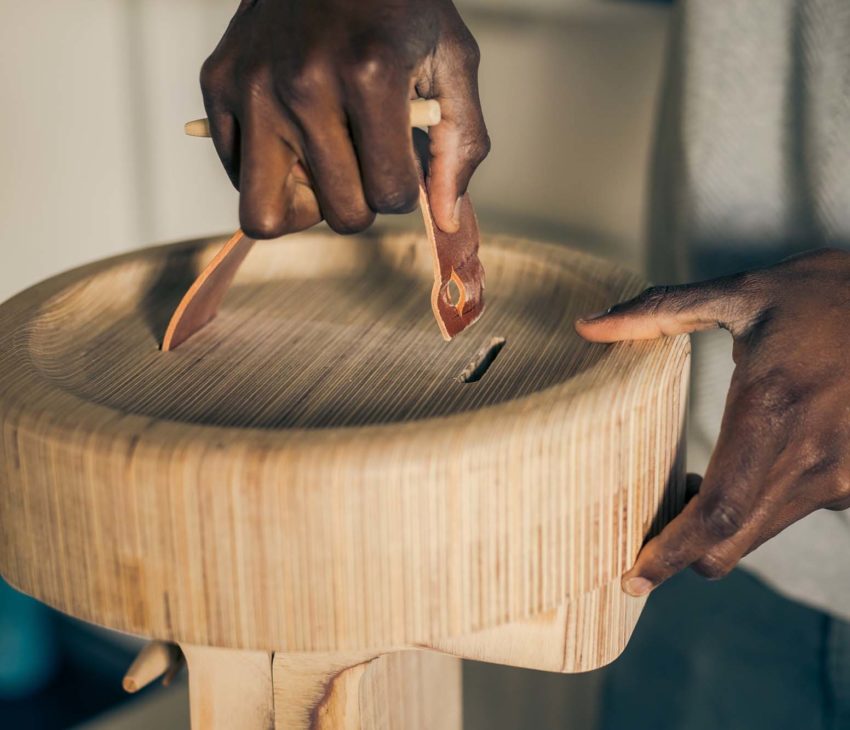
Perhaps one of the most ingenious uses of leather as a component was at the hands of Kenji Chang, from New Taipei, who designed an articulated folding chair and stool inspired by traditional woodworking techniques with hinges made of leather. “I think furniture nowadays uses too much hardware and I think that breaks the beauty. I thought if I could replace the screws with leather, I would add more quality to the furniture. The donated leather gave me the opportunity to get to know the different characteristics and functions of leather and develop my project,” he says.
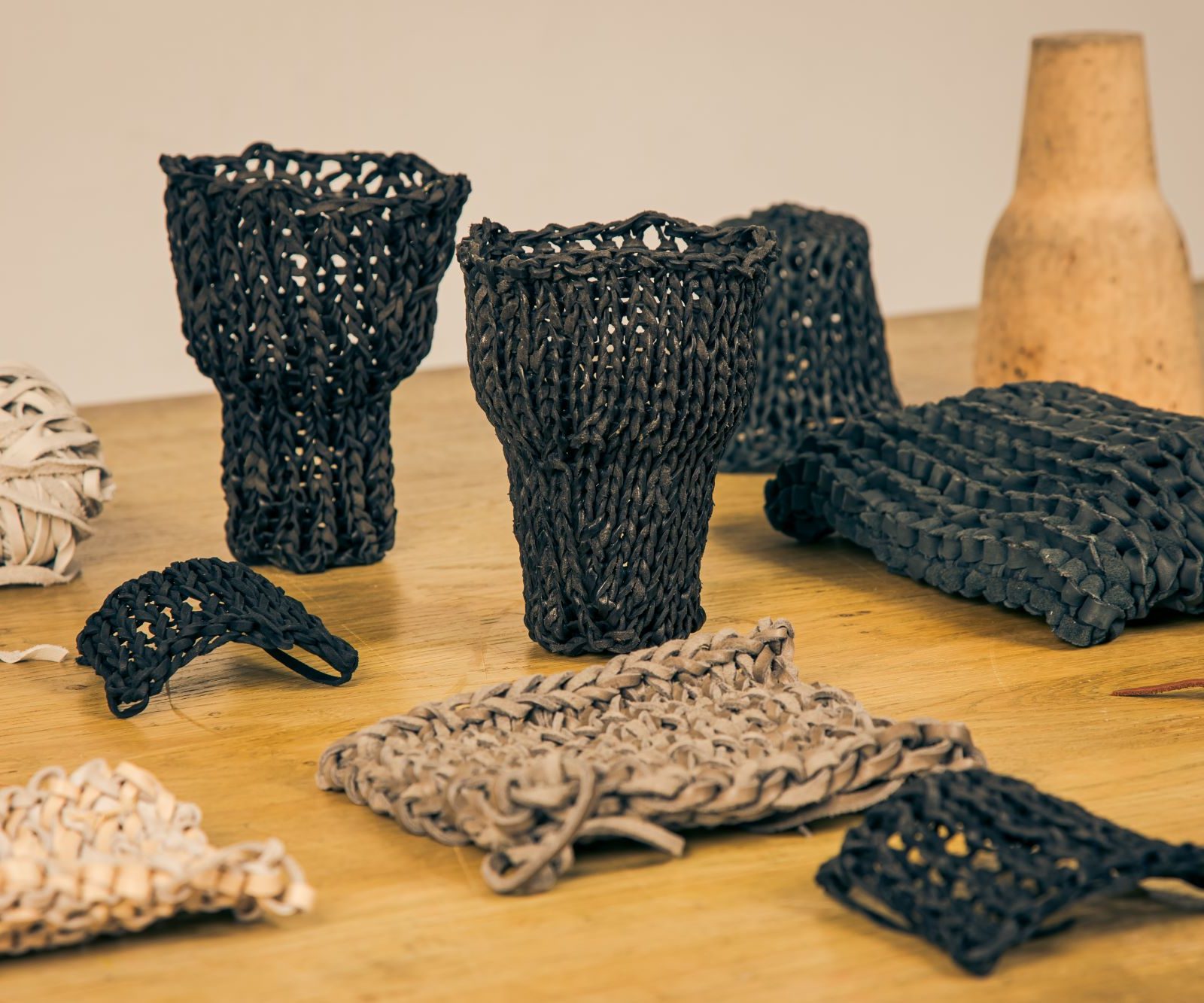
For Aleks Cwikla, a Goldsmiths design graduate from Poland, her decision to work with leather came after gaining more of an understanding about the provenance and ethics of leather, and overcoming her personal reservations about the material. “Although I’ve always found leather a beautiful material, I was a bit conflicted whether to work with it, being a vegetarian,” says Cwikla, who created decorative objects by knitting and wet-moulding strips of vegetable-tanned leather. “Through my research, I found out how many hides go to waste from meat production and it actually pushed me to be a big advocate of leather – as long as the meat industry exists, why waste it?”
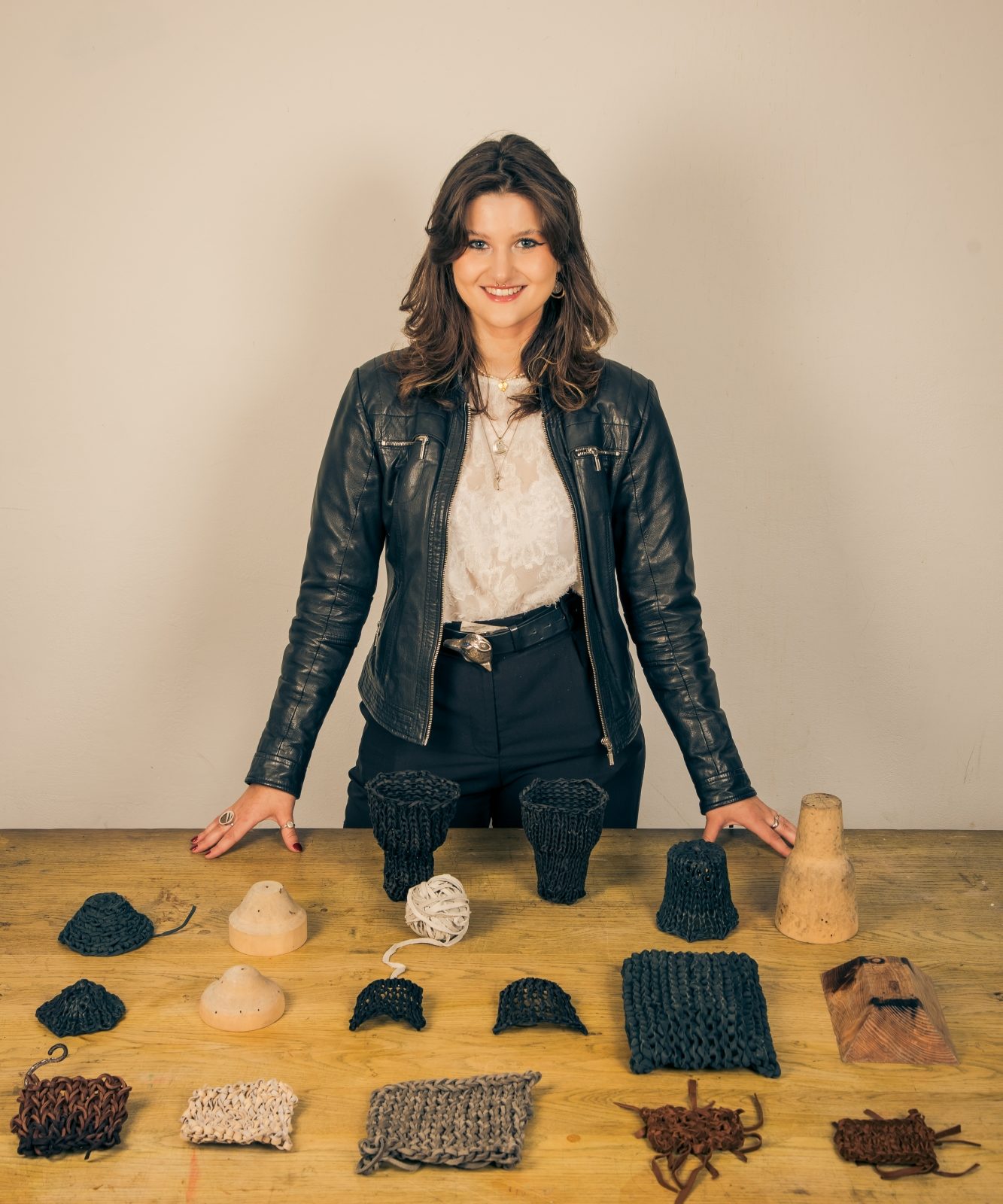 Aleks Cwikla, Kingston School of Art MA student
“The price tag often blocks students from using leather, but it’s also not knowing the right kind to get.”
Birmingham City University – another of the UK’s premier creative hubs – also benefitted from this year’s Surplus Leather allocation, some of which found its way to a series of specialist leather working masterclasses that form part of the Fashion Design BA.
The masterclasses aim to bridge the gap between traditional skills and commercial design, providing students with access to leather and hands-on experience of crafting techniques to foster a deeper understanding of its properties and sustainability. The classes were the brainchild of Senior Lecturer Joseph Turvey – a seasoned menswear designer who established his own namesake label – and Visiting Lecturer and leather goods designer Lauren Broxton, who was raised in nearby Walsall, a place with a rich history of leather crafting stretching back four centuries. “The price tag often blocks students from using leather, but it’s also not knowing the right kind to get. With the Surplus donation we could take it to the Technology Office, get it under the microscope to look at its properties, identify it and understand what each one would do [to use it effectively],” explains Broxton, who also had the support of leather designer and Leatherseller Yusuf Osman with planning the masterclass curriculum and delivering lectures. “Gaining that understanding of the processes and how it got there has made the students actually respect it more,” she adds.
“We started this course because many students outside of London would never have the chance to be exposed to these qualities and the level of finishing finesse of luxury leather. It’s about what it means to make something with purpose and intention for that,” says Turvey. ‘The New Heritage’, the brief given to students, encouraged them to explore their own background and identity through their leatherwork.
For Kasey Cornwell the resilience of leather fitted the concept of the brief by expressing her trans identity and experience. “I wanted to make something that shows the strength of the community, which is why I chose to make armour,” she explains of her project called ‘Borrowed Heritage’. “Leather is tough. It deals with what you put against it. You actively have to hammer down the seams – I’ve always felt a bit hammered down. I relate to the idea that no matter how much you batter it, something beautiful can come out of it.”
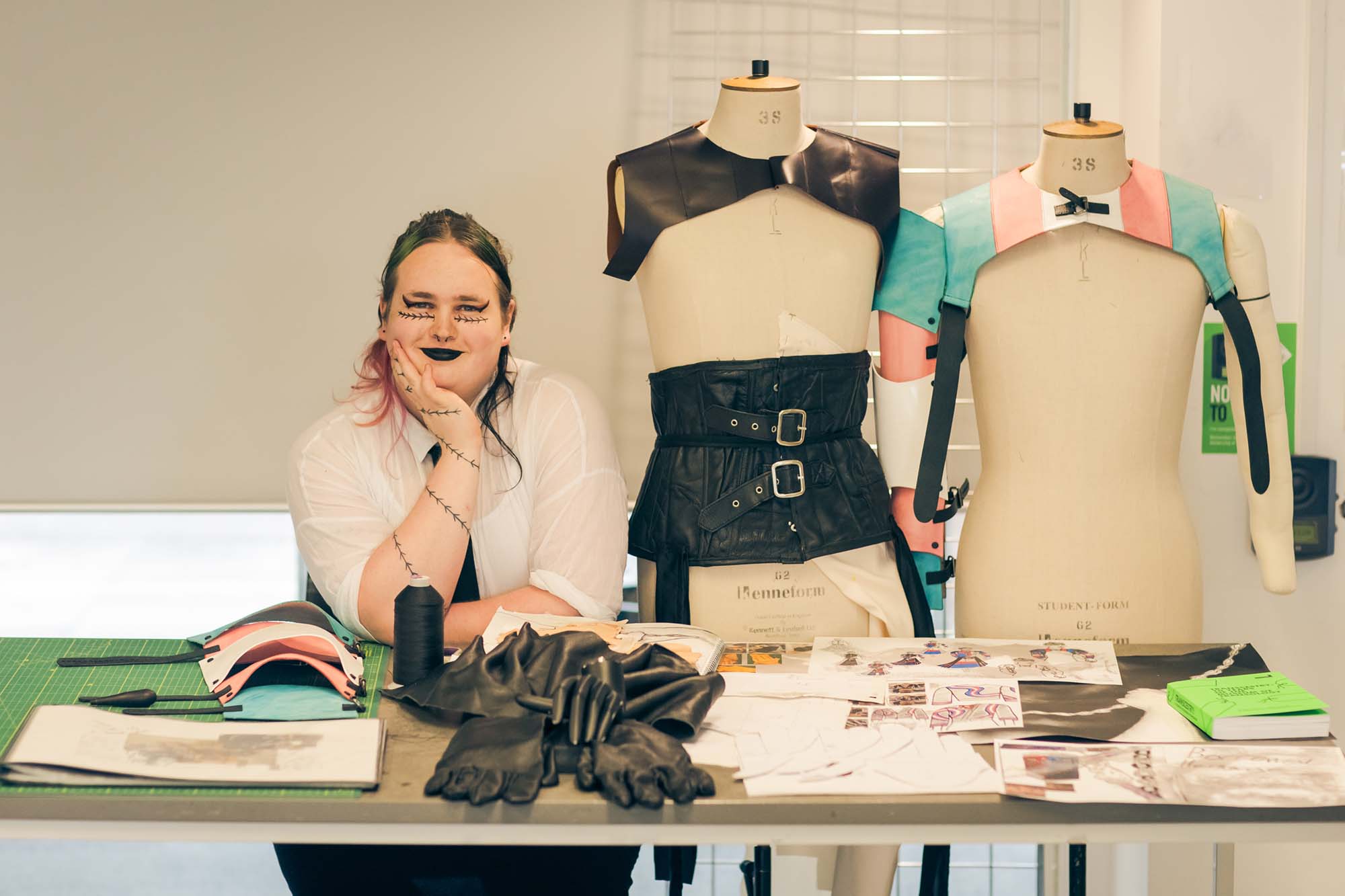 Kasey Cornwell, Birmingham City University student
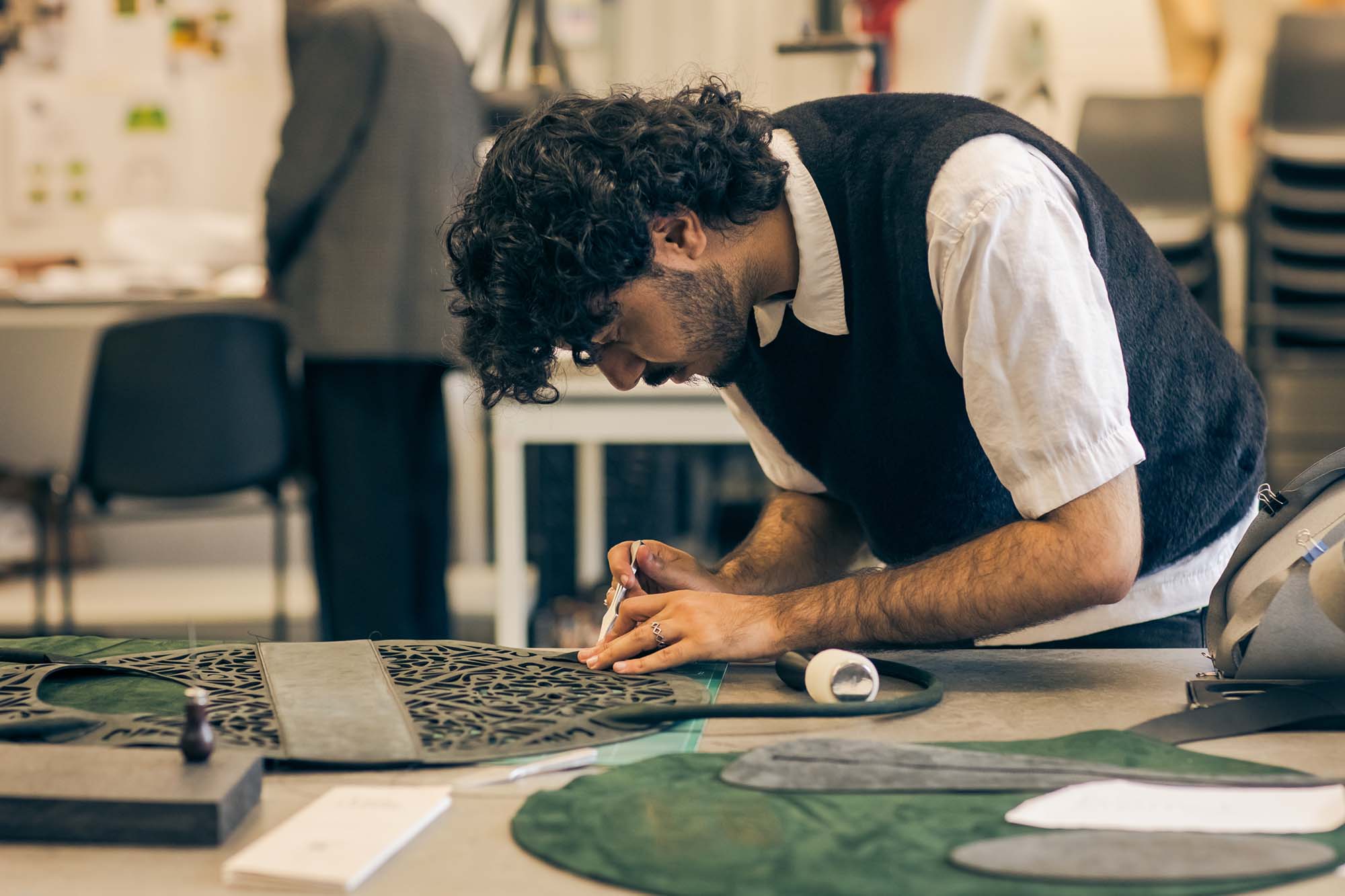
Like Broxton, Ahmed Khider hails from the leather town of Walsall, and it was his roots there that made him return to working with the material after studying psychology and biology. Khider’s exceptional collection of vegetable-tanned leather goods is crafted using laser cutting to create stencil like perforations that reference traditional Arabic art. “I love the luxurious feel of leather – particularly suede and nubuck. I like how precise you have to be with it and it works well with laser-cutting, which is also very precise,” says Khider, who plans to use his skills to launch his own luxury leather goods brand informed by artisanal techniques. “Having access to this material and the specialist equipment has been a big opportunity.”
Rohan Scott, from Wolverhampton, studied textiles and fine art before enrolling on the masterclass at BCU. His fascination with garment draping in Renaissance art informs the aesthetic of his jackets and corsets, while his leather bags feature braided handles in a reference to Scott’s Jamaican heritage. “I’ve always been drawn to the way leather looks and the way it ages and the fact that you can do so many things with it, by mixing up different weights, processes and types. I wanted to see how I could play around and manipulate it. The course taught me to be more explorative,” says Scott, who used a combination of Japanese split bovine leather, lambskin and vegetable-tanned leather from the Surplus donation to achieve the draped and sculptural forms in his pieces.
Evolutionary inheritance was the stimulus for Sean Pajillero’s collection of architectural bags, which take inspiration from biped evolution and the movement of the human body in dance and sport. “I tried to correlate this to a bag design that incorporates a lot of movement,” explains Pajarillo. Having access to the donated leather took the pressure off the financial commitment to the material and allowed him to focus on experimenting and realise which specific leather he needed for his concept. “I initially worked with a veg-tan leather, but it was too hard for the bag I wanted to design – I needed something softer and gravitated towards nubuck and materials with a more natural drop,” he explains.
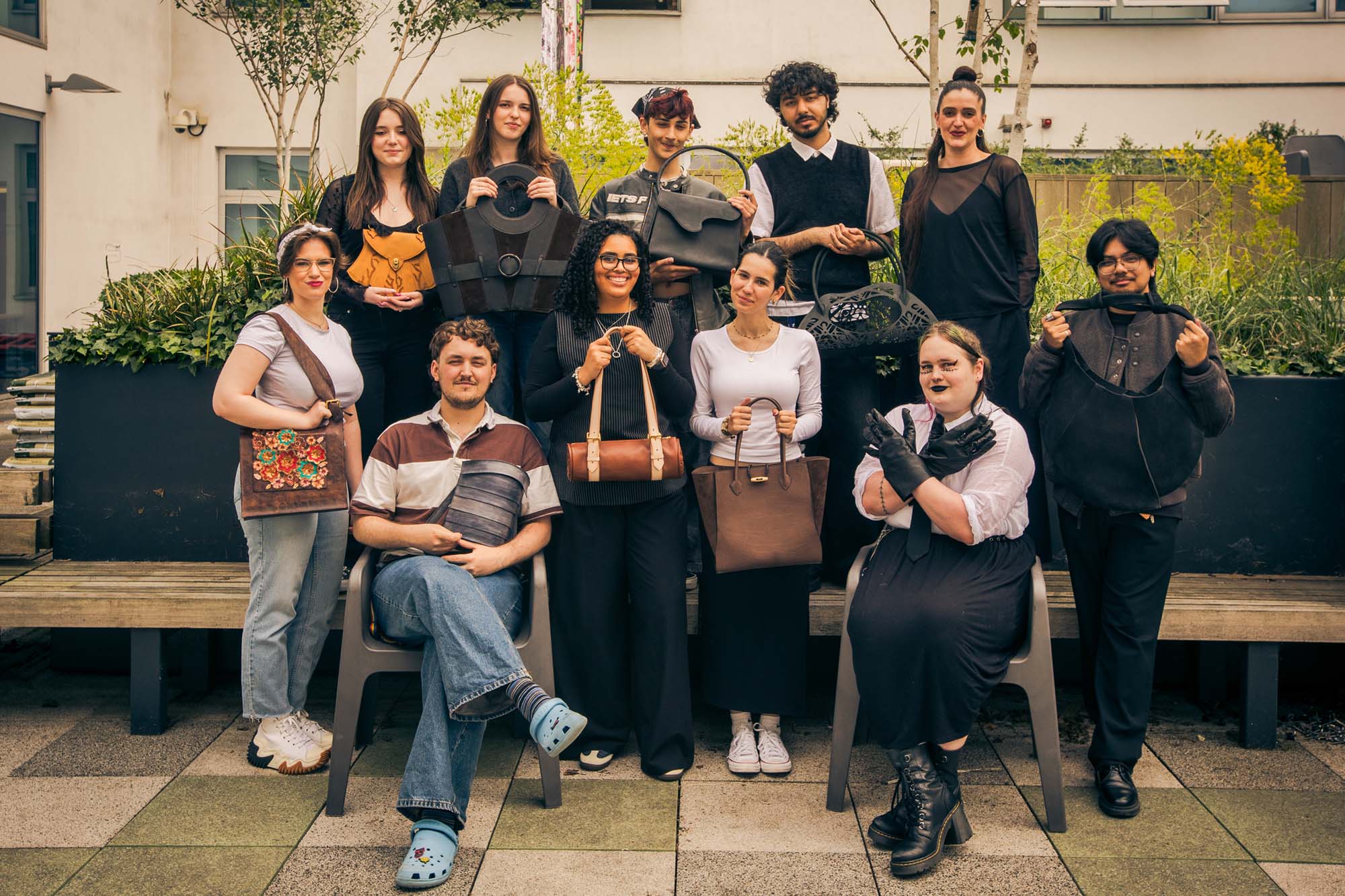 Students from Birmingham City University with tutor Lauren Broxton (top row, far right)
Molly Waterfield, from Leicester, drew on her hometown’s industrial and multicultural heritage for her bags. Waterfield based the forms of her designs on the city’s industrial buildings and embellished them with handmade flowers recycled from sarees, in tribute to the city’s South Asian community. She specifically chose antelope leather for its qualities, but also its cultural sensitivity, as pig and bovine leather have the potential to conflict with certain cultural and religious beliefs. “Leicester is known for its Diwali celebration, which is one of the largest outside of India – and there are also a lot of factories. So I’ve tried to combine the beauty of the multicultural with the industrial,” explains Waterfield, who hopes to use her leatherworking skills in the bridal industry eventually.
While the Surplus Leather Project might only be in its third year, it’s clearly fuelling a fresh wave of creativity and innovation in the leather designers of the future, providing a foundation of skills to foster an industry of resilience and character – much like a well-tanned hide.
—
2024–2025 was the third year of the Surplus Leather Project to provide donated leather to universities and colleges for use by design students across a number of disciplines. Funding of £11,000 covered the costs of administering donations, packaging and delivering 20 sets of varied leather to 18 education partners across England and Wales.
READ MORE
Dream Maker
In her sleep, Frances Pinnock finds inspiration for her figurative leather sculptures.
Leathersellers’ Scholarships at Colfe's School
Celebrating the long-term success of the Leathersellers’ Scholarships at Colfe’s School.
Fashioning History
For an inspired project at Leicester’s De Montfort University, students of “Artifacts Live” are drawing on the lessons of historic leathercraft to create the designs of the future.