Bridging the Care Cliff
How one Community Interest Company is helping London’s care leavers make the transition to adulthood


When a child in care in the UK turns 18 their statutory care order ends and they are pushed to build independent lives. An innovative programme from Power2Prevail is equipping care leavers with the knowledge and confidence they need to succeed, from rental agreements to relationship red flags.
Words by Eve Livingston
Photography by Tristan Buckland
It’s a sunny Monday evening in Hackney, east London, and inside a meeting room in an unassuming council building, a fierce debate is raging: which is a higher priority, paying council tax or paying a water bill?
Four young people sit around a rectangular table, each making their case, flipchart markers in hand. On the table in front of them sits a long list of household expenses they are working to reorder based on priority – everything from rent and phone contracts to subscriptions and birthday gifts. “There are so many things to pay for in this life,” one young woman exclaims to a chorus of giggles – but just as many earnest nods.
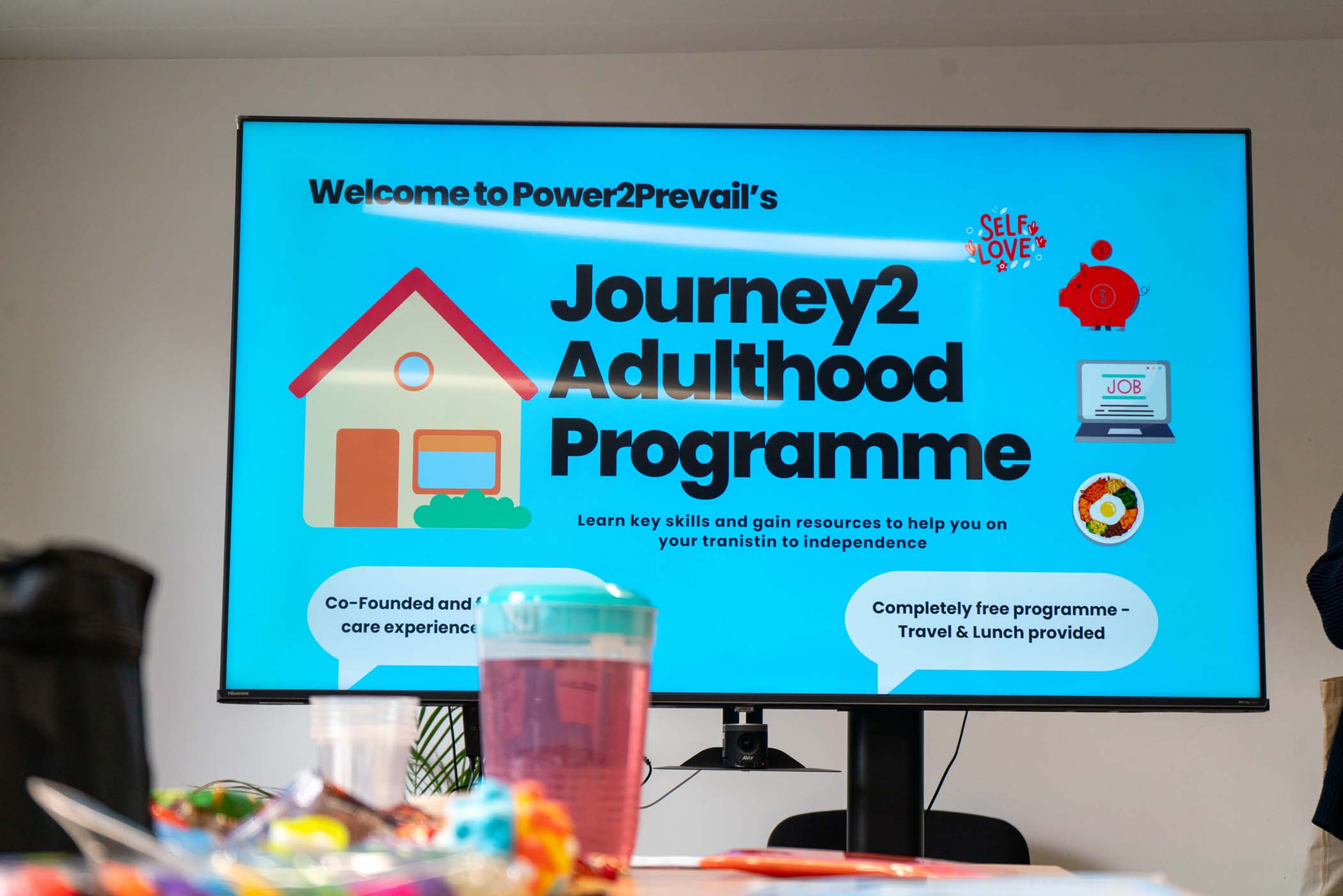
This is the third week of Journey2Adulthood, an innovative training programme for care-experienced young people in London, delivered by Community Interest Company Power2Prevail (P2P). Tonight the focus is on budgeting, but over three sessions a week throughout the six-week course, these young people – six of them in total – will explore everything from relationship red flags to life goals, CV skills and tenancy agreements. When the course finishes, they’ll each go on to receive one-to-one mentoring from a member of the P2P team.
“It’s about the ‘care cliff’, which is essentially that when you turn eighteen and you’re in the care system, you’re pushed to live on your own or to have your own property,” explains Jade Barnett, 25, co-founder and CEO of P2P. “But for a lot of young people – in general, not just care experienced young people – just because you turn eighteen doesn’t mean you know exactly what life looks like living as an adult or in your own property.”
The idea came from her own lived experience: Jade entered the care system at fifteen following a family breakdown. She was moved around several different homes across England, from Birmingham to Blackpool, not all of them culturally appropriate for “a Black girl from south-east London”. She was permanently excluded from school and didn’t always see eye-to-eye with her social worker.
“All of that stuff definitely took a toll on my mental health and how I saw myself,” Jade says now. “And then I got my own property at nineteen and there was this whole other transition of: ok, I’m an adult now. What does that look like? What does that consist of?
“Moving into care, becoming a care leaver, moving into your own property – they’re experiences that not every young person can manage. I got myself to where I am now, but that’s not always the case for many young people, so that’s why I started P2P.”
A 2024 briefing by the NSPCC found that the number of under 18s in the care system in the UK is growing, and that there were approximately 107,000 children under the care of the local authority in 2022/23. It also found young people of Black or mixed ethnicity are more likely to be in the care system: 7.1% of children in care are Black, and 10.5% are of mixed ethnicity, compared to 5.7% and 6.8% of under-18s in the general population.
P2P works with young people aged 16-25, the majority of them so far female and Black or Asian. Some are referred by support workers or other professionals, but most find the organisation through social media or word-of-mouth.
“The young people we get all have their individual circumstances for how they ended up in care,” Jade explains. “Some have been in care since they were born, or some since primary school, or when they became teenagers. Some have moved from placement to placement, foster home to care home – it’s different for everyone, but they all have been through the care system.
“Lots of them have experienced a lot of trauma, or have encountered poor living situations and not been able to feel like they can speak up, their voices haven’t been heard or they haven’t got the right support.”
While Journey2Adulthood is the charity’s flagship programme, P2P also offers regular social events, networking, and workplace visits for its growing community. Recently, they also introduced Bridge2Prevail, a mentoring programme for those who would value a one-to-one relationship but don’t want to engage in the group setting of Journey2Adulthood.
“We really do listen to the young people – their voice is really prominent in everything we do,” says Miriam Callis, 27, Journey2Adulthood manager and lead facilitator on the programme. Like the rest of the team, Miriam is care-experienced and went into foster care at eight, going on to be adopted by her foster mother at seventeen.
“We really do listen to the young people – their voice is really prominent in everything we do.”
The course curriculum is based on a template drawn up by Jade, but has been adapted over time based on feedback from previous cohorts and P2P’s care experienced staff members. The hardest part, Miriam says, is getting the young people in the room. But once they arrive, they tend to stay.
“The nature of the young people we work with is that they can be unpredictable and we work hard to get them through the door that first week; we call them in the morning, we call them in the evening,” she says. “But once they meet us and see that we’re care-experienced, close to their age and we’re not just another professional talking to them, that usually breaks down the barriers. By the end, the relationships between the young people and even us facilitators are so big and strong.”
When I ask about her highlights from the first two years of P2P’s existence, it’s young people themselves she comes back to: a girl who was so anxious she couldn’t attend the course without a support worker and tried to run away when she first arrived. “By the end of the course, she was speaking at the celebration, doing her own speech and she didn’t need her support worker there. Her anxiety was completely gone,” Miriam smiles. Another young person now wants to complete her college placement at P2P and go on to work supporting care-experienced young people.
One young person who has benefitted from the programme is Kiara Watson, now 25, who was part of the second Journey2Adulthood cohort a year ago after growing up in the care system in several homes around London. She was referred to the course by her Personal Advisor (PA) – a council worker allocated to care-experienced young people when they leave the care system and stop having a dedicated social worker.
“I always felt by myself really – I felt quite alone,” Kiara says. “I didn’t have a lot of friends that had been in care before and I just felt very different to everybody else. I felt like being care experienced was a bad thing.
“I didn’t have the mindset to go into work or my own home and be successful. But I feel like since coming to J2A I’ve developed a lot of skills and have a bit of a better understanding of life as a care leaver.”
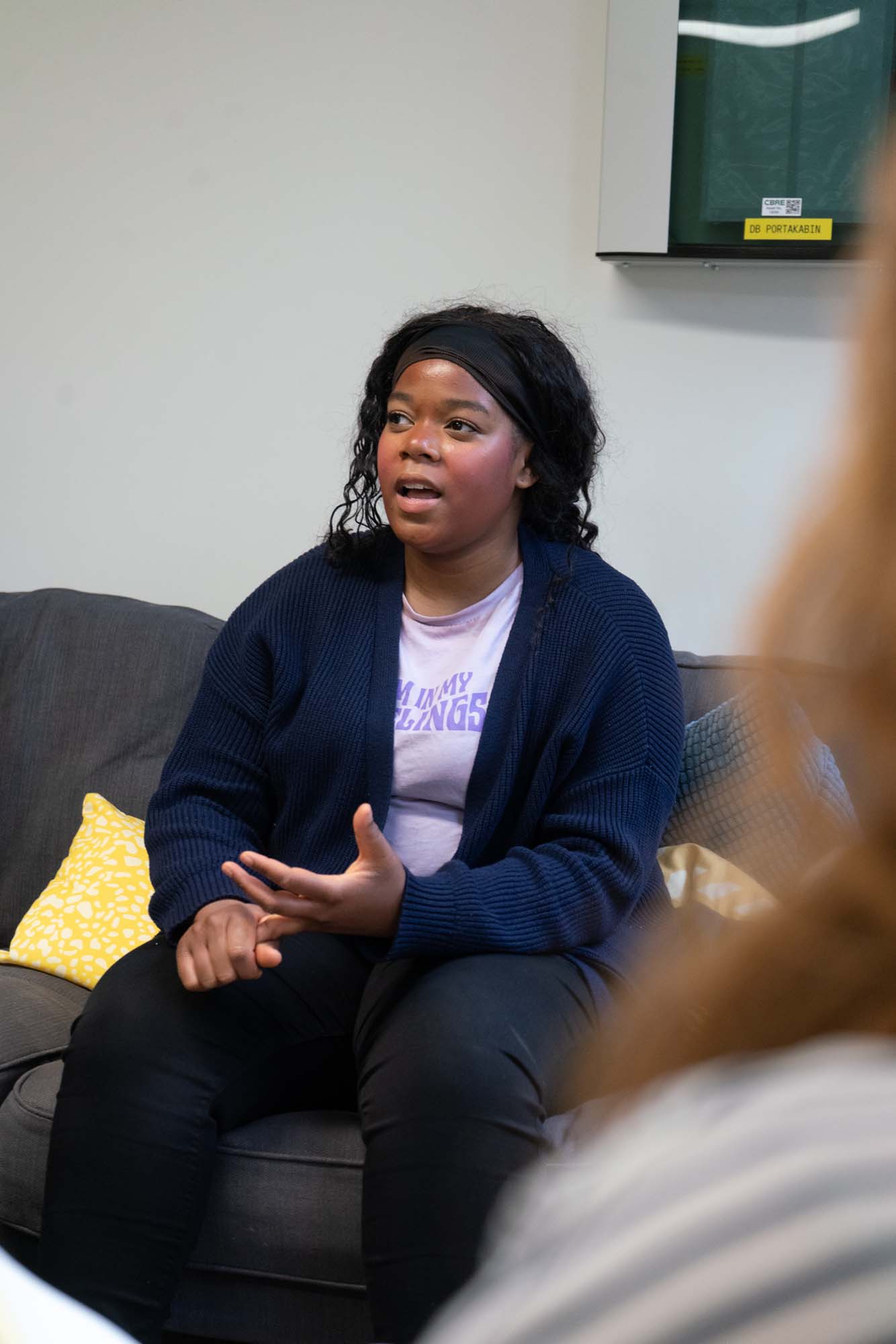
Since finishing the programme, Kiara has a new job in retail, something she believes she might not have had the confidence to achieve without P2P. She has been travelling to Greece and Malta, by herself and with a friend she made on J2A, and has aspirations of working in business administration. Soon, she’ll move into her own council flat. “I definitely feel much more ready for that now after J2A,” she smiles.
Omar Alibrahim, 20, completed J2A more recently, last November. He found out about the course when he heard Jade speak as part of another project he was involved in.
“Compared to other care leaver projects I’d heard about which were more about employment, getting a job, how to perform well at an interview… I thought this one was much more holistic,” he reflects.” And obviously it was delivered by care leavers, so I felt I could be fully myself and speak more freely.”
The impact P2P has had on him is “really transformative and has pushed me more,” says Omar: as part of the alumni community, he has attended several open days with companies to learn more about potential employment options, and aspires to a career in writing or fashion, something he and Miriam are working on in mentoring.
“I think before I wasn’t very comfortable being a care leaver, or going out and saying [publicly] that I’m a care leaver. But seeing all the community and the things that they do and the things that they care about has made me a bit more confident that I can do great things, and achieve the things I put my mind to.”
When we meet, Omar is fresh from one of those great things – the previous day, he completed the London Marathon for the first time. “It’s been a really wonderful thing to do,” he says, humbly showing off his shiny medal only after encouragement from Jade and Miriam. “But simply, I couldn’t have done it without going through the project.
“All the way through, I was pushing myself and remembering, like: if Jade’s put in so much hard work, I can push myself more. I don’t think I would have been able to do it without having been part of this community.”
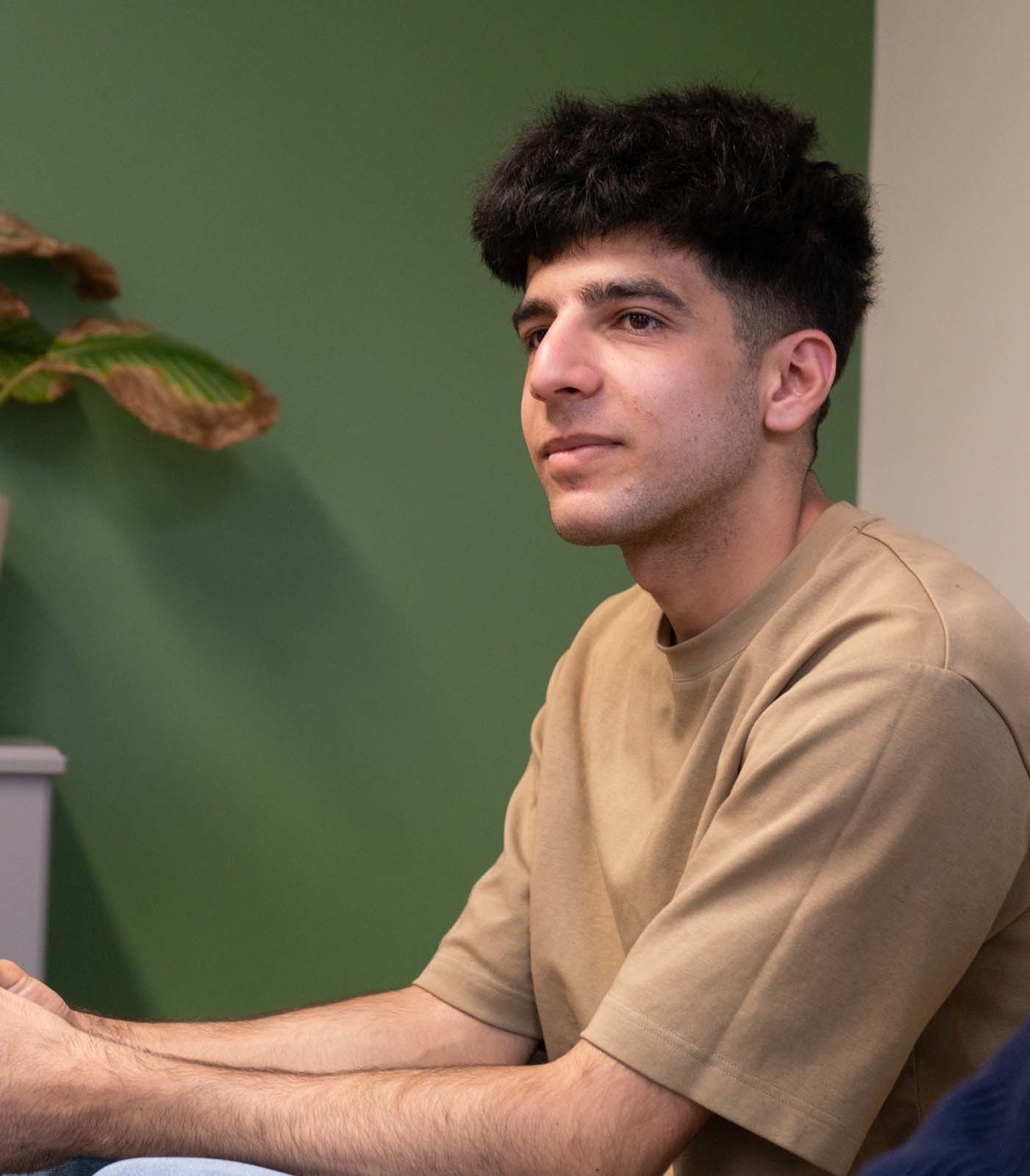
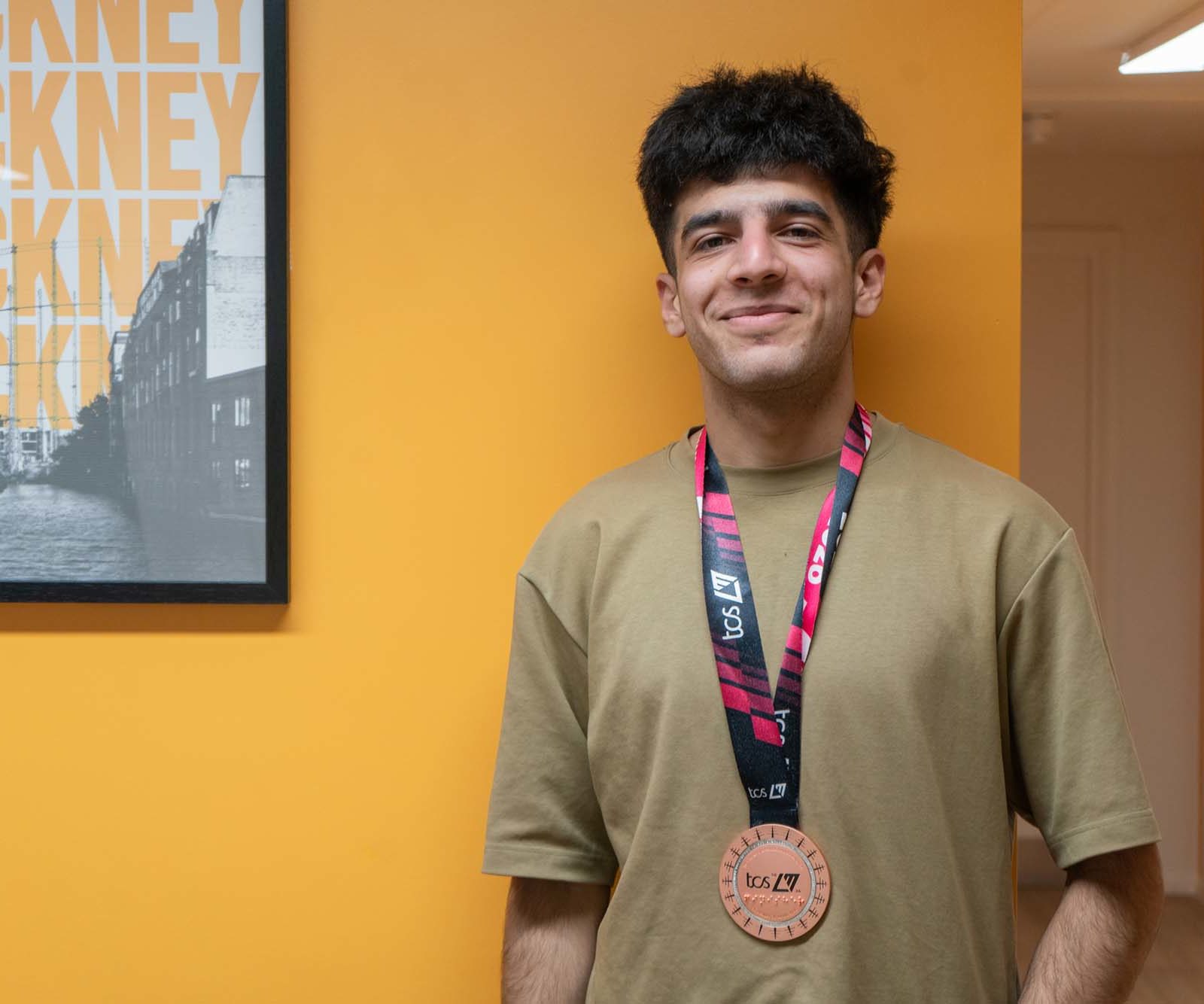
“…Seeing all the community and the things that they do and the things that they care about has made me a bit more confident that I can do great things, and achieve the things I put my mind to.”
The lessons they learned through Journey2Adulthood have stuck with both Kiara and Omar: as well as growing her confidence and positive outlook, Kiara credits the course with helping her stay safe as an independent adult – everything from being able to spot relationship red flags to knowing when and when not to give out your address, and remembering to lock windows when you go out.
Omar, meanwhile, recalls how a vision board session helped him clarify the goals he is still working towards almost six months later – and he learned a macaroni cheese recipe that “I cooked so many times I got tired,” he laughs.
Since its inception just a few years ago, P2P has gone from strength to strength, the staff team growing in size and the organisation growing in ambition. Like all small purpose-driven organisations, it’s not always straightforward. “A lot of our services at the moment are grant reliant, so if we don’t get the grant, we can’t run,” Jade explains. “There’s a lot of organisations and charities out there going for the same amounts of money, and a lot of the funding available is short-term when it can actually take months or years to develop a relationship with a young person.”
Still, she is upbeat and looking at new, creative ways of generating revenue through corporate partnerships and consulting opportunities. “There’s no blueprint really,” she says. “We’re just learning as we go and trying to conquer the hurdles as they come.”
Kiara credits the course with helping her stay safe as an independent adult – everything from being able to spot relationship red flags to knowing when and when not to give out your address, and remembering to lock windows when you go out.
Back in the workshop, things are drawing to a close and the room has fallen briefly quiet as participants and staff members alike each consider some new budgeting rules to commit to: one spending habit to stop, one to start, and a savings goal to work towards. Someone wants to save for a holiday to Jamaica; another is going to cut down their Deliveroo bill.
Wrapping up the workshop, Miriam asks for some quick feedback on the session and the response is unanimous: thinking about budgeting and household expenses has been invaluable. “It’s so important for care leavers because we have to be more independent; lots of us can’t just ask our family for help,” one participant points out.
The group will next meet in the same room in two evenings’ time, to continue their Journey2Adulthood with a session on banking and debt awareness, before turning their attention to CV skills the following week. By the end of six weeks, the P2P team hope, participants will have learned new skills, formed new bonds, and been impacted in ways beyond just the curriculum, as Kiara Watson sums up.
“To see other care leavers who are successful in life makes you feel like you’re going to be okay at the end of this tunnel,” she says. “It’s a bit of a cheer-me-up, an inspiration.”
“It’s made me feel more determined; I want to travel and learn and go to work. I want to get up and do things for myself, like go to the gym with my friend I made on the course, go out for walks, and just be out with the sunshine on my face.”
READ MORE
The Science of Connection
The power of connection and relational practice hold tremendous potential for how to approach the prevention and healing of childhood trauma.

Alistair Tusting: Honouring the natural beauty of leather is core to what we do
Tusting CEO Alistair discusses his design philosophy and explains why a leather bag will never let you down. As told to journalist Emily Cronin.
The hides that bind
The versatile and sustainable qualities of leather are helping talented craftspeople access, develop, and sustain careers in artisanal fashion.