Lifelines
Supporting perinatal mental health


The science is clear: a mother’s mental health shapes her child’s future. Two charities making peer support their cornerstone are transforming outcomes for families facing the greatest odds.
Words by Ellie Broughton
Photography by Tristan Buckland
Since 2012 a national review has been run to monitor the safety of mothers and babies in the United Kingdom. In January 2026 the survey revealed that despite a commitment to halving maternal mortality, the overall rate of maternal death in the UK is now 20% higher than in 2009-2011. Deaths from psychiatric causes currently account for a third of maternal deaths, and mental health is still the leading cause of death for women from six weeks to a year after pregnancy.
The report also found stark inequalities along race and class lines. Mortality for black women was nearly three times higher than for white, and mortality for women from deprived areas was twice as high as for women from affluent areas. Nevertheless, two thirds of Integrated Care Boards in England planned real-terms cuts to perinatal mental health services in England, the Royal College of Psychiatrists revealed last year.
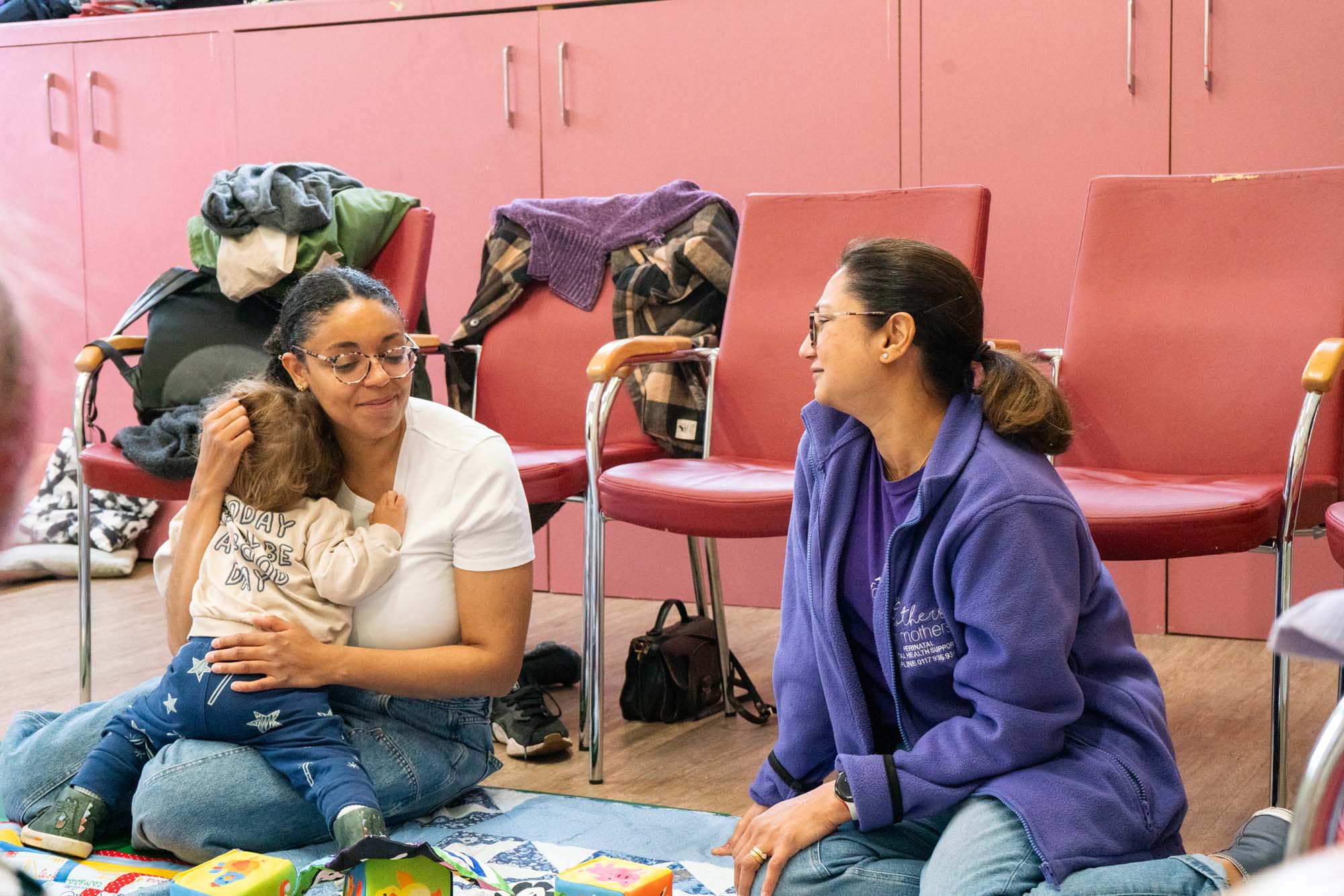
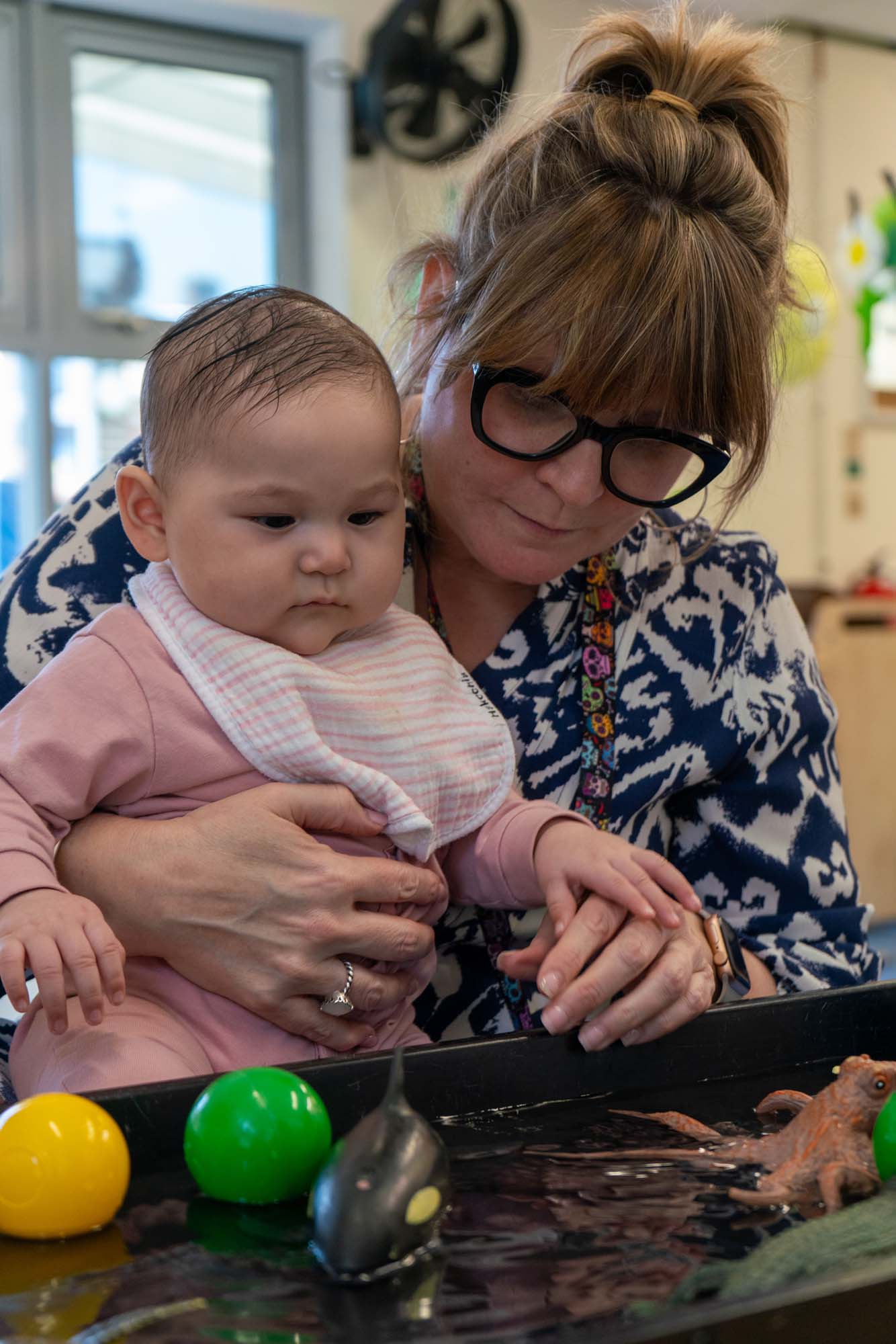
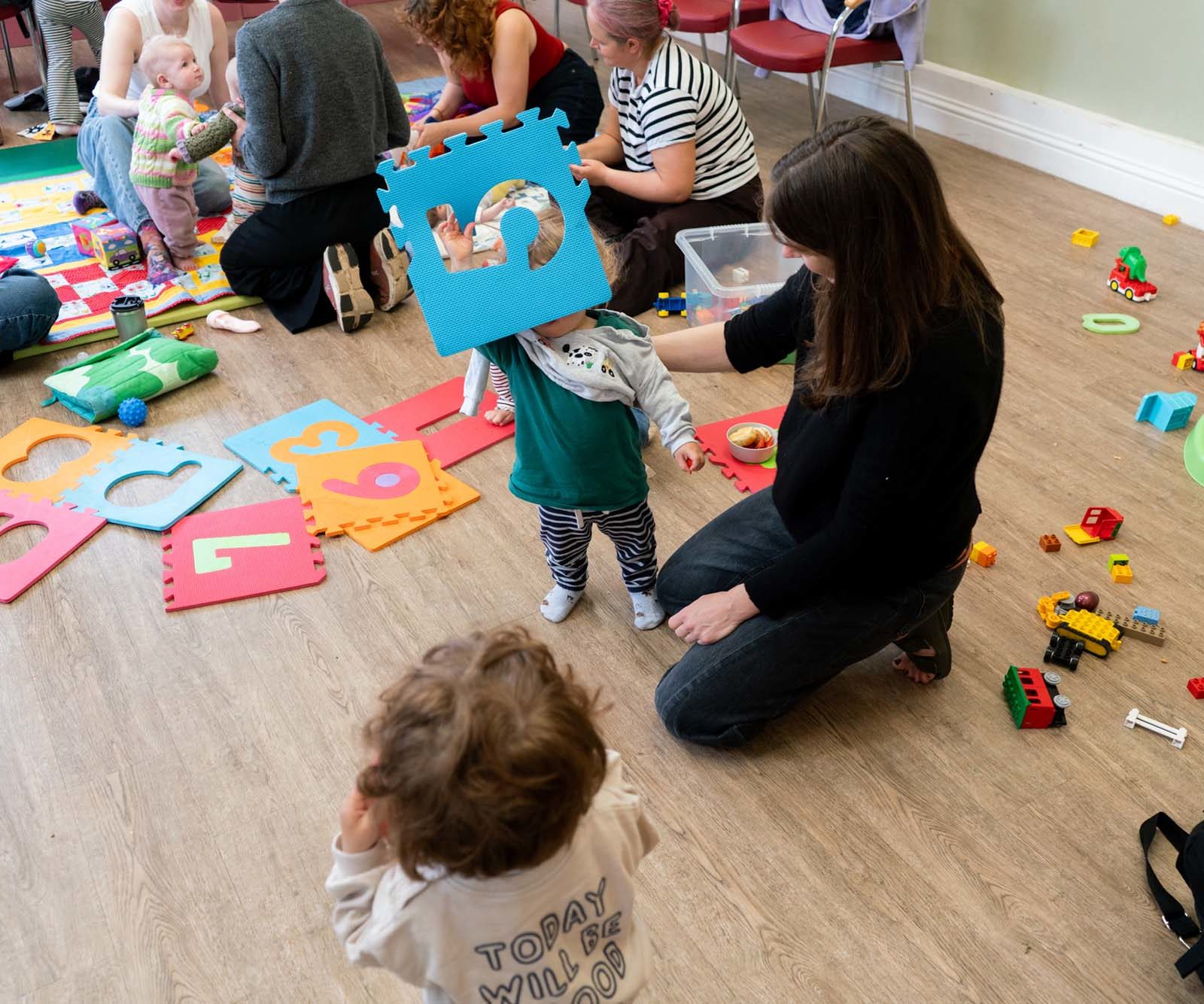
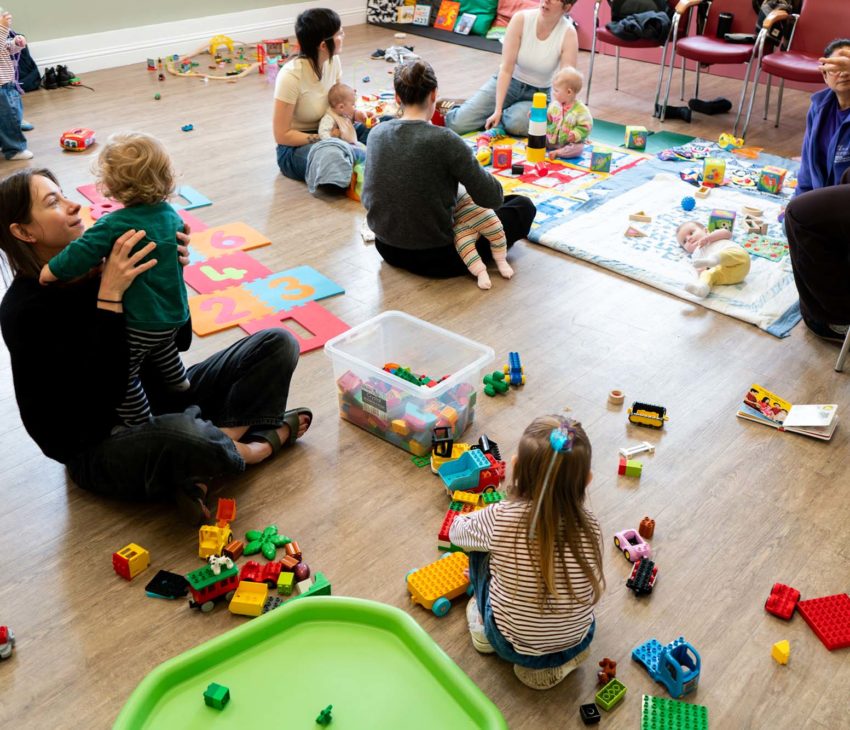
Down a sun-dappled residential road in Abbey Wood, the latest statistics feel a million miles away. A dozen buggies line the outside of a children’s centre. Inside, glitter and felt-tip pens crowd the knee-high tables on one side of the room, while plastic cows and dinosaurs lounge in the shallows of a water play table on the other. MumsAid’s young mums’ group meets here on Thursday afternoons to provide women with advocacy – and a chance to buck national trends.
MumsAid is the brainchild of a therapist who knew that she wanted to work with mums from the very start. Dr Miriam Donaghy wrote her dissertation on the existential questions women face when becoming mothers. ‘Matresence’, the change that someone goes through when becoming a mother, is now widely-recognised, but 25 years ago it was still ripe for research.
Dr Donaghy subsequently spent a further 12 years working at Greenwich Mind and the Tavistock Centre for Couple Relationships, delivering perinatal mental health support in the community, before going on to set up MumsAid. The charity started out on a £3,500 grant in 2012, and now boasts 15 employees with as many volunteers.
Her doctoral work resulted in the development of a biopsychosocial therapeutic framework that now underpins all of MumsAid’s service provision. She wanted to set up a non-pathologising service for mothers, where clients could self-refer. “You do not need a label or diagnosis to access our services, and that’s how it’s been from the start,” she says. “It’s about normalising what is happening, which takes away some of the stigma.”
Although MumsAid staff don’t talk to clients about ‘adverse childhood experiences’ or their ‘ACEs score’, they do neverless identify a person’s ACEs in order to learn about clients’ needs. For example, Dr Donaghy says, around four in five young mums they see report experiencing domestic abuse or violence during their lifetimes, and many are care-experienced. From that point of view, she says, it’s easy to see the value that counselling can offer new mums: “A non-pathologising approach means that you’re not labelling someone as mentally unwell. It’s that thing of, ‘don’t say what’s wrong with them, ask what happened to them’.”
One of the women who benefitted from the young mums’ group is Annie, 23. She was 17 when she had her first child and came to MumsAid within two or three weeks of giving birth. At 39 weeks, Annie’s grandma – her main guardian – had died suddenly and Annie was threatened with eviction.
“When I first became a mum,” she says, “I’d lost the main person in my life. I just wanted to go back to normal.” In NHS counselling Annie struggled to open up. “I didn’t know what to say, and going with a newborn baby I couldn’t focus. In the end I stopped going.”
But Annie continued to need support. She had started college and got a job but had to stop both as it emerged that her son had special needs. She met a new partner and was 20 weeks pregnant with her second child when tests revealed the baby had a rare and fatal genetic condition. MumsAid helped her find a funeral home to provide a memorial. Then four years ago, after she gave birth to her third child, her brother was killed in a knife attack. MumsAid supported Annie during the court case.
Annie says she’s changed a lot since she first arrived five years ago. “I can do phone calls and appointments myself now, and I’m learning to drive. I love being a mum. I don’t know where I’d be without my kids.”
It’s not just mothers who benefit from support such as that provided by MumsAid. Research shows that our brains develop faster during our first 1,000 days of life than at any other time, laying a foundation for lifelong brain health and well-being. Maternal mental health is significantly associated with child development outcomes, for better or worse; and this is reflected by the fact that poor parental mental health is one of ten adverse childhood experiences listed in the original ACEs Study by Felliti et al. in 1998.
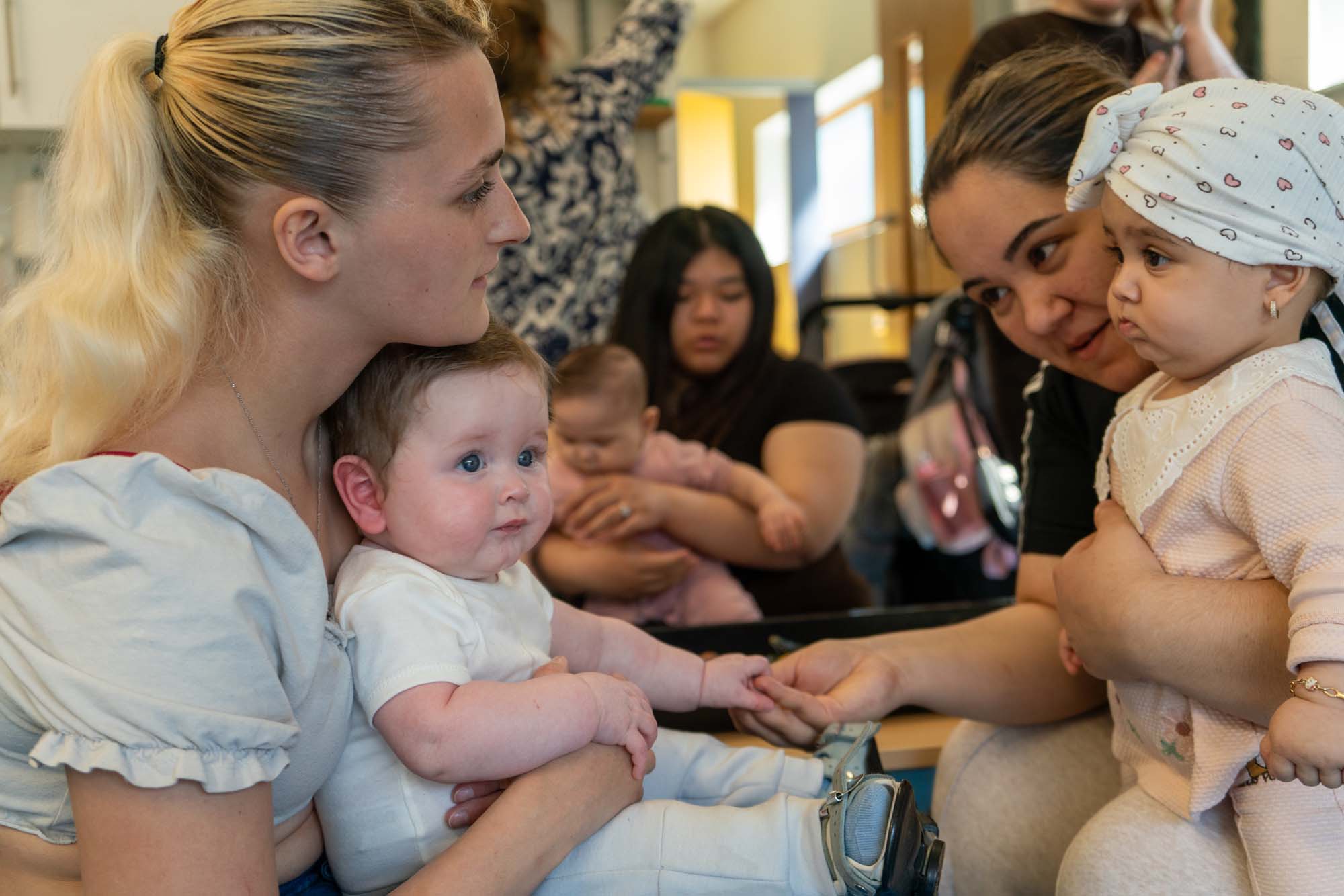
Having set up specialist groups for young mums, mothers from black and global majority communities, and mothers with babies who have disabilities, Dr Donaghy has a wealth of insight into improving engagement in mental health services for mothers: sending text reminders, doing introductory meetings with counsellors, and offering travel expenses. Many clients have a serious need for advocacy on issues like housing and bills; counselling alone didn’t touch the sides. It took almost three years to learn what it would take to get young mums to come, she says now.
Kia, 26, came to the young mums’ group after she had her son five years ago, and now returns as a volunteer. “It was my escape,” she says. “The group was like a family.” Her son’s father wasn’t involved in parenting and so she was up at night alone, caring for her son. Support workers at MumsAid helped her to move out into her own home and access the food bank and fuel vouchers she needed, and covered the cost of fitting blinds in her flat. Kia then went to counselling.
Now she wants to give back. “It changed my life, being around people that actually care and take the time out to give you the support that you need,” she says. “I don’t think I’ve ever got that before.”
On the other side of the country, in Bristol, another charity is also using peer support groups to destigmatise the struggles of perinatal mental health.
Charlotte, 36, found out she was pregnant with her son on the first day of lockdown in 2020. “When Seth was a week old, I remember saying to the midwife: ‘What the hell have I done?’,” she says. Charlotte says she was only just surviving, day-to-day. By the end of 2021, she felt deeply depressed. “I was unable to complete basic tasks, apart from anything my son needed.” A close friend noticed how ill she seemed and signposted her to Mothers for Mothers (MFM). The charity enrolled her into 12 sessions of counselling and a peer support group.
Over the last five years Charlotte has noted a shift in her parenting with support from MFM. “It’s allowed me to be more present. Today, I can take a breath and know that not everything with my child is an emergency.” Two years ago Charlotte and her partner decided to have another child; she credits the support she gets from MFM as being part of her choice to do so. She still attends weekly. “When I walk in those doors, everything in me starts to settle,” she says.
“Peer support saved my life and made sure that I was there for my children’s early years.”
Experience like Charlotte’s is integral to the leadership at MFM. Nixie McAllister, 42, is a group co-ordinator at MFM but first came as an attendee. Nixie had been pregnant with her third child at the time but felt anxious during the pregnancy, and suffered from morning sickness throughout. She had had to give up training to become a teaching assistant, and, although she had hoped that giving birth would resolve both of her health challenges, found that her anxiety only increased afterwards.
“I had about a week of running on adrenaline and began to feel on edge all the time,” she says. “Then I had a panic attack taking the kids to school and had to turn back and come home. I’d hit rock bottom. That’s when I called the helpline. The person on the phone slowly talked me through making my breakfast, and I felt like ‘Someone actually really cares about how I am’.”
Nixie went to the group for a couple of years then went back to volunteer. When a professional role came up to run groups in 2020, she jumped at the chance. She is still surprised by how much she enjoys the work, however much the people who come are struggling. “I never thought that I would work in a role that I would be that passionate about,” she says. “To use my experience, to take the darkest of times and use them to support other people, is something that never tires me.”
Like Nixie, Maria Viner – MFM’s CEO – first came to the charity in 2006 as a service user. She had had her first child in 2005, who died when he was a day old. Maria became pregnant again, but tests were unable to determine whether her second child would be ‘compatible with life’, as doctors described it, or not until the baby was born. At the time, Maria received no support from statutory services, but she did receive support calls from MFM. When Maria was pregnant with her third child, who was born in 2008, she experienced anxiety and depression during the pregnancy and had a traumatic birth. Maria developed PTSD and maternal OCD, which led to suicidal thoughts and planning.
“The only consistent support for me throughout all of this was MFM,” Maria says. “Peer support saved my life and made sure that I was there for my children’s early years.”
Maria later returned as a volunteer, first on the helpline, then in the office, and then as a trustee. She became the CEO of MFM in 2018. That year the charity supported around 100 families; now it supports over 850.
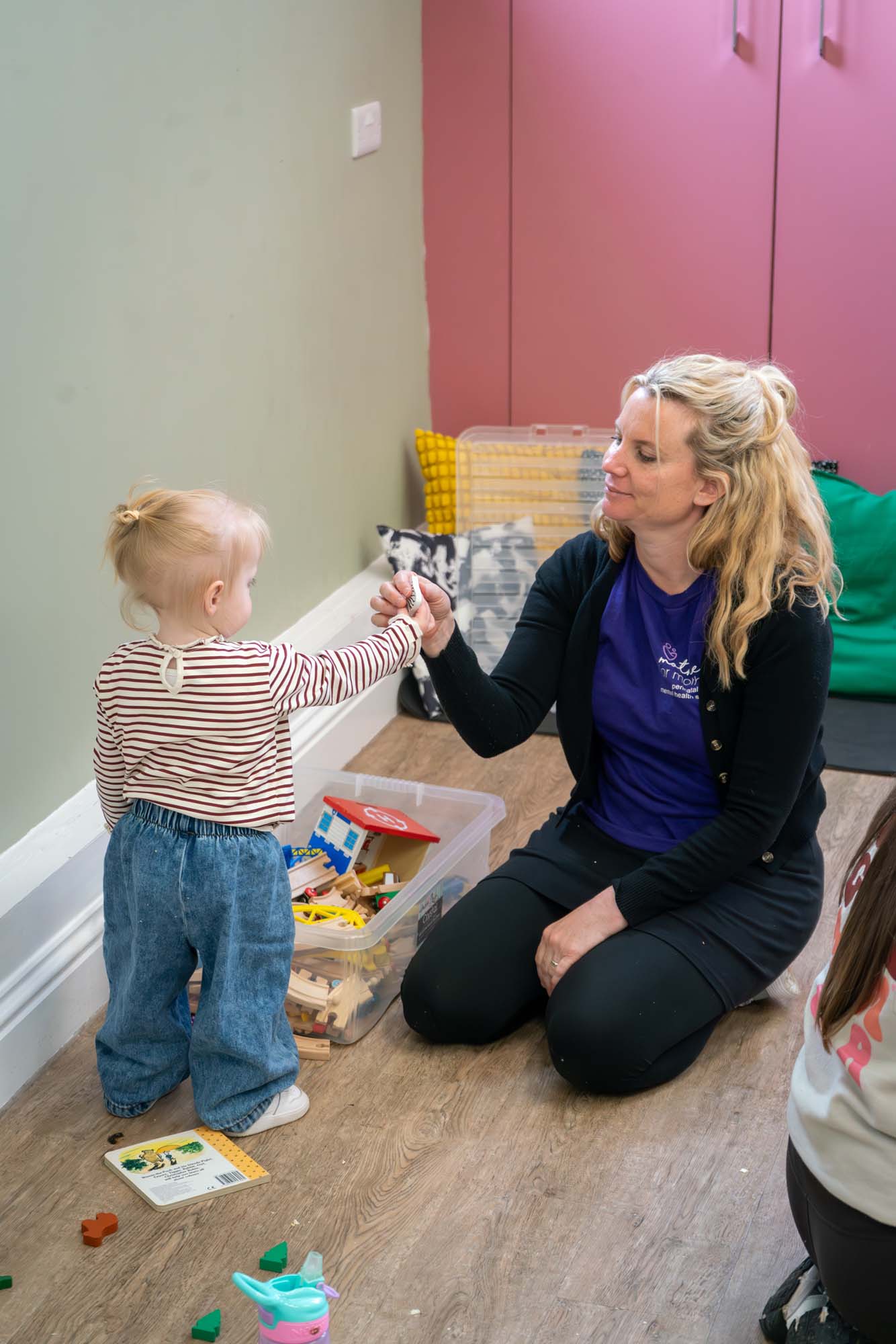
Last year, a report by MFM found even more shocking stories from the front lines of maternal mental healthcare. This Is Our Truth surveyed nearly 800 women and non-binary parents and found that a staggering four in five reported that their mental well-being fell either during pregnancy or after birth, or both, in contrast to NHS data suggesting that just one in five women who give birth in the UK experience mental health problems during or after pregnancy. Furthermore, one in four in MFM’s survey said they couldn’t recall anyone ever asking about their mental health during maternity care. Findings emerged in stark contrast with a Royal College of Midwives statistic indicating that 70% of women were ‘hiding or downplaying’ perinatal mental health symptoms.
Maria says that although MFM’s findings shocked her, they didn’t surprise her. However, she was surprised by how well This is Our Truth was received: “I do not know what I expected, but I have been struck by how many people are using it to inform their work – clinicians, academics, politicians and other voluntary community and social enterprises.”
Like many voluntary community and social enterprises, MFM faces practical pressures including increased costs linked to changes such as the National Insurance rise for employers. Nevertheless, supported by funders such as The Leathersellers’ Foundation, the charity is planning further improvements. For example, following a ‘test-and-learn’ project it intends to launch ‘gup shup’ (tea and talk) groups, hosted by peer support workers from Asian communities. The charity already offers services in Gujarati, Bengali, Hindi and Albanian, and wants to build on its progress to date.
Systems have changed since the birth of her children, she says, but not enough. “We now have more mother and baby units and specialist teams than we did 20 years ago, but there are still significant geographical gaps. Here in Bristol, there are only four beds in the unit.”
Staff at MFM are driven by a need to see change in perinatal support, and its current service users attest to its value. They do what they can to fill the gaps where they are, but the scale of the problem persists. In England approximately 99,000 women lack access to specialist services for perinatal mental health, rising to 109,000 if Scotland and Wales are included, and higher still if you count women who experience stillbirth or other pregnancy loss. “Voluntary community and social enterprise organisations are bridging a substantial gap and providing life-saving services that would otherwise not exist,” she says.
READ MORE

Creative healing
Meet two Leathersellers’ Foundation grantees using music, art and drama to address adverse childhood experiences and break cycles of trauma.
Small and Mighty
Recipients of the Small Grants Programme are proving that even in difficult times, a desire to help others and community spirit continue to thrive.
Fashioning History
For an inspired project at Leicester’s De Montfort University, students of “Artifacts Live” are drawing on the lessons of historic leathercraft to create the designs of the future.