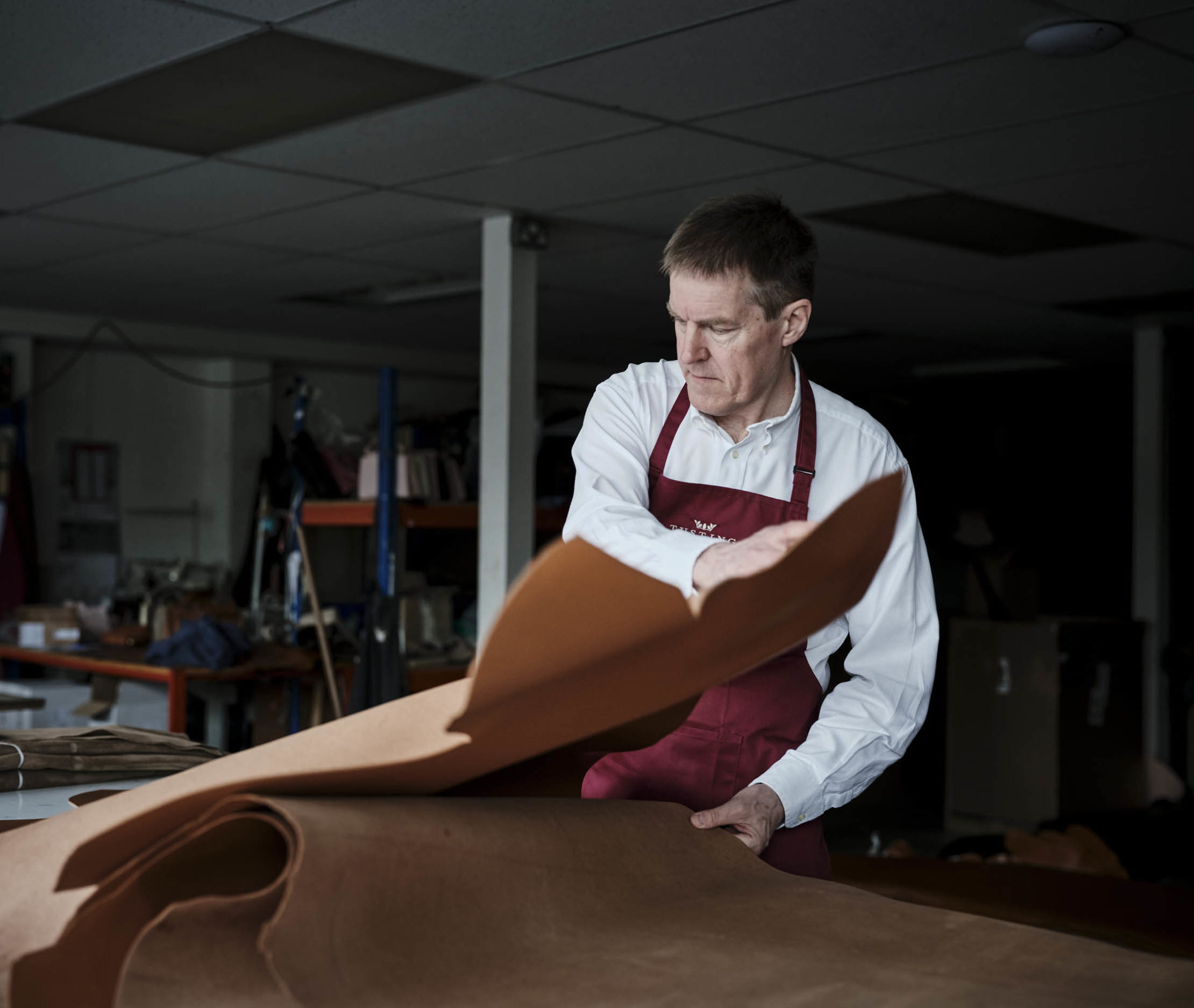
Alistair Tusting
Honouring the Natural Beauty of Leather is Core to What we do


Leather may not actually be in Alistair Tusting’s blood, but it’s certainly in his family tree. The Tusting family began as tanners, supplying hides to Northampton’s shoe industry in the late 1800s. The firm shifted its focus to finished leather goods in the 1980s. Now, Tusting is a British luxury leather goods brand that ships its handcrafted bags and luggage directly to customers worldwide (including the Princess of Wales) and counts Aston Martin and Harrods among its corporate clients. Here, Tusting CEO Alistair discusses his design philosophy and explains why a leather bag will never let you down. As told to journalist Emily Cronin.
Words by Emily Cronin
Photography © Tusting
Leather has always been part of my life
Starting when I was about six or seven years old, I would go with my father to the tannery on Saturday mornings. Dad would walk around, look at leather, smell the leather, feel it, and I would be there alongside him from this really young age. Every trip to the tannery was an adventure, with bits of leather and machinery to investigate and talk about. One of the things my parents were always very good at was expecting you to share in a conversation. You weren’t just allowed to hide away in the corner. If somebody was talking, you were expected to engage. So, leather – handling leather, thinking about leather, talking about leather – has always been part of my life, forever.
Still, there was never any pressure to join the business. That was a bit of an accident, really, and certainly not something I had planned. My parents were very happy for me to find my own path, and if it led back to the business, that was great. I went and worked in an engineering business. When I was thinking of coming closer to home, my parents said, ‘Would you like to…?’, and I thought, well, maybe I’ll give it a go. Quite a lot of years later, I’m still giving it a go.
To be a maker in the UK is quite a unique thing
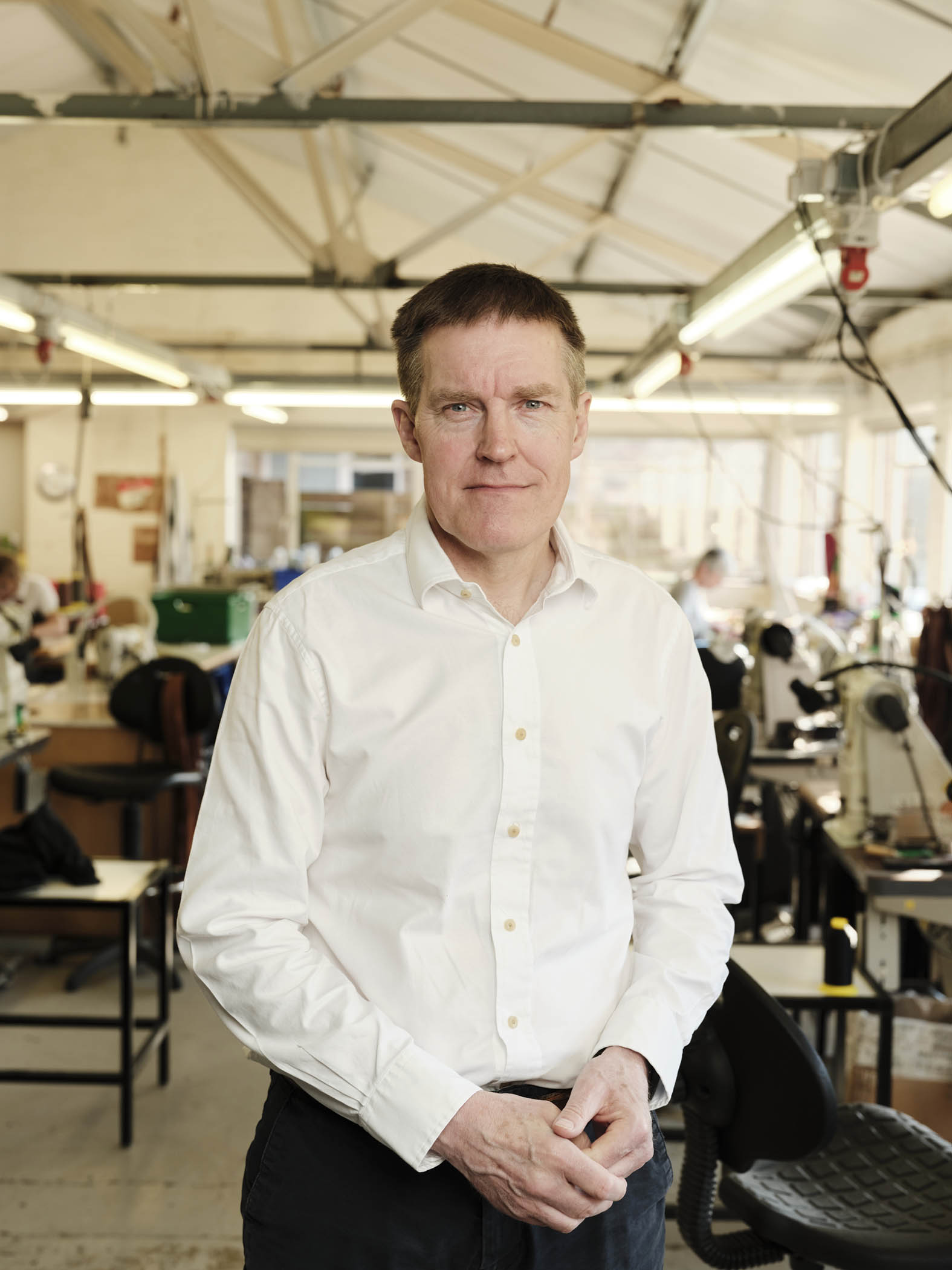
There are very few makers of handbags and leather goods left in the UK, which gives us a unique place in the UK leather environment. It certainly equips us with the ability to respond to our customers’ needs personally and with flexibility. If you look at most leather-goods brands, they source most of their product out in Asia or Eastern Europe. That means they have a long, long tail of sourcing, so from the moment they design something to the moment it gets into a shop may be a six-month or year-long process. Therefore, they need to buy a lot of product, and then what they don’t sell, they’ll discount.
As a UK maker, we feel very close to the customer. A customer can walk in and we can make the product they’re looking for in a week. We don’t keep a big inventory of finished goods, so we aren’t overproducing and consequently don’t need to discount to clear stock. Offering the same price any time of year and not building extra margin in to allow us to discount means we’re selling at a reasonable price year-round.
The intangible value of Britishness
In Britain, we tend not to be that nationalistic in the sense of wanting to buy ‘made in the UK’. The UK has always been a trading country; we’ve been buying stuff in for 200, 300 years, and we’re quite comfortable with that. But around the rest of the world, everybody is really positive about products from the UK. Especially in the USA and in the wider Anglophone world, they like to have stuff that has that made-in-the-UK heritage behind it, and they really rate British craftsmanship.
I think it stems from two areas. In the men’s fashion world, there’s a cachet to men’s footwear made in the UK – it’s always been premium. And there’s also the Savile Row tradition of men’s tailoring, of an exceptional level of service and bespoke product which is fantastically well-made and durable. Italy and France might have sharper, edgier fashion, but in Britain, you’re going to know you’ve bought a very nice thing, and you aren’t shouting about it. British heritage in the fashion world is the ultimate quiet luxury.
The power of the Princess of Wales
When the then Duchess of Cambridge, now Princess of Wales carried our Mini Holly handbag in 2021, it was both an honour and a revelation. It just opened so many doors. It allowed us to be seen by so many more people, so quickly – both directly, in terms of social media and people coming to our website, and also in terms of acceptance of us as a brand around the globally and in the international press. The Princess carrying a Tusting piece was a fantastic acknowledgement that we’re making something of value.
After she carried the bag, we sold something like 300 pieces in three weeks or so – probably about 20 or 30 times more pieces than we would have sold in that style in a less eventful period. We ran out of leather almost immediately. But people were so engaged with the product and the story that they were happy to wait until we could make more. It was a huge boost for the business.
Even now, over four years later, the Mini Holly in taupe, the colour the Princess of Wales carried, remains our single bestselling product. No question, that’s our number one. She’s had an enduring impact. The power of the British royal family in pushing out into areas where you wouldn’t imagine them opening doors is enormous.
A bag for life (or: why men don’t want a new bag)
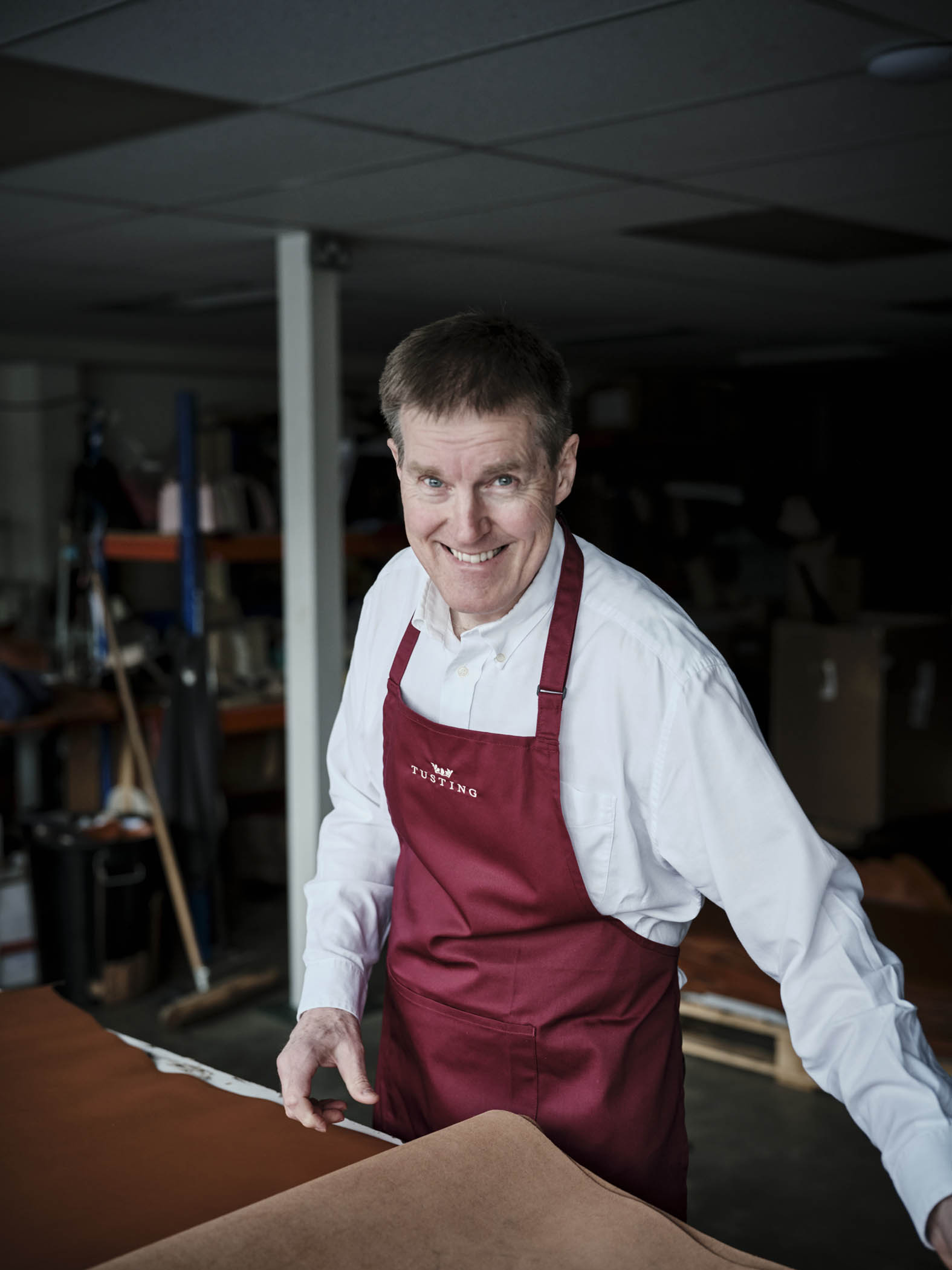
Everyone thinks women are mad about their handbags, but we’ve learned it’s men that have undying affection for their favourite bags. They’re almost an adjunct to the owner’s personality. And so men absolutely cherish our ability to refurbish something that has lived a life and been a trusted companion.
About two or three times a month, men send us bags that need a little loving care. These bags tend to be 20, 25 years old. They can be almost completely and utterly destroyed through use. The joy of being able to put on a new handle, sort out the fittings and the edge bindings, and finally pass back to the customer a product which is going to get another 10 years’ use is just fantastic. That’s a real bonus for our customers, to know they can just send it back and we’ll fix it for them. Sometimes we even get people who come back and double up. They say, ‘Please fix my old bag, but I’ll have a new one as well at the same time.’ It’s wonderful to know they’ve had such a lovely experience that they want to invest again.
I’ve tested the limits of bag durability in my own life as well. Last year I took my oldest bag skiing and the airline destroyed it. I can’t really complain because it had done about 30 years of service and the fabric just gave out. I’ve kept it because I don’t want to throw it away, but I haven’t taken it downstairs and fixed it yet either. I’m sure I’ll find a way to use it again someday.
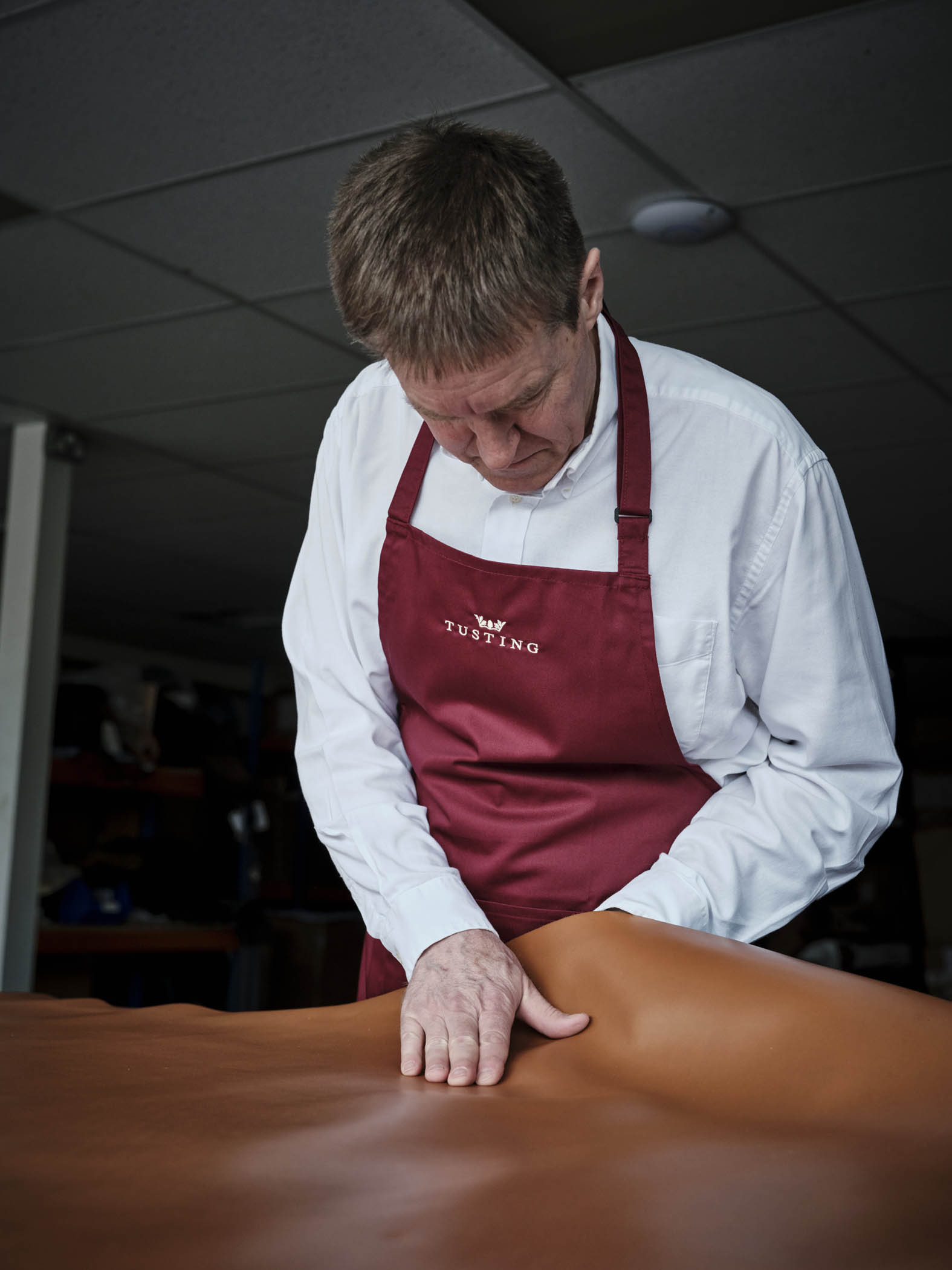
“Knowledge of leather enables you, in many ways, to engage in part of the fashion industry. Getting some knowledge of leather is a key thing that can help you go forward.”
Leather has been around for a very, very long time – but there are innovations
Leather making has been around for millennia. But that doesn’t mean there aren’t some really interesting new developments in making leather. Probably the most interesting developments in leather tanning over the last decade are new “wet-white” processes for pastels and vibrant colours reducing dye requirements and giving enhanced biodegradability showing this recycled product can be still improved even further. We’re buying tannages which are more sympathetic to the environment than previously, so that’s a great thing.
The other developments in our leather use involve doing our best to continue to use the most naturally-finished leather that we possibly can. This goes against the market because the expectation is for products to be more and more consistent and uniform. Using leather that continues to show that it is leather, in terms of its natural appearance, is important for us and this means buying from tanneries that support this philosophy.
A UK tannery, Stead’s, up in Leeds, is taking on making full-grain cow leather that gives a great demonstration of showing the beauty of the actual inherent hide that we’re working with – the grain and the texture of the skin – then creating on that some lovely colours with richness that shows the leather and the feel and the character of the leather in itself. Now about 25 percent of the leathers in our collection are made in the UK. Based on the leathers we’re getting now, I think that’s going to be an increasing feature of our product.
The market for leather goods is vast
The leather goods industry around the world is vast, with plenty of potential for newcomers to build viable careers and businesses. When you look at the biggest brands in the world – Hermès or Louis Vuitton – they’re making billions of Euros a year. The money being made from leather goods is almost unbelievable. Why wouldn’t you want the opportunity to work in that and have a fraction of that business? You need skilled people right through the process, whether it’s designers and craftspeople, or in the supply chain. Knowledge of leather enables you, in many ways, to engage in part of the fashion industry. Getting some knowledge of leather is a key thing that can help you go forward.
We know that people love our bags
What keeps the work exciting for me is the fact that we make great product. We’re really confident in what we make and have an almost evangelical desire to share that with more people, to get more people to love our product as much as we do. We know that when people have our bags, they love them and use them forever, then come back for more. The thing driving me forward is, what do we need to learn? What do we need to know that helps both the knowledge of making the bags, but also pushes us out so we can get more people to want to carry our bags?
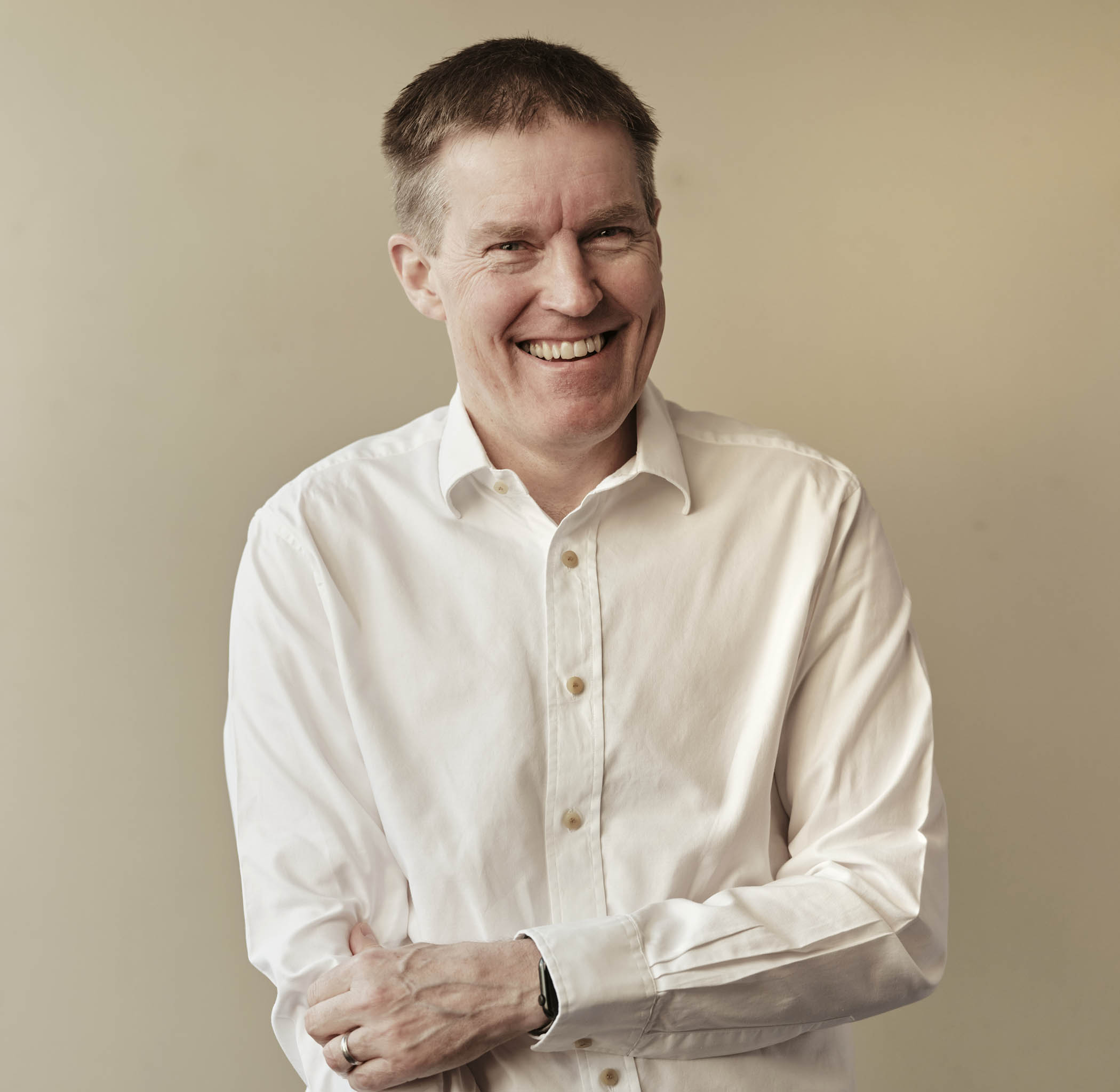
I made a bag for myself almost 10 years ago
I’ve always thought our Clipper bag offers an ideal combination of materials, style and function. They’ve always been one of our very best products. Whenever I’ve used them, they just work. But that isn’t the bag I carry on a daily basis. I made a bag for myself about 10 years ago. It’s very, very similar, but slightly different because I wanted to try a different leather and a different bit of construction. So I made a bespoke bag that I’ve been using for the last 10 years. Like a lot of our male customers, I haven’t changed my bag. I’m quite happy having it as my own special, unique thing. It’s not often that I like to keep things to myself, but I’m very happy that this is my bag.
READ MORE
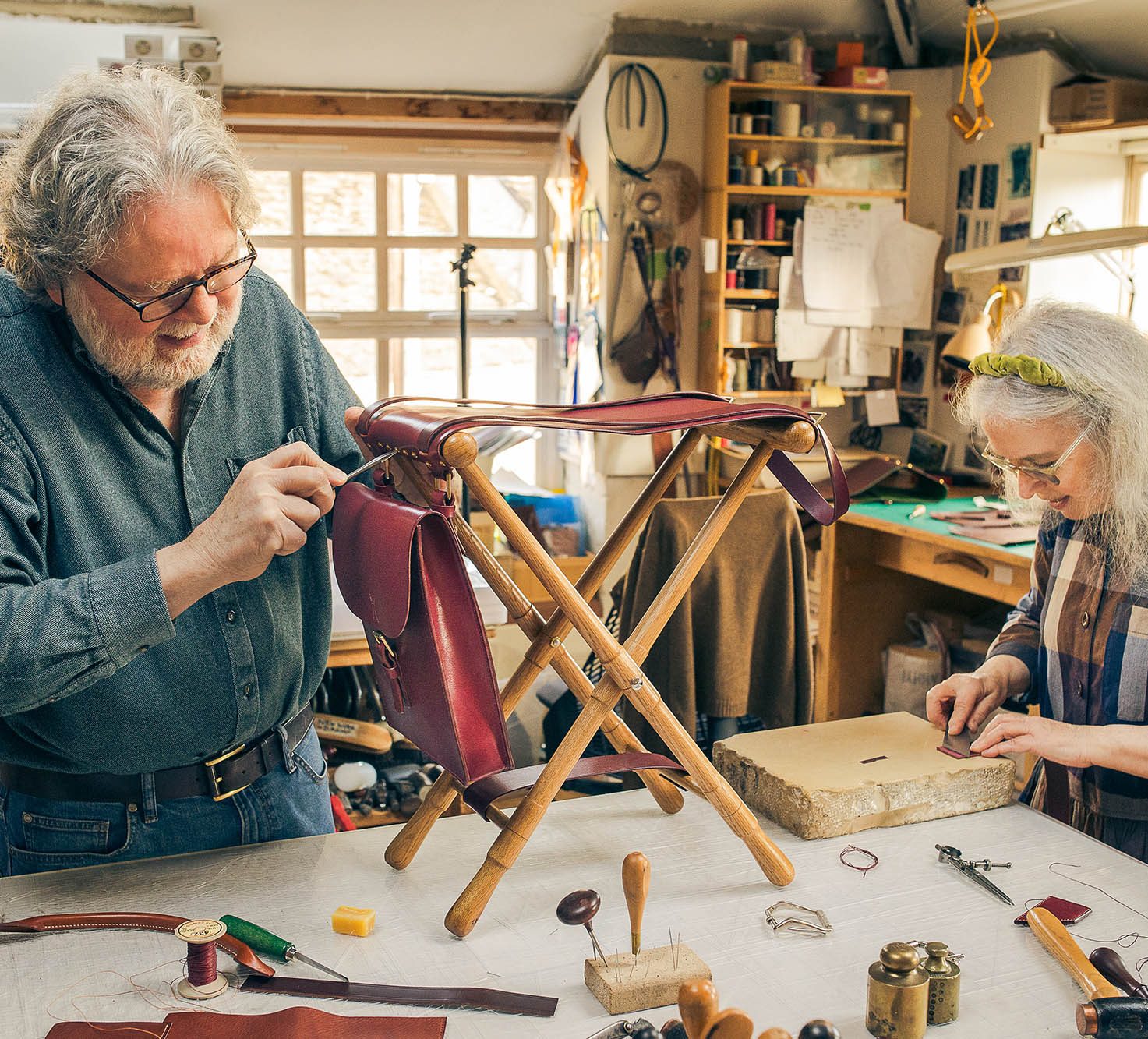
The Educators
Meet the leatherworkers helping to give the UK its competitive and creative edge by passing on traditional leather craft skills.
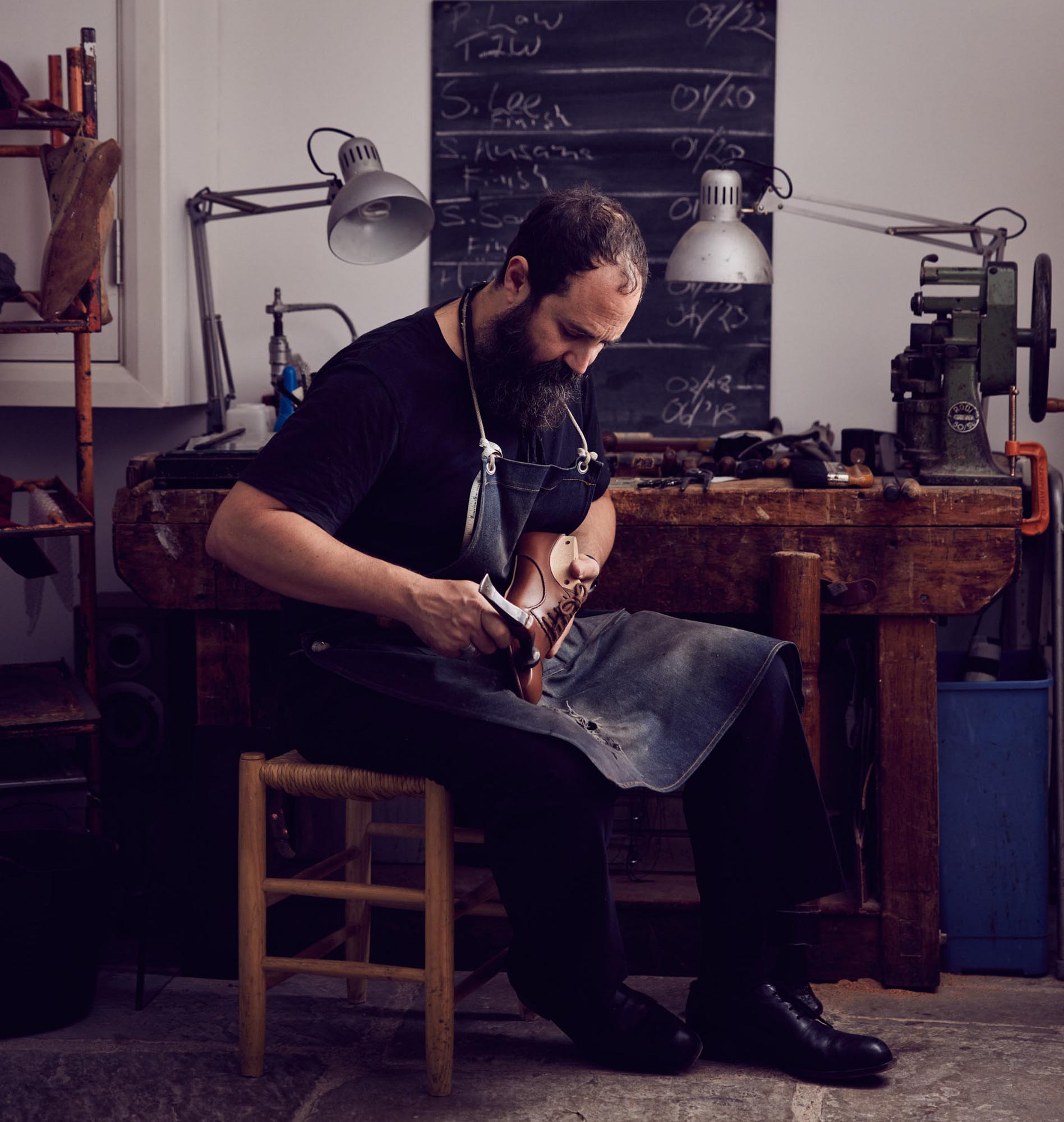
The Embers of Shoemaking in East London
East London shoemakers are rekindling embers of the area's historic craft. Elisa Anniss meets the artisans making it happen.
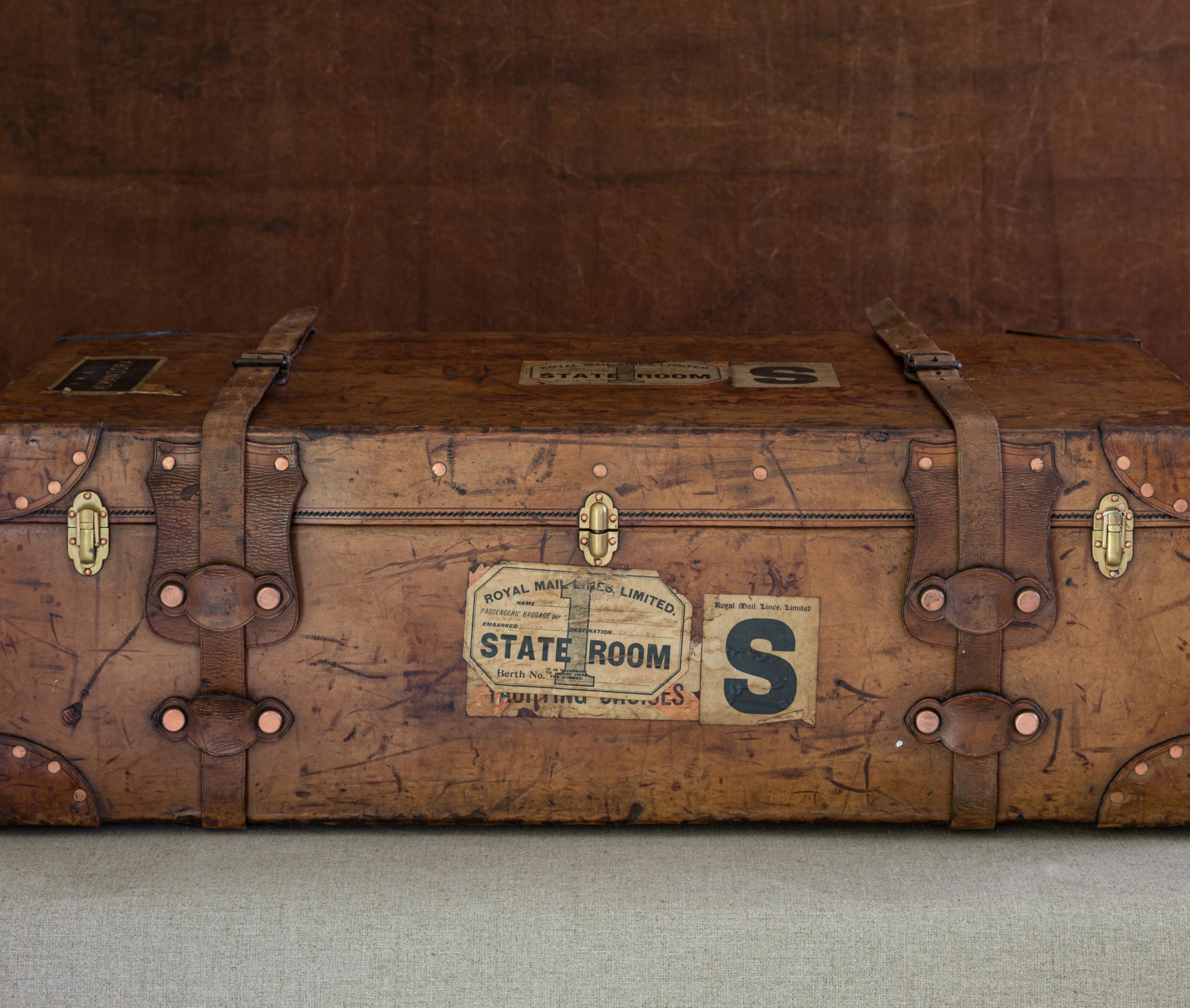
The Rich History of the Leather Trunk
Rory FH Smith charts the evolution of luggage and the role of leather - a story synonymous with changes in transportation.