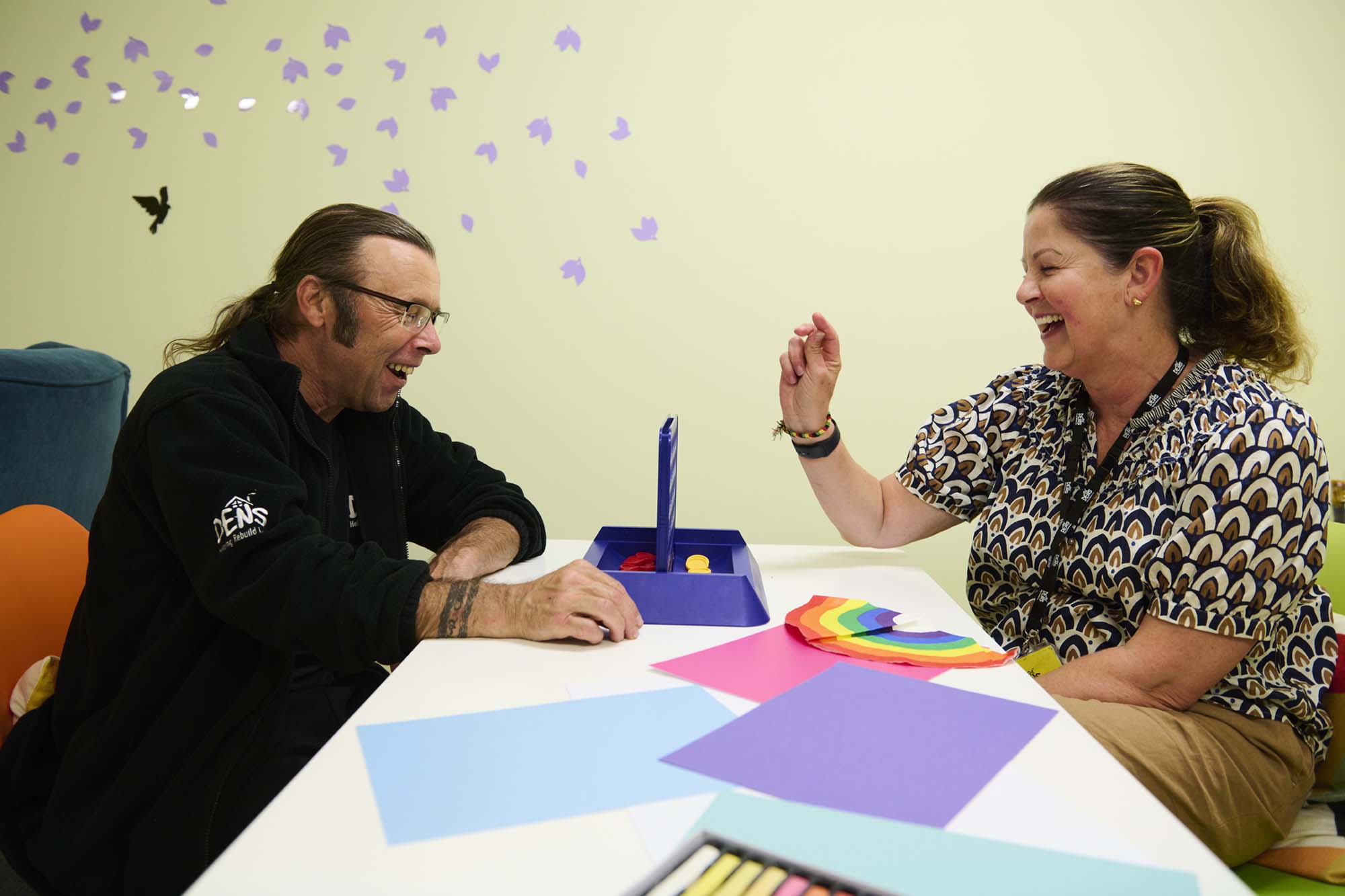
Room to Think
Helping Adults Overcome the Effects of Childhood Trauma


How one homelessness project in Hertfordshire is helping adults to overcome the effects of childhood trauma.
Words by Ellie Broughton
Photography by Callum Toy
Warren has some rhubarb for Paula. “He’s got the most amazing allotment,” the therapist says, bursting with pride. Warren shakes his head over the sunny weather outside. “It’s frying at the moment,” he says, “but I’ll get you some cucumbers too.”
Warren first met Paula Mates, DENS’s resident psychotherapist, in 2022 through the counselling service at DENS, a charity in Dacorum, Hertfordshire. Originally Dacorum Emergency Night Shelter, a joint project started by local churches, today the service covers both emergency accommodation and housing, as well as wrap-around services such as counselling. DENS became a Leathersellers’ Foundation grantee in 2022, in receipt of a four-year grant totalling £84,000.
Incidence of what are called Adverse Childhood Experiences (such as abuse and neglect) is higher amongst people who are homeless, which increases individual risk of mental health conditions as does the stress of homelessness itself. At DENS, what practitioners see in clients is a complexity of both childhood and adult trauma – for example, some clients might have a complex post-traumatic stress disorder diagnosis.
Last year at DENS, the average age of a therapy client was 39 and the average ‘ACE score’ of clients – a method to understand and quantify the impact of childhood trauma – was 6+ ACEs out of a possible 10. This means that the average client had experienced six or seven different forms of loss, abuse or neglect before adulthood. Over 30 clients seen by the service last year scored eight or more, while a score of over six cuts life expectancy on average by 20 years.
DENS is unique in offering long-term individual and group work, with clients seeing the same practitioner for over a year. Although long-term work is strongly recommended for people with relational trauma such as abuse, neglect, bereavement or abandonment, it is extremely difficult to fund and provide, and therefore few UK charities can offer it.
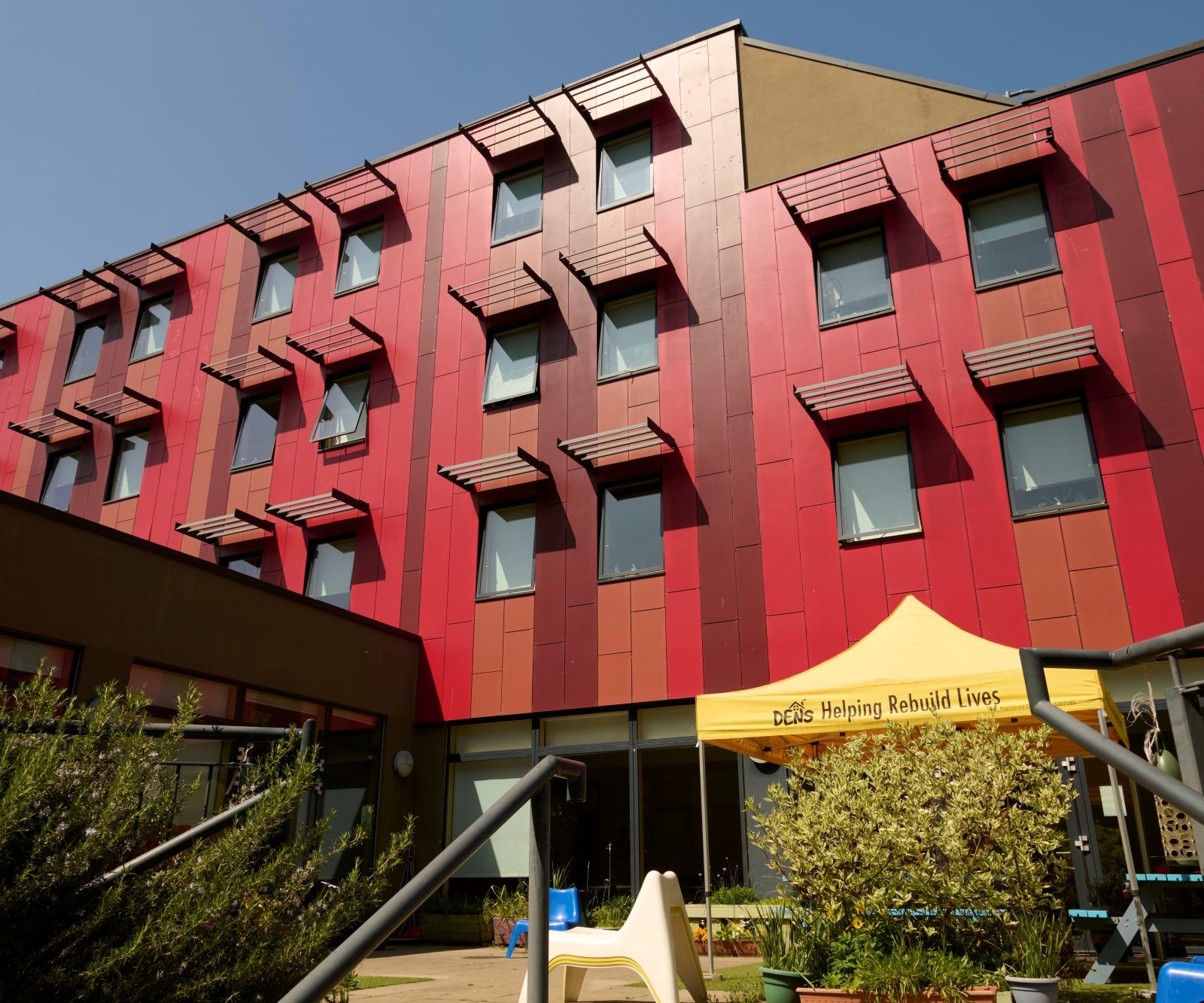

Warren, now 57, started therapy at DENS when he was in recovery from alcohol addiction. He had lost his father to suicide, experienced self-harm, and four years ago was asked to leave the home he shared with his mum owing to problems arising from his addiction.
With the help of DENS, Warren managed to stop drinking and move into his own place. But when he started living alone for the first time, he relapsed. In hospital, he was referred to DENS’s therapy service and began one-to-one therapy with Paula when he got out.
Three years later, he’s grateful. “In just the first couple of sessions, I could really feel relief in being able to open up about my past,” he says. ”My recovery wouldn’t have worked without the therapy; I started drinking at an early age at school because of abuse and bullying – that was my way of just covering it up. In recovery your body doesn’t want the alcohol anymore, but all the other underlying things from the past have to be sorted, because they crop up again.”
After individual therapy, despite his misgivings, Warren moved into group therapy. “The first day I went, I was so close to running away! But then when I got in there it was like, ‘What was I so scared of?’ The atmosphere was calm and relaxed. That was the beauty of it: talking about myself, listening to other people, and relating to their problems. Their circumstances might have been different from mine, but the suffering resulting from it was similar.”
Today Warren works in DENS’s bike project, looks after an allotment, and his doctor says he’s reversed his cirrhosis diagnosis. He’s also cultivated a better relationship with his adult daughter, who’s now 33. ”Of all the benefits from the therapy and the absence of alcohol, the greatest is my daughter. We have this beautiful relationship now. We can talk! We talk about psychology and everything. She never got that from me in the past, but she’s got it now. She’ll always have that from now on.”
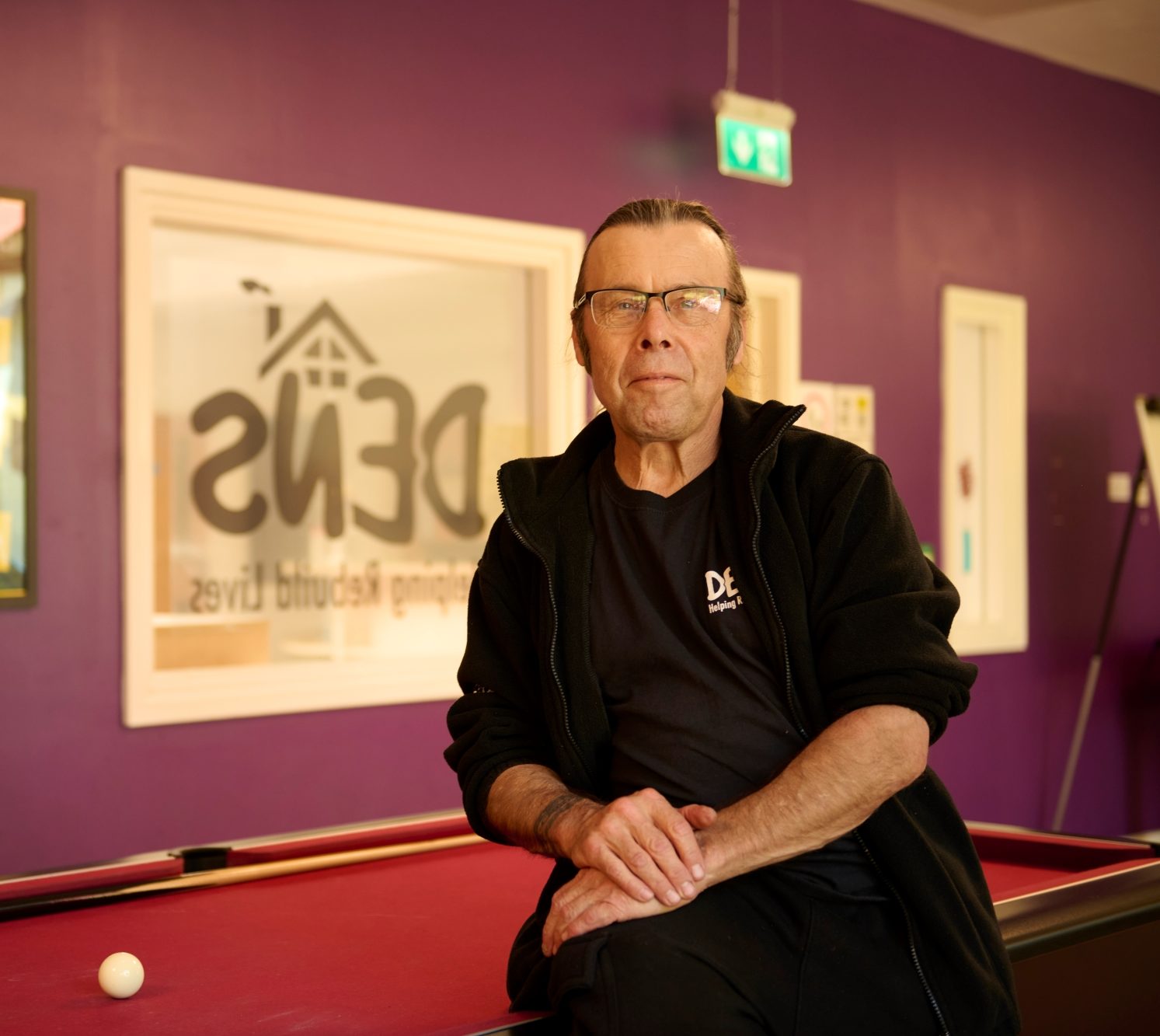
DENS’s emphasis on long-term work for people recovering from ACEs, and to prevent ACEs in their own families, helped The Leathersellers’ Foundation to improve its understanding and giving approach.
“DENS was integral to challenging our perceptions of what ‘ACEs as a core focus’ looked like in real terms,” says Stacey Lamb, Head of Charity Grants at the Foundation. “By any description, DENS is first and foremost a ‘homelessness’ charity, but their understanding of the origin of their service users’ journeys demonstrated that experience of multiple ACEs was interlaced with the immediate housing need.”
This learning was significant because it prevents future charities from being overlooked as a result of a focus on core activity alone. Since working with DENS, the Foundation’s approach is more nuanced. As Stacey explains, “We now determine ‘ACEs-focused’ by considering the prevalence of ACEs across the client group, not by the primary purpose of the activity.”
DENS is unique in offering long-term individual and group work, with clients seeing the same practitioner for over a year.
Sammi, 27, also had long-term therapy at DENS. When she was 22 her relationship with her mum broke down. She moved out into her aunt’s house temporarily, but sharing with her seven cousins wasn’t a long-term solution. Sammi’s brother had previously stayed with DENS so she followed him there. She stayed in the charity’s emergency accommodation for a fortnight before getting a room in a shared house. However, it was not long after that when lockdown hit. Sammi referred herself to one-to-one therapy to cope with the loneliness and isolation.
“I didn’t want to do it,” Sammi says. “I didn’t really like opening up then and I was so quiet. I wouldn’t talk to anyone; I was just so scared.” It took her several months to open up; in her first session, she and Paula sat in silence for 30 to 45 minutes. After they developed a relationship in therapy, Paula suggested that like Warren, Sammi could try group therapy. “I was nervous, very nervous. I said no, first of all. I wouldn’t talk; it was like being back in one-to-one therapy for the first time, I just sat there.” As the groups went on, Sammi got more confident. “They couldn’t stop me talking by the end of it,” she jokes.
Since finishing group therapy, Sammi has completed several online training courses to become a teaching assistant and has begun volunteering in a local school. She plans to start work again at the start of the next school year. She hopes to specialise in working with autistic children (her younger brother is autistic).
Sammi credits the therapy with her improved confidence and mood. “When I first came in, I didn’t know what was going on, but I knew I needed to do it. I needed to find myself, and I did – it’s the best thing I’ve ever done.”
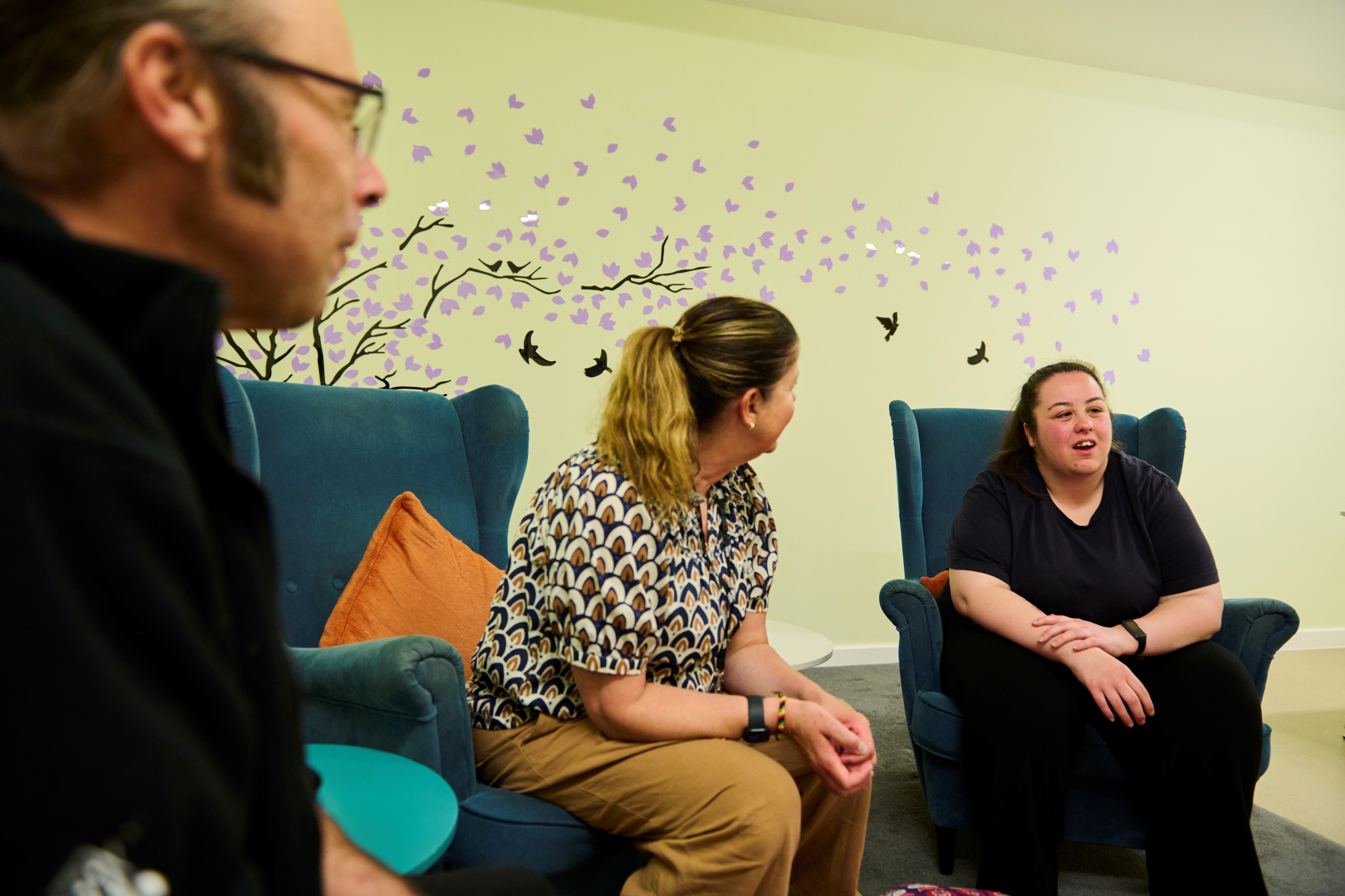
In 2022 DENS began offering placements to local counselling and therapy students in order to improve capacity and increase access to the service; this year Paula has already had 20 applicants. With the help of the Foundation’s unrestricted funding, Paula now works full-time at DENS.
“Often people will come into the service and initially be a bit resistant to the thought of therapy because their levels of trust are low and they have experience of abuse by authoritative figures,” Paula explains. “But after a while, they will see me around and hear from the other residents who are in therapy, and will then approach us.” Even people who are housed can struggle to attend regular therapy, and the challenges for clients without a home are even greater. Beyond the question of whether the person has a phone, money to travel, or appointments with other agencies, some homeless people are stuck in addictive cycles.
After training to be a UKCP-accredited therapist at the Metanoia Institute in London, Paula gained experience as a therapist at a rehabilitation service before setting up DENS’s service. She herself has experienced homelessness, substance misuse and long-term therapy. She was particularly moved by the work of Carl Rogers, the man behind humanistic therapy and the person-centred approach, and has led her own research into therapy outside of conventional settings. “The system generally fails when it comes to this client group, as it does for any disadvantaged or marginalised groups,” Paula says. “It doesn’t work for them, and it really needs redressing.”
DENS’s radical approach to therapy is also a point of pride for CEO Wendy Lewington. “We’ve got 50–60-year-olds that have had a life of trauma; short-term therapy isn’t going to make a difference,” she says. “The fact that it’s based in the hostel means that clients feel at home, and if they miss an appointment, they get another go. If you miss an appointment with the NHS then you can often be wiped off. We have a full time therapist with significant experience, and we really focus on trauma. Those elements have made it be the success that it is.”
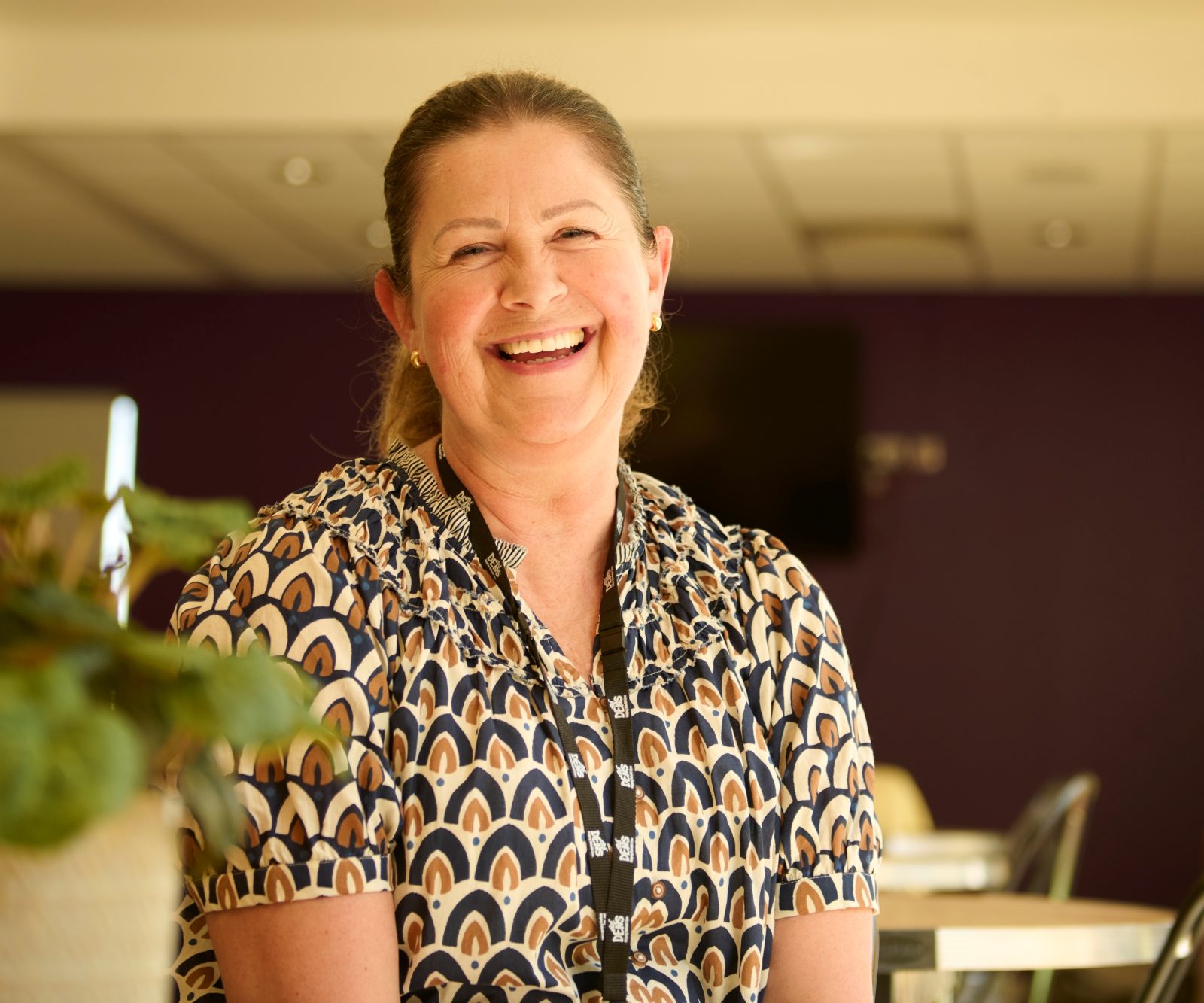 Paula Mates, Clinical Lead Psychotherapist
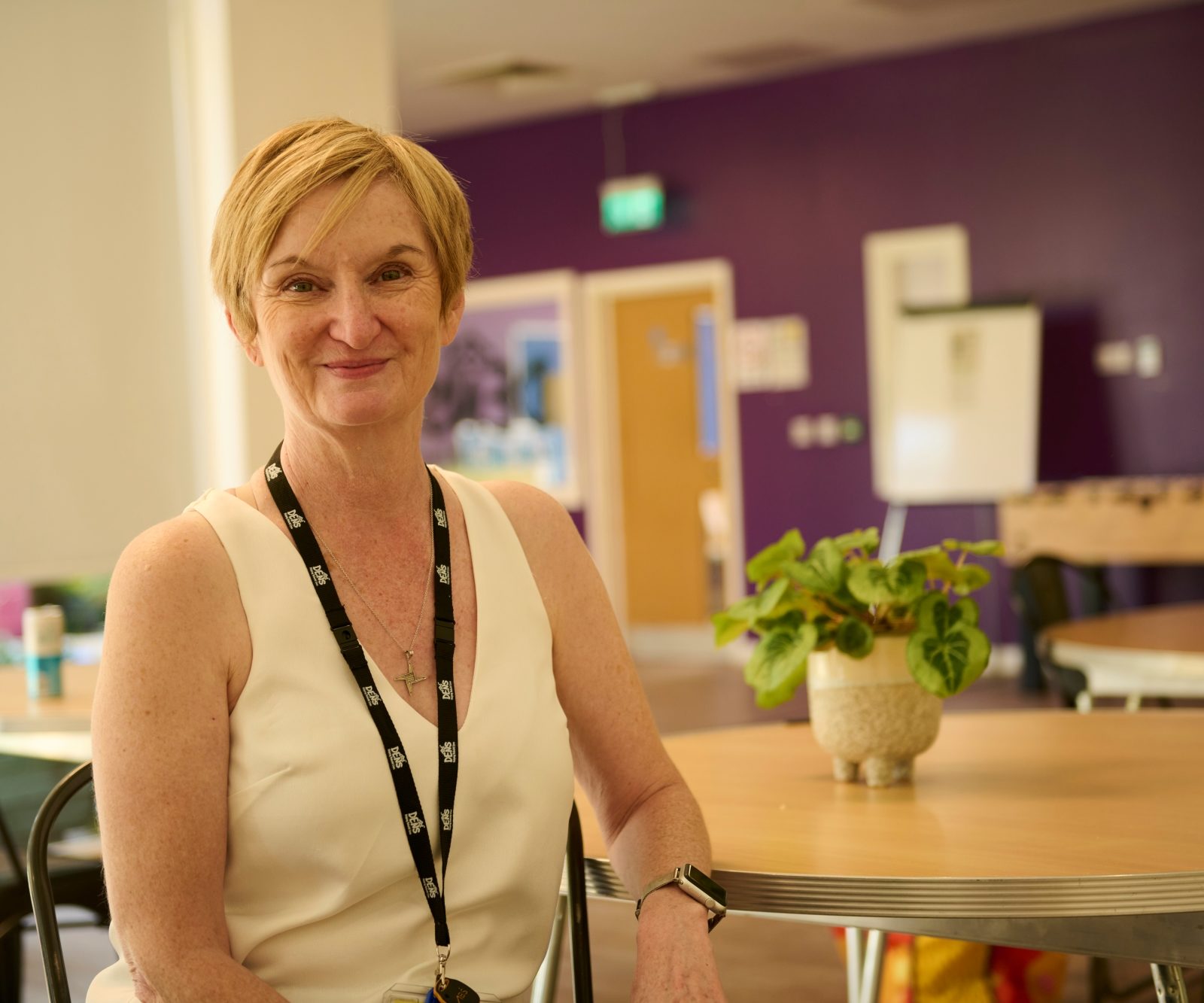 Wendy Lewington, CEO
Alongside the housing and therapy that DENS provides, the charity also teaches life skills such as cooking, and workplace skills such as gardening and bike maintenance – all intended to support people to live and work independently after contact with DENS.
DENS’s patient, relational approach to resolving homelessness is one of its unique strengths. “Homelessness is a symptom or by-product of other issues,” Wendy says. “Unless you deal with the other issues, there’s going to be a revolving door around homelessness. We’ve seen it. Some people come back to our hostel four or five times. What is that fourth or fifth intervention that means they can take that next step? If you’ve got a life of trauma, it’s going to take more than just a little bit of therapy to work your way through that.”
DENS’s local county council, Hertfordshire, faces reorganisation by 2028. Wendy believes that this will bring new opportunities for the charity to extend the work they do. With a new strategy due out at the end of the year, the team is now constantly identifying innovative ways of working to support the most vulnerable. A long-term commitment works wonders for their clients, and will do the same for the future of DENS, too.
—
The Leathersellers’ Foundation’s ACEs Main Grants Programme provides multi-year funding to over 60 ACEs-focused charities throughout the UK. Funded partners work with people of all ages affected by ACEs, including infants, soon-to-be parents, young people and adults. In preventing and mitigating the harm of ACEs, we believe that it is never too early or too late to ask for help.
READ MORE

Creative healing
Meet two Leathersellers’ Foundation grantees using music, art and drama to address adverse childhood experiences and break cycles of trauma.

Small and Mighty
Recipients of the Small Grants Programme are proving that even in difficult times, a desire to help others and community spirit continue to thrive.

Fashioning History
For an inspired project at Leicester’s De Montfort University, students of “Artifacts Live” are drawing on the lessons of historic leathercraft to create the designs of the future.